
Xinjiang Polo (Pilaf): Regional Twists on the Rice That Feeds the Steppe
If Xinjiang had a national dish, it would be
The dish’s history is written into its ingredients. Rice and carrots arrived via the Silk Road from the east and south, lamb came with the pastoral nomads of the steppe, and the cumin that defines the flavor is a Central Asian signature that separates polo from every Chinese fried-rice cousin. You can taste the trade routes in a single spoonful — this is not a borrowed recipe but a locally perfected one that absorbed influences and made them its own. That is why every town claims its version is the original; in a sense, they all are, each a slightly different answer to the same ancient problem of feeding many people from one pot.
polo — the local spelling of pilaf. It is rice steamed with lamb, onion, and carrot in lamb fat until every grain is separate and faintly golden. I ate it for breakfast in Kashgar, for lunch on the Ili grasslands, and for dinner in a Urumqi basement canteen, and it was never quite the same bowl twice. Polo is the dish that proves Xinjiang sits at the crossroads of every cuisine that ever crossed the steppe — a single pot that talks to Persia, the Caucasus, and the Turkic north all at once.
The Base Recipe (and Why It Works)
The skeleton is constant: rendered lamb tail or shoulder, a soffritto of onion, then carrot cut into long matches, then rice laid on top with just enough water to steam through. Crucially, the rice is steamed, not boiled — the grain stays distinct. Cumin, sometimes a pinch of dried berry (zira), and occasionally raisins or chickpeas go in. The result is rich but not heavy, and it reheats badly, which is why it is always made fresh. The fat is not an accident of indulgence; it is the medium that carries the carrot’s sweetness into every grain. A good polo cook guards their fat-to-rice ratio like a family secret, because that ratio is the difference between memorable and greasy.

Regional Variations You Will Actually Taste
| Region / group | Twist | Notable add-in |
|---|---|---|
| Uyghur (south) | Long orange carrot, yellow rice | Raisins, chickpeas |
| Kazakh / Kyrgyz (north) | More fat, bigger meat | Horse meat optional, dried apricot |
| Dungan (Hui) | Less greasy, more spice | Green chili, garlic |
| Kashgar style | Deep golden, crisp bottom | Quail egg, date |
| Tarim oasis | Leaner, more carrot | Yellow raisin, pea |
The carrot color is the regional tell: southern Uyghur polo uses the sweet orange Kashgar carrot; northern versions lean yellow. Either way, the carrot is not a vegetable side — it is half the flavor. In some Kazakh versions the carrot is almost candy-sweet from slow rendering, a deliberate contrast to the salty lamb.
Where to Eat the Best Bowl
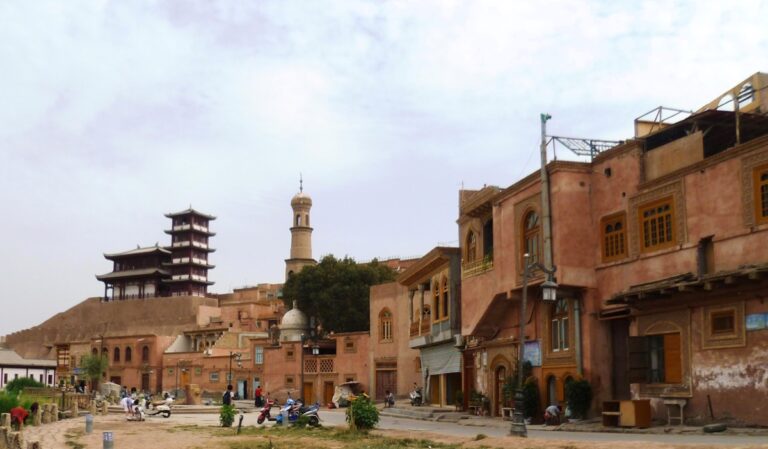
Kashgar is the polo capital; the old city hides hole-in-the-wall pots that open at noon and sell out by 2 p.m. Urumqi’s Erdaoqiao area has solid, consistent versions. On the Ili grasslands, Kazakh yurt stays serve a meatier, fattier polo that sticks to your ribs at altitude. For a broader map of the region’s rice and meat, see our Xinjiang food guide. The trick is to follow your nose to the longest queue of locals — a polo pot that empties fast is a pot worth joining.
The “Bottom Crust” Rule
The prized part of a good polo is the qazan bottom — the layer of rice that crisps against the cauldron. Ask for “tüwi polo” (bottom rice) and you signal you know the dish. It is the cook’s favorite part to give away, and the crunchy, caramelized edge is the best bite on the plate. Some places serve it separately as a prize; others mix it back in. Either way, do not leave without trying it.
Eating It the Local Way
Polo is eaten with a spoon, never chopsticks, and often with the right hand scooping from a shared plate at family tables. A bowl runs 15–35 RMB; a shared platter for the table is 60–120 RMB. It pairs naturally with green tea to cut the fat. At weddings and celebrations the platter grows to feed dozens, mounded with whole lamb shank — the centerpiece of any proper Xinjiang feast.

A season by season read
Spring and early summer
Same family, different accents. Xinjiang polo is lamb-forward, cumin-scented, and steamed; Persian versions lean saffron and barberry, Indian ones more whole spices. The technique is shared Silk Road DNA, diverging by what each stop grew.
Summer
Yes, virtually all polo in Xinjiang is halal lamb. You will not find pork versions anywhere in the region.
Autumn
Rarely. The fat and stock are lamb. Some Dungan spots offer a vegetable polo, but ask explicitly — assume meat otherwise, and confirm the oil is not animal fat.
Winter
From the carrot and lamb fat, plus sometimes a little dried cranberry or carrot juice. It is supposed to be that color; a white-grain version would mean the carrots were skipped.
4
Mostly lunch. The big cauldrons fire mid-morning and the best batches are gone by early afternoon, so eat polo at noon for the freshest, loosest grain.
5
Some Urumqi cooking classes and homestays teach it. The key skills — rendering fat, cutting carrot into matches, and steaming without stirring — take a few tries to master.
How It’s Actually Made (So You Can Spot a Good One)
Watch a cook and the method is revealing. The lamb is rendered in the cauldron first, the onion goes in until translucent, then the carrot is added in long sticks and softened but not browned. Rice is laid on top with enough water to just cover, the heat dropped to a simmer, and a paper or cloth placed under the lid to trap steam. The rice should never be stirred — stirring breaks the grain and turns it to paste. When the water is gone and the grain fluffy, it’s flipped onto a platter. A cook who stirs is cutting corners; a cook who waits is making the real thing. The difference is visible in the plate: separate, glossy grains versus a gluey mound.
Where I Ate the Best Bowls
Beyond the headline spots, a few specifics: the Sunday polo at Kashgar’s livestock-market edge feeds herders and is unbeatable for atmosphere; the university-area canteens in Urumqi serve a cheap, consistent student version at lunch; and the yurt stays near Nalati do a rustic Kazakh polo cooked over open flame that tastes of wood smoke. None are fancy, all are better than the plated tourist versions in the big hotels. The pattern holds across Xinjiang: the best polo is found where people eat it daily, not where they serve it to visitors.
A Note on Portions and Price
A street-bowl polo runs 15–35 RMB and is a full meal; don’t order sides unless you’re sharing. The shared tawa platter for a table is the better social choice and usually better value. Portions are generous to the point of comical — I rarely finished a platter alone and never left hungry. If you’re offered a second helping by a host, a small decline followed by acceptance is the polite dance; refusing outright reads as dislike of the food.