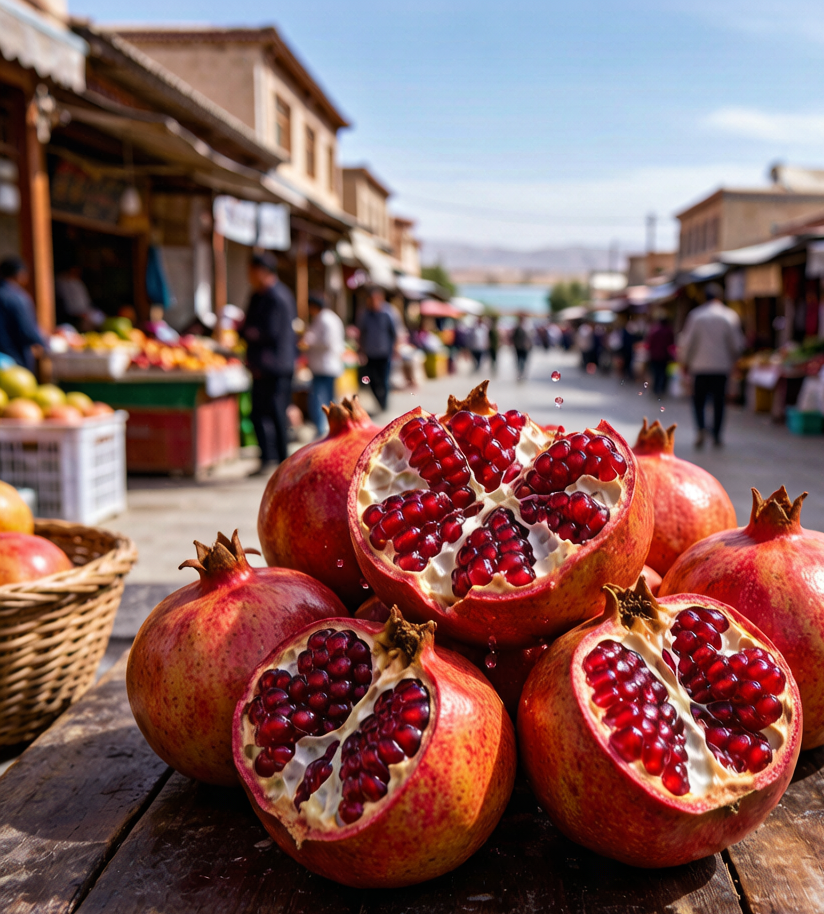
Xinjiang Pomegranates: The Jewel Fruit of the Southern Oasis Towns
Some fruits travel badly and should be eaten where they grow. Xinjiang pomegranates are exactly that, and the southern oasis towns are where I learned to love them properly, seeds like rubies and a tang that wakes the mouth up.
The fruit suits the desert edge. Fed by meltwater and grown under intense sun, the pomegranates of the oasis belt are darker and tarter than the soft supermarket kind, and the contrast is the point. They belong to the same market world as the dried-fruit and spice stalls I have written about, only fresher and louder.
Eating them is a small ceremony. Locals score the skin and break it open by hand rather than cutting, and the seeds are eaten straight, sometimes with a pinch of salt. I picked up the habit at a summer drinks stall where the vendor tossed pomegranate into a glass, and the sweet-sour hit is something I now chase on every southern loop.
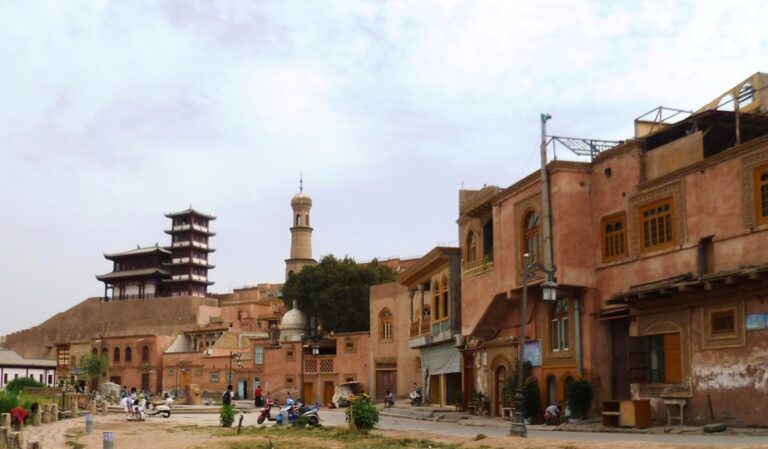
The market is the place to buy. At the Kashgar Sunday bazaar the fruit tables in season are a spectacle, and haggling over a pile of pomegranates is a gentler introduction to bazaar life than the carpet rows. Buy what you will eat in a day or two; they are best fresh.
I think of pomegranates as the oasis in edible form: a proof that the desert edge grows things of real beauty if the water reaches them. They pair with the cold drinks and the melon as part of a summer fruit triad I now plan trips around, and they are the one I most regret not finding sooner.
How to eat one without a mess: score the skin around the middle, then break it apart with both hands over a bowl, and the seeds drop clean. Locals do it one-handed and make it look easy; I do it over a sink. The juice stains, so I save the good shirt for later in the day.
In season, a pomegranate from a southern oasis is a thing to plan a detour around. I have turned a fuel stop into an hour at a fruit stall more than once, and never regretted the delay.
The southern towns near the oasis belt are where the fruit is at its best, and I plan a market half-day around it when the season hits. A good pomegranate is heavy for its size and has a slightly squared shape, signs the seeds filled out; a light, round one is watery. I learned this from a vendor who tapped two together and handed me the heavy one without a word, and the trust was the lesson. The juice is the other product: fresh-squeezed at a stall, it is tart and deep, nothing like the bottled version, and a glass between sights is a proper refreshment. Buy a few, eat one in the market, carry the rest, and accept that your fingers will be stained purple by evening, which is half the fun.
If you buy more than you can eat, the seeds freeze well and travel in a tub for days, which I learned after over-buying at a southern stall and refusing to waste them. A sprinkle over the morning yoghurt or the cold drinks turns a road breakfast into something local, and the colour alone is worth the effort.
What travels home and what does not
Buy the dried fruit in the market rather than at the airport and ask for it packed at the stall. What does not work is anything fried or saucy, which turns in transit, and anything you cannot repeat at home. It is cheaper, the staff wrap it properly, and it spends a week in your bag as the best thing about the trip. Nuts, dried grapes, an uncut flatbread and vacuum-packed lamb all survive a long-haul flight. If the timing is the question, our [[aksu-xinjiang-a-travelers-guide-to-the-southern-silk-roads-oasis-gateway|Aksu, Xinjiang: A Traveler’s Guide to the…]] goes through it properly.
The stall, the teahouse and the restaurant
The teahouse is where you sit an hour and get refilled. The restaurant is where you take someone you want to impress. The food is the same and the price gap is not small. What you lose at the stall is a seat and some shade.
I eat at the first two most days and take people to the third when they ask for somewhere proper. Everything else is right there. Three kinds of place sell the same dish in Xinjiang Pomegranates The Jewel, and they are not competing so much as serving different occasions. The street stall is fastest, cheapest and eaten standing up.
Where most people get the logistics wrong is covered in our [[xinjiang-kiwi-fruit-guide|Xinjiang Kiwi: A Silk Road Fruit You Did…]].