Sun Protection, Dust and Sandstorms: The Reality of Xinjiang’s Climate
Xinjiang’s climate is extreme in ways that surprise first-timers: a desert at noon, a mountain at dusk, and sun that burns through cloud. Plan for the sky, not the forecast, and the climate becomes a feature rather than a foe.
The UV is no joke
At altitude and in the desert, UV indexes routinely hit “very high.” I burned on a “cloudy” Pamir morning because the thin air let the rays through. Pack SPF 50+, a brimmed hat, and sunglasses with a real UV rating. Reapply like a fanatic. Our 30 tips put this near the top for a reason — it is the single most common mistake.
Dust and the occasional sandstorm
Spring brings 沙尘暴 (sandstorms) that turn noon to dusk in minutes. They are dramatic but manageable:
- Close the car windows and run the air on recirculate to keep grit out.
- A simple mask beats the dust; your scarf works in a pinch.
- Postpone outdoor sightseeing a few hours; they usually pass.
On the open northern loops I have sat out two storms in a roadside café — annoying, never dangerous, and oddly cosy with a pot of tea.
Temperature swing
A 20°C day can become a 5°C night. The winter-driving guide covers the cold end; for summer, layer so you can shed and add. The wind (remember Dabancheng?) makes it feel colder than the number on the thermometer.
My kit
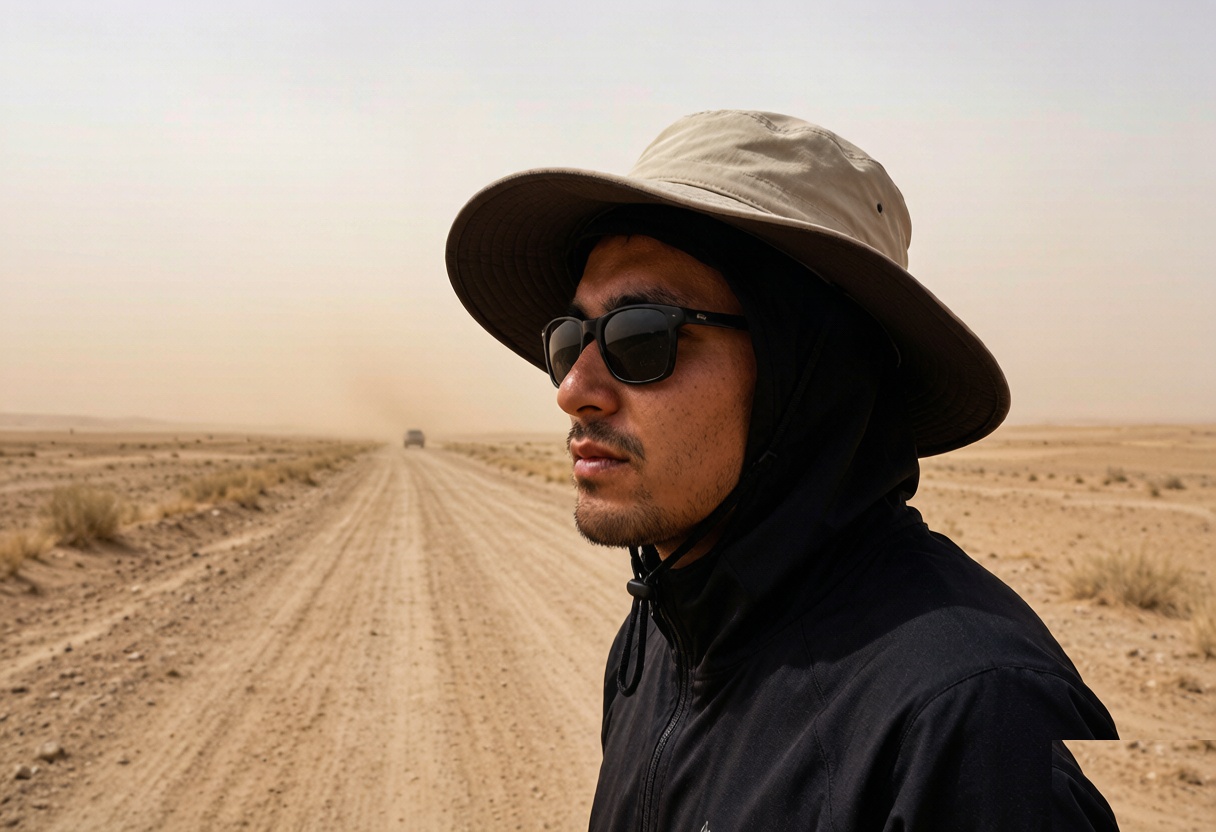
SPF, lip balm, hat, wrap-around sunglasses, a light mask, and a bandana. Cheap, small, and the difference between a great trip and a raw, peeling, coughing one. The climate here is part of the adventure — dress for it and enjoy.
The kit, item by item
- SPF 50+ and a lip balm with SPF — the wind makes lips crack fast.
- A brimmed hat that stays on in wind; a cap alone blows off.
- Wrap-around sunglasses with a UV400 rating, not fashion shades.
- A light dust mask or bandana for spring grit.
- A thin long-sleeve layer even in summer — covering skin beats reapplying.
Reading the sky
A hazy horizon in spring is often the first sign of a sandstorm building; if you see it, shorten the outdoor plan and find shelter early. In the mountains, UV is stronger at altitude even when cold — sunscreen is a four-season habit here. Treat the climate as a constant companion, dress for it, and it stops being a threat and becomes part of the place.
The hour I go back for
The light is only free of company on a Tuesday. Whatever the guidebook says about golden hour, go on a weekday. Midday is the hour to avoid, not the hour to schedule. Everything goes flat, the shade disappears, and the temperature on an open plateau rises in a way that stops you caring about photographs. Between the two I would pick the later one, mostly because the early version costs you the rest of the day.
Go early or go late and the same ground gives you two different subjects. Sunrise is the one worth an alarm for. The whole face of Sun Protection Dust Sandstorms turns a colour that does not exist at any other time, and the site is empty enough that you can stand still and hear nothing. By ten the coaches are here, and by one it is an hour of people shuffling past. I have come to like the last forty minutes before the gate shuts, when the groups have gone and the staff are sweeping, because that is when you can look up properly instead of squeezing a shoulder past strangers.
For the part people underestimate, see our [[xinjiang-heat-sun-protection-guide|Sun Protection in Xinjiang: Beating the…]].
A few minutes of background change the visit
The place only makes sense once you know its shape. Sun Protection Dust Sandstorms was cut rather than built, which is why the walls are solid and the streets are the empty space between them, and why centuries of dust ended up acting as a roof. Read that the morning before rather than at the entrance, where the boards stand too far from the object to help. Locals in Xinjiang will give you the short version in about a minute if you ask, and it is usually better than the panel at the gate. Knowing what you are standing on turns a pleasant walk into something you actually remember. The history here is layered in a way the official signage compresses into names and dates. If the timing is the question, our [[xinjiang-sandstorm-dust-season-guide|Xinjiang Sandstorms and Dust Season: When…]] goes through it properly.
The kit I don’t travel without
The sun at altitude and the dust on the plains are a real one-two. My kit: a high-SPF cream for face and the back of the neck, a stick for lips (they crack fast), proper sunglasses, and a light mask or buff for dust. A hat with a brim beats a cap because the back of your neck burns on long drives. I reapply cream after every few hours outside, not once in the morning — the UV here fools you because the air is dry and the heat feels different from the coast.
Reading the sky and riding out a storm
Dust and sandstorms build fast on the southern plains and the Taklamakan edge. The sign is a wall of brown on the horizon and a sudden drop in light. When it hits, I pull off, close windows, run the fan off outside air, and wait — driving blind into one is how people end up in the ditch. They usually pass in under an hour. Best light for photos is the clear hour after, when the air scrubs clean. Skin care at night (moisturiser, more water) keeps the dryness from turning into a trip-ruining crack.