Traveling Xinjiang Solo: Language, Apps, and Daily Logistics for the Independent Visitor
The reason to stop
Solo travel in Xinjiang is rewarding and very manageable, but it rewards preparation. The region is vast, distances are enormous, and while safety is excellent, the practical logistics of moving alone through a multilingual, lightly Anglicized area take some setup. This guide covers the daily mechanics of independent travel here: the apps to install, the language realities, how to eat and sleep alone, and how to stay oriented when signs are in Chinese and Uyghur. The goal is simple: arrive alone, but never feel lost or stranded.
Traveling alone lets you change plans on a whim and meet people you would miss in a group. With the right toolkit, Xinjiang is one of the most satisfying places to explore on your own terms. The solitude of a lakeside dawn or a quiet old-city alley is its own reward, and the confidence you build carries into every later trip you take, anywhere in the world, long after the trip itself has faded into memory.
It also suits the region’s scale. Group tours here run on rigid clocks and skip the unplanned stop that turns out to be the best part of the day. Solo, you can linger at a sight that moves you or bail on one that does not, and no one’s itinerary suffers but your own. That freedom is the whole point of coming all this way, and it is easier to claim than most first-timers assume.
Approach roads and mileages
Most solo travelers fly into Urumqi and branch out by train, flight, or rented car with a driver. Trains are comfortable and a great way to meet locals in the dining car, where a shared thermos of tea breaks the ice fast. Domestic flights connect Urumqi to Kashgar, Yining, Altay, and Hotan efficiently. For true independence, hiring a car with a driver by the day costs less than you might think and solves navigation and language in one move, leaving you free to watch the scenery instead of the road and the GPS.
Book your first two nights before arrival so you have a fixed point on the map. From there, hostels and guesthouses in Urumqi and Kashgar are social hubs where solo travelers swap routes and sometimes pair up for rides to far-flung sites. A posted notice board or a group chat at the front desk often leads to a shared taxi that halves your cost and doubles your company, the best of both solo and social travel when you want a face across the table at dinner.
Season by season
Shoulder seasons, May to June and September to October, offer the best balance of weather and manageable crowds for solo explorers. July and August are busy and hot in the basins but lively, with festivals and full services. Winter is starkly beautiful and empty, ideal for solitude, though some mountain roads close and you must plan around weather and the shorter daylight that limits how far you can drive alone each day before the light fails.
For solo travelers, avoiding the October National Day week is wise; prices spike and transport fills, and the independence you came for gets squeezed by crowds. Quiet weeks in September give you space, flexibility, and the freedom to linger wherever the day takes you without fighting for a bed or a seat, which matters more when you are the one making every decision and the one who will eat alone if the plan collapses.
Where to spend your days
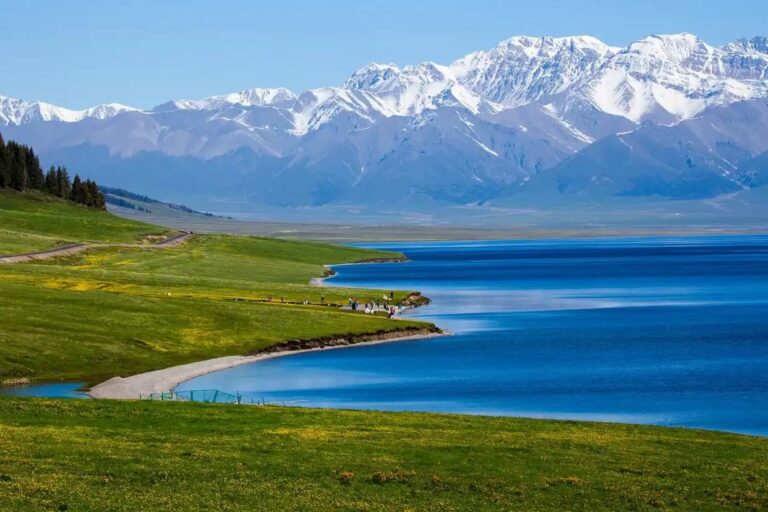
Solo travelers thrive on the classics done independently: wander Kashgar’s old city at your own pace, ride the train to Turpan’s ruins, or base in Yining for Ili Valley day trips. The northern loop of Sayram, Nalati, and Kanas suits solo drivers with a rental, while the south’s Kashgar-to-Pamir route is straightforward by shared car arranged at the guesthouse. You set the clock, not a tour bus, and you can abandon the plan the moment something interesting appears by the roadside.
Use downtime in cities to visit museums and teahouses, where sitting alone with a pot of tea is completely normal and a fine way to observe local life. Strike up a conversation with a vendor or a fellow traveler, and the region opens up through people rather than pamphlets. Some of the best tips I have collected came from a stranger at a night-market stool, and those are the ones no guidebook prints, because they are too small and too local to ever make the edited highlights.
Consider a guided day hike or a cooking class now and then to break the rhythm of solo days and meet locals in a structured setting. Balance alone time with shared moments and the trip stays energizing rather than lonely, and you return home with stories that came from other people, not just from the view. The solo traveler who never speaks to anyone misses the half of Xinjiang that lives in conversation.

Ways to keep it simple
Install a translation app with offline Chinese and download maps for offline use before you lose signal. Alipay and WeChat cover most payments; set them up with a linked card early, since the setup is smoother on hotel Wi-Fi than on a remote 4G flicker. Learn a few phrases: hello, thank you, how much, and the names of cities in both languages, since signage rarely caters to English and a spoken word often unlocks a smile, a discount, and a direction you would otherwise never find.
Keep digital and paper copies of your passport and permits, and store them in separate bags. Share your rough route with someone back home and check in when you reach towns with signal. Trust the excellent safety record, but tell your guesthouse where you are headed each day. Solo does not mean invisible; locals are welcoming and will often look out for you once they know your plan, especially in the smaller towns where everyone notices a newcomer within an hour.
Eat alone without awkwardness by sitting at the counter or a small table, and point at dishes you cannot name. Most restaurants are used to solo diners, and a hot bowl of laghman alone is a small daily pleasure, not a lonely one. The habit of dining by yourself abroad is a skill that, once learned, makes the whole world feel like home, and it turns an empty evening into a quiet, contented one instead of a self-conscious ordeal.
One more habit pays off more than any app: tell someone your plan and then actually follow it. Solo travelers sometimes change routes on impulse, which is the joy of going alone, but a guesthouse that expects you back from the northern loop and gets silence at midnight will worry appropriately, and a missed check-in is far easier to explain than a rescue operation. Build a simple pattern: message your hotel when you reach each town with signal, and name the next stop out loud to the person at the desk before you leave. It costs thirty seconds and turns the region from lonely into accompanied by a loose network of people who know roughly where you are. That quiet safety net is why so many solo travelers return to Xinjiang year after year; the land is enormous, but the human web around a careful traveler is bigger, and it catches you gracefully if the plan ever slips or the weather closes a pass you meant to cross.
Other places close by
In Urumqi, the Regional Museum is a perfect solo morning, calm and English-labeled enough to orient your understanding of the region. Around Kashgar, the Sunday bazaar is easiest with a local tip on timing from your guesthouse host. The Ili Valley’s small towns are friendly and low-pressure for a lone explorer who wants to wander without an agenda or a clock and simply let the day decide which fork in the road to take.
For a gentle first solo excursion, take the bus or a hired car to Heavenly Lake and walk the shore alone; the manageable scale builds confidence before you tackle the multi-day northern loop on your own. Start small, succeed, then expand, and the region opens to you one quiet step at a time, until the distances that once intimidated you become the part you love most about the place.
What actually matters
Solo travel in Xinjiang is less about fear and more about setup. Master the apps, learn a little language, and move with a loose plan. The independence pays off in spontaneous encounters and the quiet pride of crossing this giant land on your own terms. Go alone, and you may find the region speaks to you more clearly than it ever could in a group, because there is no one else there to interpret it for you, and the silence is part of the gift.