Bosten Lake: Xinjiang’s Largest Inland Lake and the Birdwatcher’s Stop
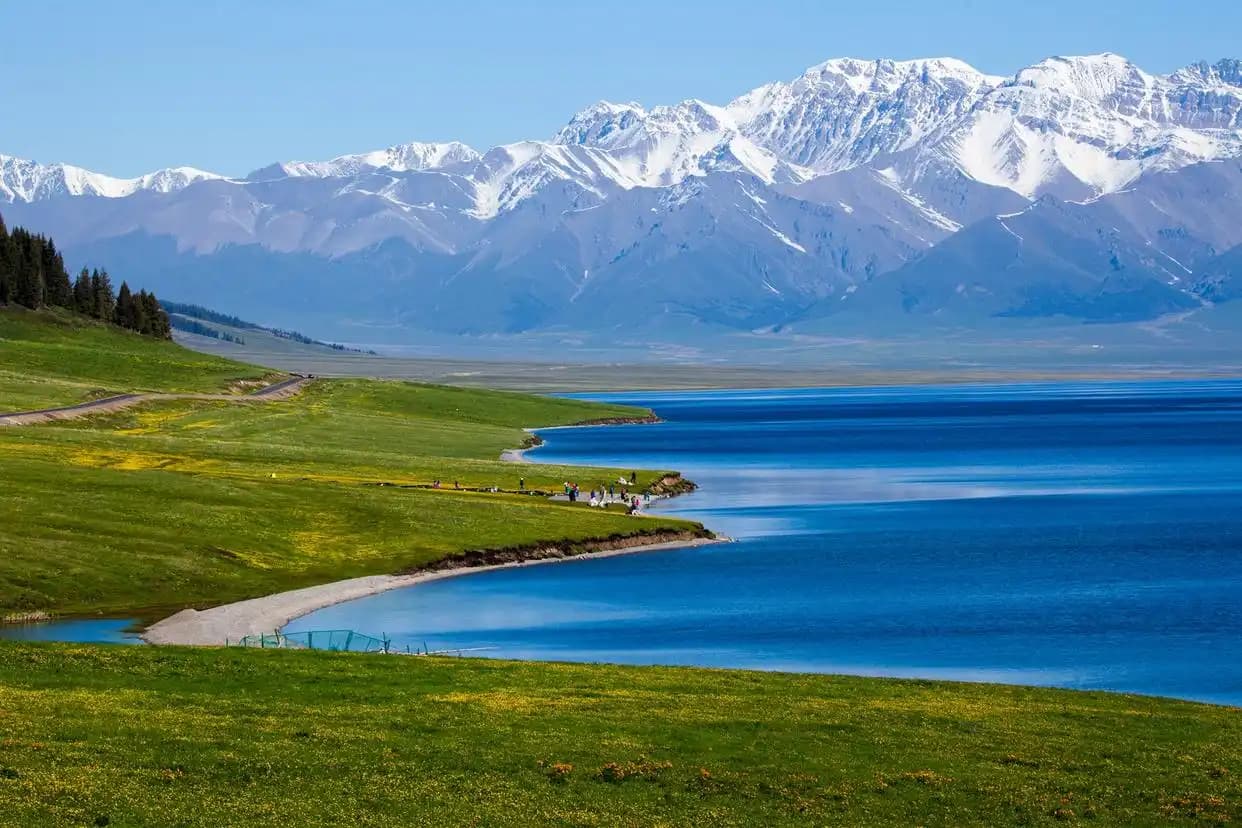
Most of Xinjiang’s famous lakes are alpine and glacial; Bosten is the opposite — a big, shallow, freshwater lake in the Tarim Basin near Korla, fed by the melting Tianshan and ringed by vast reed beds. It’s the largest inland freshwater lake in the region, and a surprise: a green, watery expanse where you expected only desert. Birdwatchers know it; most road-trippers pass Korla without stopping. They shouldn’t.
Bosten sits at the crossroads of the northern and southern routes, which is exactly why it’s an easy add-on.
The Lake and the Reeds
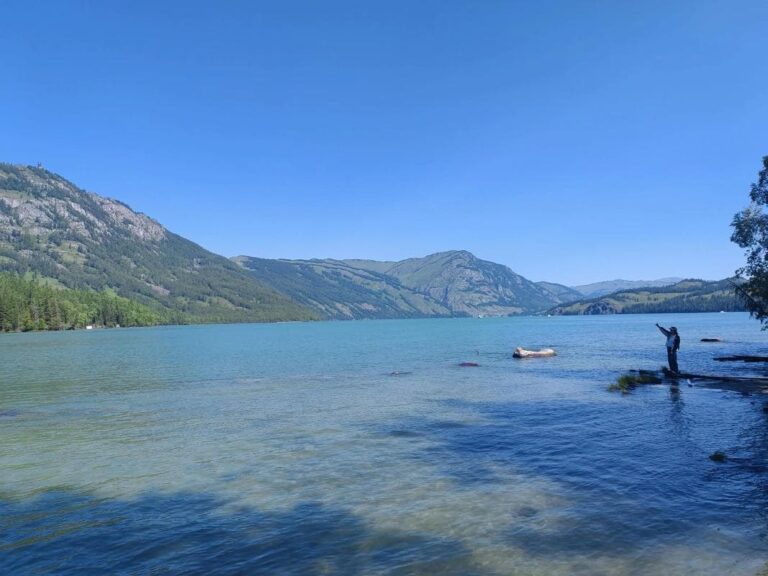
Bosten is enormous — over 1,000 sq km — and shallow, with enormous reed marshes at its edges that are among the largest in China. The water is calm and brackish-fresh, the shores sandy. It feeds the lower Tarim River, making it ecologically key. For visitors, the appeal is the contrast: after days of dust and rock, a horizon of water and rustling reeds feels like another country.
Birds
The reed beds are a major stopover on the Central Asian flyway — geese, ducks, swans, and raptors by the thousands, especially in spring and autumn migration. A hide or a boat trip gets you close. It’s the best birding in Xinjiang and a quiet counterpoint to the headline scenery. Bring binoculars; the birdlife is the point.
Worth pairing with
Ask at the hotel desk the evening before what opened this week, because several of these places shift their hours with the season and the leaflet in the lobby is a year out of date. The stops most people miss are the small ones between the big names. Bosten Lake Xinjiangs Largest sits naturally into a longer Bosten day. With a car the combination that worked for us was the site in the morning, a long lunch somewhere with shade, and the other place in the late afternoon, so two half-days covered a full one. For the part people underestimate, see our [[ulungur-lake-fuhai-xinjiangs-inland-sea-of-fish-beaches-and-winter-ice|Ulungur Lake (Fuhai): Xinjiang’s Inland Sea…]].
A second look on day two
The second time you can skip the obligatory viewpoint and walk along the base of the ridge where the light comes in sideways, and that is the photograph you keep. I did, and the second visit was better, because the first had been spent working out where to stand. Almost nobody does Bosten Lake Xinjiangs Largest twice. If your itinerary has a spare morning, spend it here again rather than at the bigger name on the far side of town. The evening version of that plan is in our [[bosten-lake-xinjiang-travel-guide|Bosten Lake: Xinjiang’s Largest Freshwater…]].
The mistake I made the first time
There is a shuttle, a walk, sometimes another shuttle, and the stretch everybody underestimates is between the second gate and the thing you crossed the country to see. So: work out how far it is from where the vehicle drops you to the feature, then double it. I assumed two hours would be plenty. That is the number of hours the visit needs. It was, in the sense that I saw everything, and it was ruined in the sense that I saw everything at the same hour with the same crowd, and I spent the drive home meaning to come back and never did.
What I would tell the version of me who planned it: put the slow hours in, not the fast ones. The whole point of coming this far is to have the place to yourself for a while, and that only happens if you are willing to be there when it opens or when it is nearly shut. I did come back the following trip, at seven in the morning, and it was a different site. The other mistake is about distance on the map. The gate is not the site.
Who should think twice about {P}
It suits a traveller with a car and a flexible morning. It does not suit a family with a small child who needs a shade stop every forty minutes, and it does not suit anyone in week two of a high-altitude trip still feeling it. The honest version: take half a day if that is all the arithmetic allows, and save the full day for the thing that is genuinely once in a lifetime. I am not going to pretend this is gentle.
There is a lot of unshaded ground, the altitude is real if you came from a low-altitude city, and the swing between the car and the viewpoints is enough to give you a headache on an empty stomach. Who it does suit: someone wanting one strong memory, someone driving the Bosten loop anyway, someone willing to be out before breakfast. Who it does not: anyone whose main goal is a relaxed few days, and anyone who has already done this same thing twice here. If you are short on days, this is the thing to cut, and no guidebook will tell you that. Bosten Lake Xinjiangs Largest is superb, but it is also an hour or more in each direction from everything else you planned, and the drives are what eat the schedule.
It suits people who like landscape and can walk a few kilometres at their own pace.
How to Visit
Bosten is ~20 km from Korla, reachable by car or local transport. Summer is pleasant on the water (swimming and boating areas exist); spring and autumn are best for birds and mild weather. Facilities are basic — a lakeside resort or two, boat trips in season. It pairs naturally with a Korla overnight on the Urumqi–Kashgar traverse, or as a green break on a Tarim-loop drive.
Why Bother
Bosten won’t upstage Kanas or Sayram, but it fills a gap those don’t: lowland water, wetland life, and the simple relief of a lake in the desert. For birders, it’s a destination; for road-trippers, a refreshing pause that proves Xinjiang isn’t only mountain and sand. Stop if you’re near Korla in migration season — the reeds are alive.