Karakul Lake & Muztagh Ata: The Blue Mirror Beneath the ‘Father of Ice Mountains’
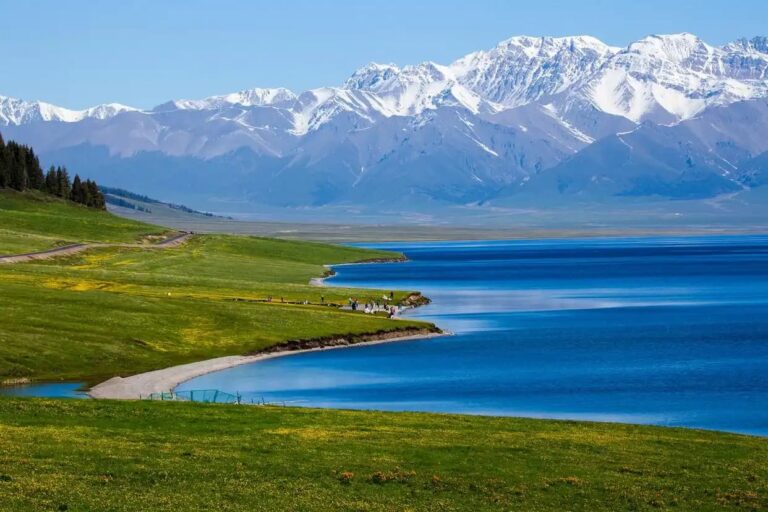
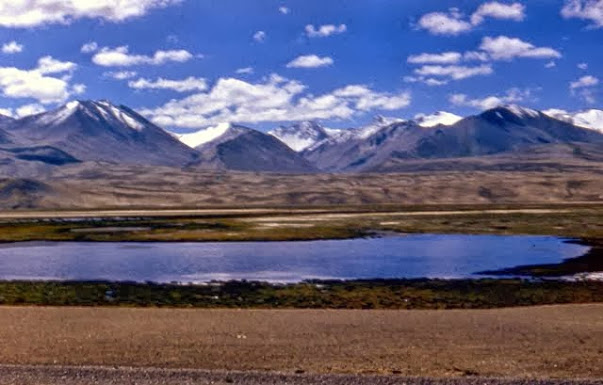
There are alpine lakes, and then there is Karakul. At about 3,600 meters on the Pamir Plateau, southwest of Kashgar, it is a deep, almost black-blue sheet of water held in a bowl of bare rock and ice. Behind it rises Muztagh Ata (7,546 m), the ‘Father of Ice Mountains’ — a broad, symmetrical peak so approachable-looking that early mountaineers called it the easiest 7,000er on earth, right before it humbled them. For anyone building a Xinjiang Travel Guide, Karakul is the single best reason to push past Kashgar toward the border.
It is also one of the few places in the region where the reflection alone justifies the trip. On a still morning the lake doubles Muztagh Ata so perfectly that photographers set alarms for 5 a.m. just to catch it.
Where It Is and How to Get There
Karakul Lake lies roughly 190 km southwest of Kashgar along the G314, the road that becomes the Karakoram Highway. Most visitors reach it as a day trip or overnight from Kashgar, or as a stop on the way to Tashkurgan. The drive itself is the warm-up: the road climbs out of the oasis and onto the plateau, and within an hour the green disappears and the giant mountains begin.
You need a border permit (边境管理区通行证) to travel this far south, issued in Kashgar with your passport. Without it the Gez checkpoint turns you back. Allow a day for the paperwork, or have a hired driver handle it. Foreign travelers should confirm current rules, which shift.
What Makes the Lake Special
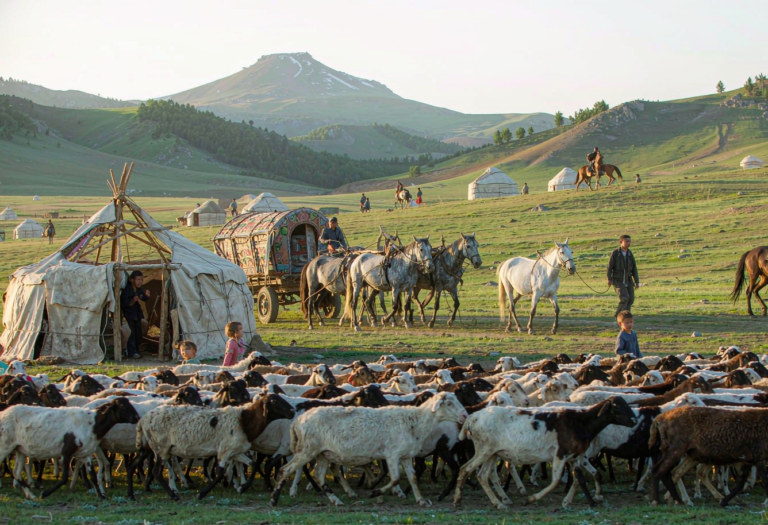
Unlike the turquoise glacial lakes of the north, Karakul reads as deep blue to near-black, colored by its depth and the dark rock it sits in. Two smaller lakes, Bulunkou and Baisha (‘White Sand’) sit along the same road and make easy photo stops on the approach. But Karakul is the centerpiece: a Kirghiz herding camp rings part of the shore, and in season you can ride a yak, visit a yurt, or simply walk the shoreline path.
The light is the variable. Midday is flat; sunrise and sunset turn the water metallic and set the ice peaks on fire. If you can, stay overnight in the lakeside yurt camp or the basic hotel at the shore — the early and late light is worth more than any extra attraction.
The hour I go back for
Go early or go late and the same ground gives you two different subjects. Between the two I would pick the later one, mostly because the early version costs you the rest of the day. Sunrise is the one worth an alarm for. The whole face of Karakul Lake Muztagh Ata turns a colour that does not exist at any other time, and the site is empty enough that you can stand still and hear nothing. By ten the coaches are here, and by one it is an hour of people shuffling past.
I have come to like the last forty minutes before the gate shuts, when the groups have gone and the staff are sweeping, because that is when you can look up properly instead of squeezing a shoulder past strangers. Whatever the guidebook says about golden hour, go on a weekday. Midday is the hour to avoid, not the hour to schedule. The light is only free of company on a Tuesday. Everything goes flat, the shade disappears, and the temperature on an open plateau rises in a way that stops you caring about photographs.
The short version, with the numbers, is in our [[karakul-lake-muztagh-ata-pamir-plateau-2|Karakul Lake & Muztagh Ata: The Pamir…]].
Not everyone should build a trip around this
It suits people who like landscape and can walk a few kilometres at their own pace. It suits a traveller with a car and a flexible morning. The honest version: take half a day if that is all the arithmetic allows, and save the full day for the thing that is genuinely once in a lifetime. It does not suit a family with a small child who needs a shade stop every forty minutes, and it does not suit anyone in week two of a high-altitude trip still feeling it. I am not going to pretend this is gentle.
There is a lot of unshaded ground, the altitude is real if you came from a low-altitude city, and the swing between the car and the viewpoints is enough to give you a headache on an empty stomach. Who it does suit: someone wanting one strong memory, someone driving the Xinjiang loop anyway, someone willing to be out before breakfast. Who it does not: anyone whose main goal is a relaxed few days, and anyone who has already done this same thing twice here. If you are short on days, this is the thing to cut, and no guidebook will tell you that. Karakul Lake Muztagh Ata is superb, but it is also an hour or more in each direction from everything else you planned, and the drives are what eat the schedule. I wrote the driving side up in our [[karakul-lake-muztagh-ata-pamir-plateau|Karakul Lake & Muztagh Ata: Trekking to the…]] as well.
When to Go
Summer (June–August) is mild by day and cold at night, with the most reliable road conditions. Spring and autumn are quieter and often clearer, but colder. Winter closes some facilities and can bring snow on the pass, though the frozen lake has its own stark beauty. Whenever you go, pack for altitude: the lake is high enough that many feel it, especially combined with the even higher Khunjerab Pass further south.
A Practical Note on Altitude
At 3,600 meters, Karakul is no joke for the body. Move slowly on arrival, drink water, and skip the alcohol the first night. If you are continuing to Tashkurgan (3,100 m) or Khunjerab (4,700 m), treat Karakul as an acclimatization step, not a photo dash. The payoff is a view that, once seen, explains why the Pamir has obsessed travelers for two thousand years.