Hotan: More Than Just Jade — A Visitor’s Guide to Xinjiang’s Southern Gateway
Hotan: A City I Almost Skipped (And Why I’m Glad I Didn’t)
I almost didn’t go to Hotan (和田). On the map, it sits at the very southwestern edge of Xinjiang, a long way from everywhere else on a typical itinerary. From Kashgar, it’s a 6-hour train ride or a 1-hour flight. From Urumqi, it’s more than 1,000 kilometers south. When I was planning my 2023 southern Xinjiang trip, Hotan seemed like a detour — an extra day or two that I wasn’t sure would be worth it.
Last updated: July 15, 2026 · Written by Karl Huang, a Xinjiang travel specialist who has spent time across the region. Practical details are cross-checked against official tourism, transport, and border-regulation sources.
I’m glad I ignored my own doubts. Hotan turned out to be one of the most culturally distinctive cities I visited in Xinjiang. Yes, it’s famous for jade (and the jade market is worth seeing), but what I remember most is the silk workshop where I watched a woman unravel silk from a cocoon with her bare hands, the carpet workshop where three generations of the same family were tying knots on a single rug, and the night market where I ate roasted eggs on a stick (more on that later).
This guide covers everything that makes Hotan worth visiting — and there’s more than you might think.
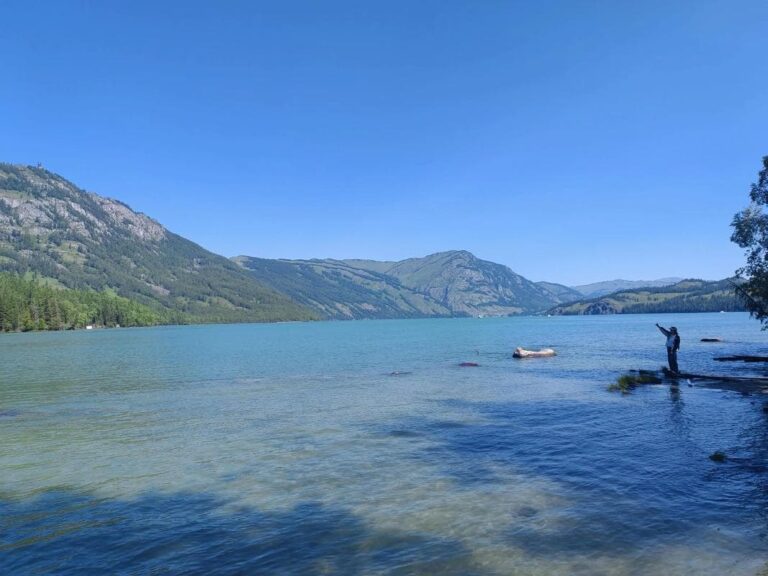
{IMG1}A Quick Orientation to Hotan
Hotan (also spelled Hetian) is the southernmost major city in Xinjiang, sitting in the Hotan Prefecture of the Xinjiang Uyghur Autonomous Region. It’s part of the Tarim Basin, and the landscape around the city is mostly desert (the Taklamakan Desert begins just north of the city). The Hotan River runs through the city, providing water for the abundant orchards and farmland in the oasis.
The city has a distinct southern Xinjiang feel — more Uyghur-owned businesses, more traditional architecture, and a slower pace than Urumqi or even Kashgar. Hotan has been a crossroads on the southern Silk Road for over 2,000 years, and that history is visible everywhere, from the mud-brick workshops to the bustling bazaars.
More Than Jade: What to Do in Hotan
1. Visit a Traditional Silk Workshop
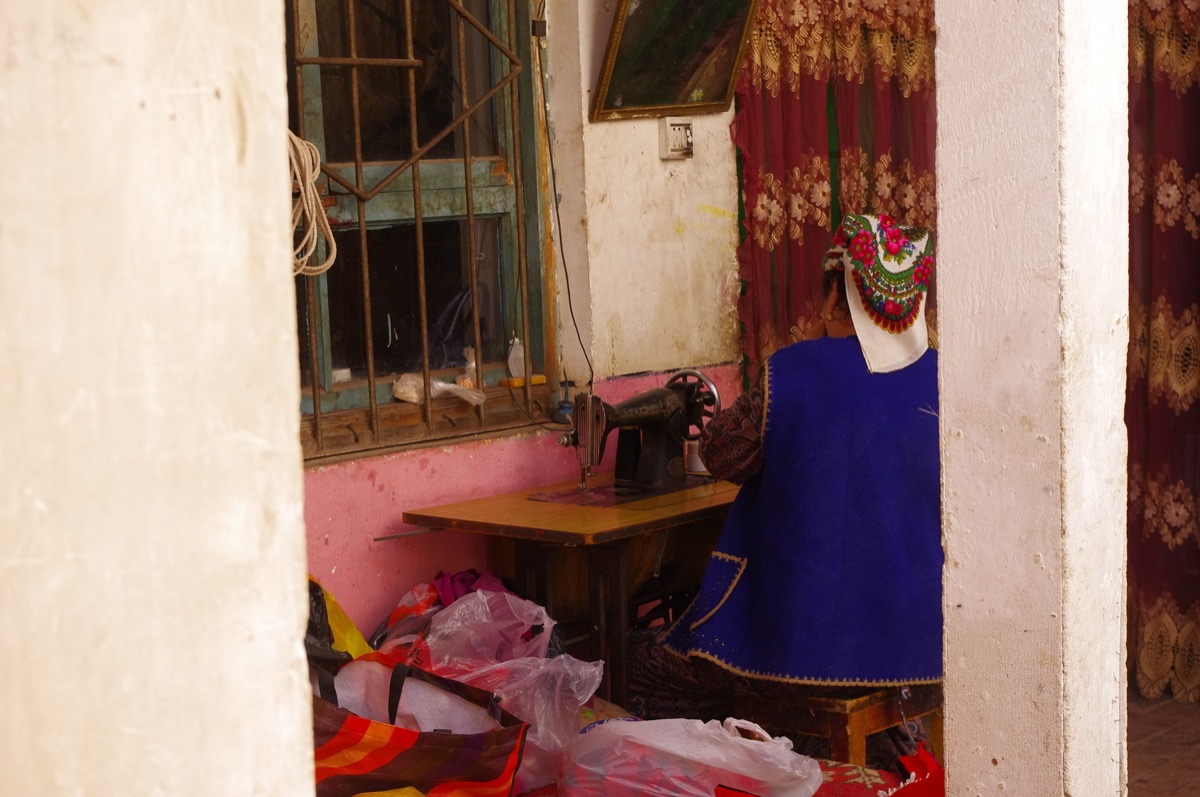
Hotan has been a center of silk production for centuries. The process is fascinating and entirely manual. At a workshop I visited on the outskirts of the city, I watched the full process:
- Boiling the cocoons: Silkworm cocoons are boiled to soften the sericin (the gum that holds the cocoon together).
- Finding the end of the filament: A worker uses a bamboo brush to find the loose end of the silk filament, which can be up to 1,000 meters long in a single cocoon.
- Reeling: The filaments from several cocoons are combined and reeled onto a spool.
- Dyeing: The raw silk is dyed using natural dyes (including pomegranate peel, walnut shells, and indigo).
- Weaving: The dyed silk is woven into fabric on a traditional wooden loom.
The entire process, from cocoon to finished fabric, can take weeks. And the result — a bolt of Hotan silk — is something you won’t find in most other places. A small scarf made from locally produced silk costs about 150–300 RMB. A full bolt of fabric can cost 1,000 RMB or more.
2. Watch Carpet Weavers at Work
Hand-woven carpets are another Hotan specialty. The carpets are made using traditional Uyghur designs — geometric patterns, stylized flowers, and occasionally pictorial scenes. The weaving process is labor-intensive: a typical 2m × 3m carpet can take 3–6 months to complete, depending on the knot density.
I visited a carpet workshop near the Hotan Bazaar where an elderly weaver named Memet (he told me his name, but I’m spelling it phonetically) showed me how the knots are tied. He’d been weaving carpets for 40 years, and he could tie about 8,000 knots a day. His current project, a carpet with a deep red background and intricate blue and gold patterns, had taken him four months so far, and he estimated it would take another two.
If you’re interested in buying a carpet, be prepared to spend. A small (1m × 1.5m) carpet costs 2,000–5,000 RMB depending on quality. Larger, finer carpets can cost 20,000 RMB or more. And yes, you can ship them home — the shop I visited offered international shipping (though I can’t vouch for the reliability).
3. See the Walnut King Tree (核桃王树)
About 15 kilometers from Hotan city center is a 1,400-year-old walnut tree that is, quite literally, a king among walnut trees. The tree has a trunk circumference of about 6 meters (20 feet) and a canopy that covers more than 300 square meters. It’s still producing walnuts.
The site includes a small park and some information boards (in Chinese and Uyghur) about the tree’s history. It’s not a world-class attraction, but it’s a nice spot for a walk, and the tree itself is genuinely impressive. There’s also a Fig King Tree (无花果王) nearby — a massive fig tree that’s about 500 years old and covers an area of about 1.2 mu (roughly 800 square meters).
4. Try Rose Jam and Rose Naan
Hotan is known for its roses, which are used to make rose jam (玫瑰花酱) and rose naan (玫瑰馕). The roses are grown in local orchards, and the petals are harvested in May and June, then cooked with sugar to make a fragrant, deep-red jam.
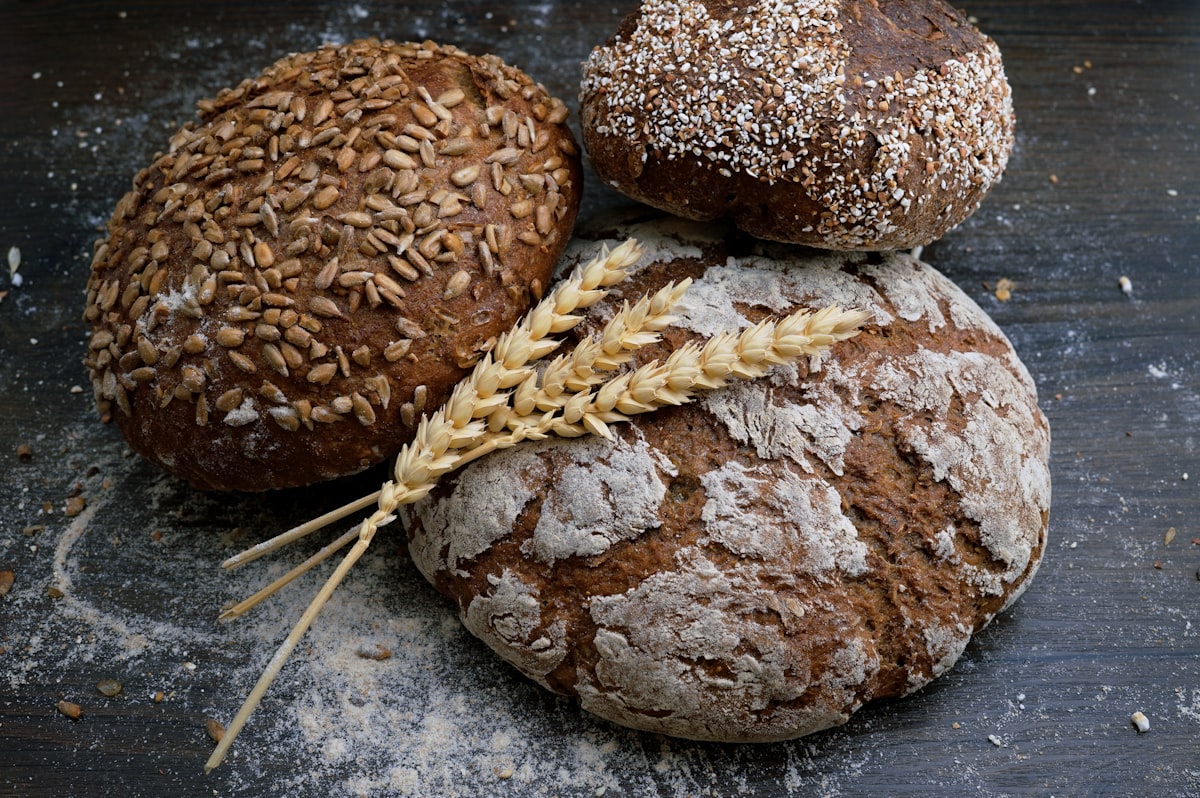
Rose jam is eaten on naan, mixed into yogurt, or simply eaten by the spoonful. It’s intensely floral and very sweet. Rose naan is a variation of the standard Uyghur flatbread, with rose jam mixed into the dough before baking. The result is a bread that’s slightly sweet, intensely aromatic, and completely unlike any bread I’d eaten before visiting Hotan.
You can buy rose jam at the Hotan Bazaar for about 20–30 RMB per jar. It makes a great souvenir (and it’s lighter than jade or carpets).
5. Hotan Night Market: The Roasted Egg Experience
The Hotan Night Market (和田夜市) is smaller than the one in Kashgar but no less lively. It’s held in the city center in the evenings, and the food stalls offer all the standard Xinjiang night market fare (kebabs, naan, laghman) plus some specialties you won’t find elsewhere.
The most famous (or infamous) is roasted eggs (烤蛋). Vendors take eggs — chicken eggs, duck eggs, and sometimes even goose eggs — crack them into a bowl, mix in seasonings (salt, cumin, chili), pour the mixture back into the eggshell, and roast them slowly in a bed of hot sand. The result is a kind of savory egg custard, eaten directly from the shell with a spoon.
I tried it. It was… interesting. The texture is somewhere between a hard-boiled egg and a baked custard, and the seasoning gives it a savory, slightly spiced flavor. Is it delicious? Not exactly. Is it worth trying for the experience? Absolutely.
My Jade Market Experience: Looking for Treasure in the Stalls
I’d be lying if I said I didn’t go to the Hotan Jade Market (和田玉市场). Hotan jade (Hetian yu) is famous throughout China — it’s a type of nephrite jade that comes in several colors, with white (“mutton fat” jade) being the most valuable. The market in Hotan is where much of the region’s jade trade happens.
I spent two hours wandering through the stalls, looking at pieces of jade in every imaginable form: raw stones, carved pendants, bracelets, statues, and beads. The prices ranged from 50 RMB for a small, probably-fake pendant to tens of thousands for a piece of high-quality white jade.
Here’s what I learned: I have no idea how to tell real jade from fake jade. I looked at two similar-looking pendants — one priced at 80 RMB, the other at 8,000 RMB — and I couldn’t tell the difference. A vendor tried to explain the difference in translucency and texture, but honestly, without experience or expert guidance, buying jade in Hotan is basically gambling.
I didn’t buy anything. But I enjoyed the atmosphere of the market — the bargaining, the stacks of stones on blankets, the vendors calling out to passersby. Even if you’re not planning to buy jade, the market is worth visiting for the spectacle.
How to Get to Hotan
From Kashgar
- Train: There are daily trains from Kashgar to Hotan. The journey takes about 6 hours. A second-class seat (硬座) costs about 80 RMB. The train is a good option if you want to see the landscape along the way (it’s mostly desert, but there are some beautiful dune landscapes).
- Flight: The flight from Kashgar to Hotan takes about 1 hour and costs 400–800 RMB depending on the season. Much faster, but you miss the scenery.
- Bus: Long-distance buses run from Kashgar to Hotan. The trip takes 7–8 hours on the desert highway. Cheaper than the train (about 60 RMB) but less comfortable.
From Urumqi
Flights from Urumqi to Hotan take about 2 hours and cost 600–1,200 RMB. There’s also a train, but it’s a very long journey (18+ hours), so I’d only recommend it if you enjoy long train rides.
Where to Stay in Hotan
Hotan has a decent range of accommodation, though it’s not as developed as Kashgar or Urumqi. I stayed at a mid-range hotel near the city center for 280 RMB per night — clean, comfortable, and with a decent breakfast buffet. Budget options (hostels and guesthouses) start at about 80–120 RMB per night. High-end options (4-star hotels) are available but limited.
When to Visit Hotan
The best time to visit Hotan is September to October. Here’s why:
- Weather: Hotan is in the desert, and summers are extremely hot (40°C / 104°F is common in July and August). September and October are pleasantly warm (20–30°C / 68–86°F) without being unbearably hot.
- Fruit season: This is when Hotan’s famous dates (jujubes) and grapes are harvested. The fruit in Hotan is exceptional — sweeter and more flavorful than what you’ll find in most markets.
- Rose harvest: If you’re interested in seeing the rose jam production process, May and June are the months when roses are harvested and processed.
A Suggested 1-2 Day Hotan Itinerary
One Day (Highlights)
- Morning: Visit a silk workshop and a carpet workshop (allow 2–3 hours total).
- Lunch: Eat at a local restaurant near the city center (try the dapanji or laghman).
- Afternoon: Visit the Walnut King Tree and the Fig King Tree (allow 2 hours).
- Late afternoon: Explore the Hotan Bazaar and the jade market.
- Evening: Dinner at the night market (try the roasted eggs).
Two Days (More Relaxed)
Day 1: Same as above.
Day 2: Visit the Hotan Museum (small but informative), explore the old town area, and visit an orchard (many orchards around Hotan offer tours and fruit tasting in season).
FAQ: Visiting Hotan
Is Hotan safe for foreign travelers?
Yes. Like most of Xinjiang, Hotan has a visible security presence, but I never felt unsafe. The local people I interacted with — in workshops, restaurants, and shops — were friendly and welcoming. As always, dress modestly (especially if visiting religious or traditional sites) and be respectful of local customs.
Do I need to speak Chinese to get around Hotan?
It helps, but it’s not essential. Many people in the bazaar and tourism areas speak at least some basic phrases in Uyghur and Chinese. English is not widely spoken. I used a combination of Google Translate, hand gestures, and my very limited Chinese to get by. If you’re comfortable with uncertainty and improvisation, you’ll be fine.
Can I buy real jade in Hotan?
Yes, but buyer beware. There is a lot of fake or low-quality jade sold alongside genuine pieces. If you’re serious about buying jade, do your research beforehand or go with someone who knows jade. Alternatively, buy from a reputable shop rather than from a market stall. Expect to pay more at a shop, but you’ll have more confidence in what you’re buying.
How long should I spend in Hotan?
One full day is enough to see the main sights (silk workshop, carpet workshop, bazaar, night market). Two days lets you explore more leisurely and maybe visit an orchard or take a day trip to the Taklamakan Desert edge (which is only about 30 km from the city). I spent two days in Hotan and felt it was the right amount of time.
What’s the food like in Hotan compared to other parts of Xinjiang?
The food in Hotan is similar to other southern Xinjiang cities (lots of kebabs, naan, laghman, and dapanji), but there are some local specialties. In addition to the roasted eggs I mentioned, Hotan is known for date-based sweets (the dates here are excellent) and rose-flavored everything. If you have a sweet tooth, you’ll be in heaven.