Uyghur Culture in Xinjiang: A Traveler’s Introduction
Understanding Uyghur Culture in Xinjiang: A Traveler’s Introduction

Last updated: July 15, 2026 · Written by Karl Huang, a Xinjiang travel specialist who has spent time across the region. Practical details are cross-checked against official tourism, transport, and border-regulation sources.
Xinjiang is not just a land of dramatic landscapes — it’s also home to one of the most distinctive cultures along the ancient Silk Road. The Uyghur people, with their Turkic-language heritage, Islamic traditions, and oasis-based way of life, have shaped the region’s identity for centuries. For travelers who want more than just scenery, understanding Uyghur culture adds a profound layer to any Xinjiang journey.
This guide introduces the essentials: who the Uyghurs are, where to experience their culture respectfully, and how to engage with local communities in a way that is thoughtful, legal, and genuinely enriching.
Who Are the Uyghurs?
The Uyghurs are a Turkic-speaking, predominantly Muslim ethnic group with roots in the oasis cities of the Tarim Basin. Their language belongs to the Karluk branch of the Turkic family, closely related to Uzbek, and their cultural DNA blends Central Asian, Persian, and Chinese influences accumulated over more than a millennium of Silk Road exchange.
Historically, Uyghur communities flourished in the major oasis hubs — Kashgar, Turpan, Kuqa, and Khotan — each developing its own architectural style, dialect, and culinary traditions. Today, Uyghurs make up the largest ethnic group in southern Xinjiang (South Xinjiang), and their presence is equally visible in Urumqi and the Ili Valley.
For travelers, the most accessible entry points into Uyghur culture are Kashgar Old City, Turpan’s oasis neighborhoods, and the Uyghur household lanes of Kuqa. Each offers a different facet of the same living tradition.
Language, Script, and Daily Life
The Uyghur language uses a modified Arabic script and is spoken widely in southern Xinjiang. While Mandarin Chinese is the official language and is used in schools and government, many Uyghurs remain more comfortable conversing in their mother tongue. In Kashgar’s Old City, it’s common to hear Uyghur on the street, in tea houses, and in market negotiations.
For travelers, a few phrases go a long way:
- Assalamu eleykum — “Peace be upon you” (standard greeting)
- Rahmat — “Thank you”
- Yakhshi — “Good / OK”
Even attempting these opens doors. Uyghur hospitality is legendary: if you’re invited for tea, accept. It’s not a transaction — it’s a cultural norm.
Daily life in Uyghur communities still revolves around the bazaar (market) system, the Friday congregational prayer, and seasonal agricultural rhythms (grape harvest in Turpan, melon season in Hami, walnut gathering in Hotan). Understanding these cycles helps you time your visit for maximum cultural exposure.
Islamic Heritage and Architecture
Islam arrived in the Tarim Basin in the 10th–11th centuries and gradually became the dominant faith. The architectural legacy of that transformation is visible in every Uyghur town.
Id Kah Mosque (Kashgar)
The Id Kah Mosque (艾提尕尔清真寺) is the largest in Xinjiang and the spiritual center of Kashgar. Its courtyard — a tree-lined sahn with a pool for ritual ablution — is a masterpiece of Central Asian Islamic design: repetitive arches, glazed tile accents, and a human scale that feels peaceful rather than imposing.
Visitor note: Non-Muslim tourists are welcome in the outer courtyard during designated hours, but the interior prayer hall is not open to visitors during the five daily prayers. Dress modestly (long pants, covered shoulders; women should carry a headscarf). Removal of shoes is required before entering prayer spaces.
Abakh Khoja Mausoleum (Kashgar)
The Abakh Khoja Mausoleum (阿帕克霍加麻扎), also known as the Xiangfei Garden, is the dynastic shrine of the Afāq Khoja lineage. Architecturally, it’s the closest thing to Samarkand tilework you’ll see inside China: turquoise domes, cobalt arabesques, and glazed brick geometry set within a walled garden.
The site is both a place of worship and a cultural landmark. The adjacent museum wing displays clothing, genealogy documents, and context on the Khoja family’s role in 17th–18th century Kashgaria.
Kuqa’s Mosque Architecture
In Kuqa Old Town, smaller neighborhood mosques — with sun-dried brick minarets and carved wooden doors — offer a more intimate glimpse of religious life. The Kuqa Royal Palace (库车王府) also contains a prayer hall open to visitors, contextualizing the intersection of secular and spiritual authority in the Qiuci Kingdom legacy.
Uyghur Cuisine: A Flavor Journey
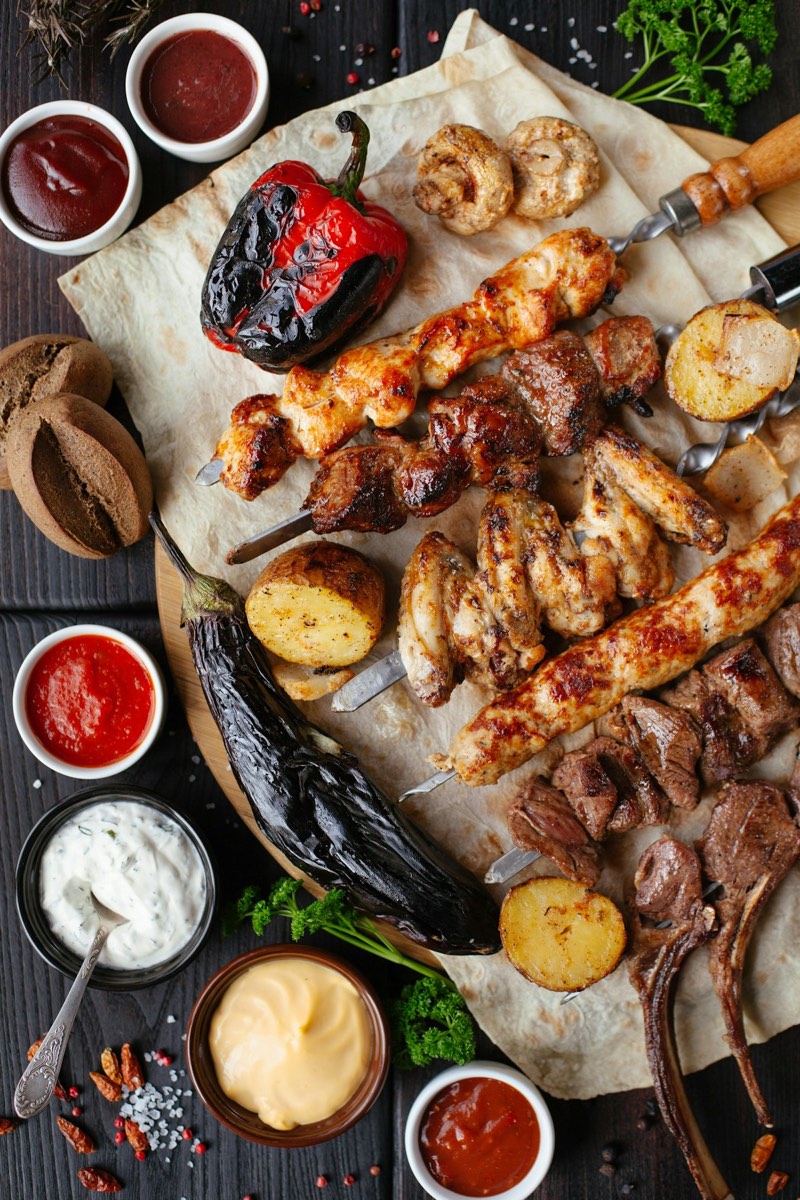
Uyghur food is one of the most direct ways to experience the culture. It’s also one of the few aspects that translates perfectly without a language dictionary.
Core Dishes Every Traveler Should Try
- Laghman (拉面) — Hand-pulled noodles stir-fried with bell peppers, tomatoes, onions, and your choice of meat. The noodle-pulling is often done in an open kitchen; it’s dinner and a show.
- Polo (抓饭) — “Grab rice” — a pilaf of carrot, onion, and lamb slow-cooked in sheep fat, served with a hard-boiled egg on the side. In Kashgar, it’s a breakfast staple.
- Samsa (烤包子) — Flaky pastry pockets filled with minced lamb and onion, baked in a vertical clay oven (tandoor). Best eaten hot from a street-side stall.
- Chuanr (烤肉串) — Skewered lamb, charcoal-grilled with cumin and chili flakes. The night food street near Kashgar’s East Gate is the place for this.
- Naan (馕) — Flatbread baked in a tandoor, ranging from plain to seeded to sweet (with raisins or honey). Every Uyghur household has a designated naan oven (tonur) in the courtyard wall.
- Dugha (酸奶) — Thick, tart yogurt, often served with honey or as a drink mixed with water and salt.
Where to Eat
The most authentic meals are in family-run restaurants where the menu is pencil-written in Uyghur (or nonexistent — just point). In Kashgar Old City, the alleys east of Id Kah Square hide excellent hole-in-the-wall spots. In Turpan, the Grape Valley has family compounds offering home-cooked meals in season.
Cultural etiquette: Meals are often communal. If you’re invited to share, wait for the eldest person to start, and use your right hand if eating without utensils.
Music, Dance, and the Twelve Muqam
Uyghur culture is inseparable from its musical heritage. The Twelve Muqam (十二木卡姆) is a vast cycle of poems, songs, and dances that was inscribed on UNESCO’s Representative List of the Intangible Cultural Heritage of Humanity in 2008.
Each Muqam is a suite — part classical composition, part folk improvisation — performed with instruments including:
- Dutar — Two-stringed lute, soft and melodic
- Rawap — Five-stringed lute with a resonating box, brighter and more percussive
- Dap — Frame drum, providing the rhythmic backbone
In Yarkand (Shache), the spiritual home of the Muqam, you can sometimes find informal teahouse performances. In Kashgar, the Old City’s cultural centers occasionally host arranged demonstrations. Ask locally — these are not always on a fixed schedule.
Uyghur dance is characterized by rhythmic head turns, expressive hand gestures, and rapid toe-and-heel work. In Turpan’s Grape Valley, folk dance performances are staged in season; they’re tourist-oriented but still energetic and culturally rooted.
Where to Experience Uyghur Culture Firsthand
1. Kashgar Old City (喀什老城)
This is the single best place to immerse yourself. The Old City is a UNESCO-listed living neighborhood of ~130,000 people. Its narrow, multilevel alleys are lined with carved poplar doors, rooftop tea houses, and artisan workshops.
Don’t miss:
- Sunday Livestock Market (星期天大巴扎) — a raw, traditional market held on Sunday mornings, ~5 km from the city center
- Rooftop tea houses at golden hour
- The wood-carving and coppersmith workshops in the northwest grid
2. Turpan’s Oasis Neighborhoods
Turpan offers a different window: the Karez irrigation system, the Grape Valley, and the Jiaohe Ancient City together tell the story of how Uyghur communities survived — and thrived — in one of the world’s hottest, driest places.
The Karez Folk Custom Garden explains the engineering; the living neighborhoods show the social organization that the system made possible.
3. Kuqa Old Town
Less polished than Kashgar, more authentic for it. Kuqa was the capital of the ancient Qiuci Kingdom, and its Uyghur culture carries that deep historical layering. The Royal Palace, the old lanes, and the nearby Subash Ruins (a mountaintop Buddhist monastery complex) together span 1,500 years of cultural evolution.
4. The Xinjiang Regional Museum (Urumqi)
Before heading into the field, spend 2–3 hours here. The ethnic minority galleries display Uyghur costumes, musical instruments, and yurt interiors. It’s free (advance reservation required), air-conditioned, and gives you the framework that makes everything else click into place.
Practical Etiquette for Respectful Cultural Engagement
Uyghur communities are welcoming, but they are also traditional. A few guidelines ensure your presence is appreciated rather than merely tolerated:
- Ask before photographing people — A smile and a gesture with your phone is the universal preamble. If someone waves you off, smile and move on.
- Dress modestly at religious sites — Covered knees and shoulders are the minimum. Women: a headscarf is not forced but is appreciated at shrines and mosques.
- Remove shoes before entering — Homes, some tea houses, and all mosque interiors require this.
- Accept tea invitations gracefully — If you’re offered tea, it’s impolite to refuse outright. You can take one cup and politely indicate you need to move on.
- Don’t bring alcohol to religious or family settings — Uyghur culture is Muslim; even if your hosts don’t practice strictly, the respect norm is acknowledged.
- Support local artisans directly — Buy that carved wooden bowl, those dried fruit bags, that hand-woven rug. It sustains the intangible heritage you came to see.
Recommended Reading and Further Context
To deepen your understanding before traveling, consider:
- Visiting the Xinjiang Regional Museum in Urumqi on Day 1
- Reading about the Twelve Muqam cultural context (check local cultural centers for performances)
- Exploring Kashgar Old City with a locally recommended guide who can explain the alley logic and door carvings
For itinerary planning that incorporates cultural stops, see our North Xinjiang Loop: Kanas, Hemu, and Sayram Lake in 7 Days guide and our South Xinjiang Cultural Tour: Kashgar, Tashkurgan, and the Pamir Highway article.
Conclusion: Culture as a Living Conversation
Uyghur culture in Xinjiang is not a museum exhibit. It’s a living, breathing way of life that has adapted to deserts, mountains, and geopolitical shifts for over a thousand years. As a traveler, your role is to listen, observe, and engage with humility.
The reward is access — not just to beautiful architecture or delicious food, but to a worldview shaped by the Silk Road’s longest continuous cultural conversation. And that is something no scenery alone can provide.
Featured image alt text: Uyghur cultural elements in Xinjiang — traditional architecture, music, and daily life in Kashgar and Turpan.
Internal links:
Questions I get at the travel desk
What is the best time to visit Sayram Lake?
June through September offers the best weather with temperatures between 15-25°C and wildflowers in full bloom around the lake.
How do I get to Sayram Lake from Urumqi?
Sayram Lake is about 450km from Urumqi. You can drive via the G30 highway (5-6 hours), take a bus from Urumqi West Bus Station (6-7 hours), or hire a private driver for the most flexibility.
Is there an entrance fee for Sayram Lake?
Yes, the entrance fee is approximately 70 RMB per person. Additional fees may apply for the lake island boat tour (about 100 RMB) and the scenic area shuttle bus.
Can I camp near Sayram Lake?
Camping is allowed in designated areas around the lake. The best spots are on the eastern shore where you can wake up to stunning sunrise views over the water.
What should I pack for a trip to Sayram Lake?
Even in summer, temperatures can drop significantly at night. Bring layers, a windproof jacket, sunscreen (UV is strong at high altitude), and comfortable walking shoes.