Ultimate Travel Guide to Xinjiang Turgen Apricot Valley: Step Into a Medieval Pink Sea Left by Time
Last updated: July 15, 2026 · Written by Karl Huang, a Xinjiang travel specialist who has spent time across the region. Practical details are cross-checked against official tourism, transport, and border-regulation sources.
In early April, while most parts of China are just welcoming the first signs of spring, a centuries-old natural spectacle unfolds quietly in the valleys of Yili, Xinjiang. A trip to Turgen Apricot Valley takes you deep into the world’s largest primitive wild apricot forest, offering a breathtaking visual and spiritual journey amid snow-capped mountains, grasslands and seas of blossoms.
For international travelers seeking unique, unspoiled natural scenery, Xinjiang Turgen Apricot Valley is an irreplaceable destination. Free from over-commercialization, it boasts over 30,000 mu of wild apricot blossoms in full, unbridled bloom, weaving a pure landscape intertwined with Kazakh nomadic culture. This is far more than a flower-viewing trip—it is an in-depth journey into the heart of northwest China, a chance to understand the profound bond between the land and all life.
What is Turgen Apricot Valley? Unveiling the Lesser-known stops
Officially named Turgen Apricot Valley, this scenic spot is located in Turgen Township, Xinyuan County, Yili Kazakh Autonomous Prefecture, Xinjiang Uygur Autonomous Region, China. Spanning over 30,000 mu (approximately 20 square kilometers), this apricot forest is not a man-made orchard, but the world’s largest primitive wild apricot forest dating back to the Middle Ages.
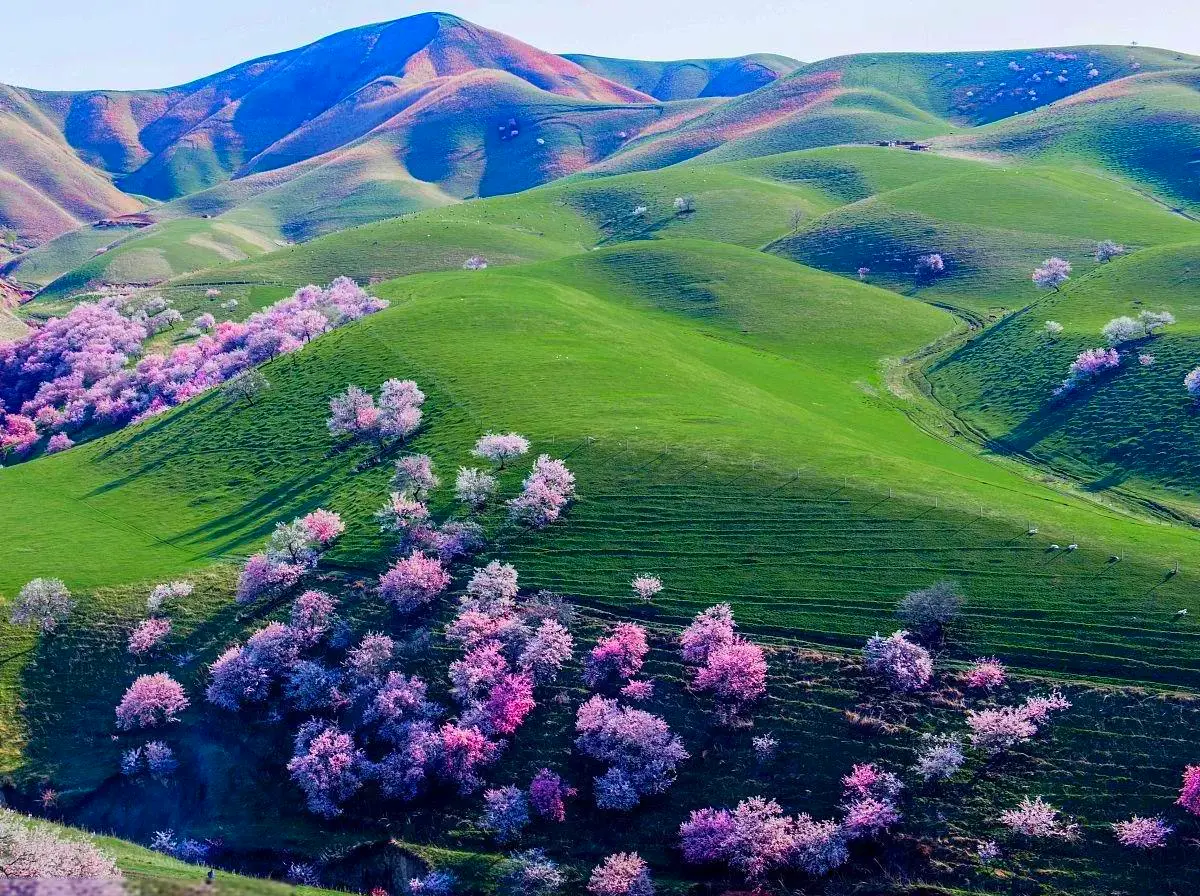
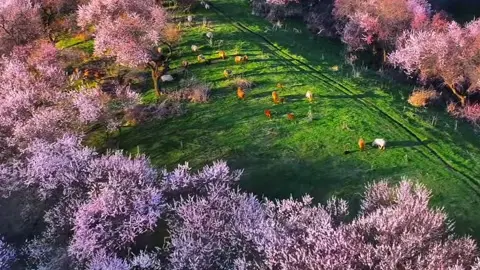
Geologists believe these apricot trees grew from apricot kernels discarded by ancient Silk Road caravans, evolving into an ecological wonder over hundreds of years. Clustered along rolling slopes at elevations of 1,300 to 2,200 meters, the trees burst into pink and white blossoms every April, submerging the entire valley in a floral tide. Paired with the snow-capped Tianshan Mountains in the distance and freshly greened grasslands at their feet, this scenery was hailed as China’s Most Beautiful Spring by Chinese National Geography.
At its core, a visit to Turgen Apricot Valley is a celebration of pure, untamed natural life.
Why Choose Turgen Apricot Valley? 5 Unmatched Attractions
A trip to Turgen Apricot Valley promises these one-of-a-kind experiences:
1. World-Class Natural Wonder
The simultaneous bloom of 30,000 mu of floral sea is a rare sight globally in terms of scale and wild beauty. The blossoms grow in untamed profusion—gnarled old branches adorned with fresh blooms, forming a perfect layered palette with snow-capped peaks (such as Khan Tengri Peak), dark green spruce forests and tender green grasslands. This iconic “snow mountain-forest-grassland-blossom sea” quartet is the signature landscape of Turgen Apricot Valley.
2. Ultimate Photography & Visual Experience
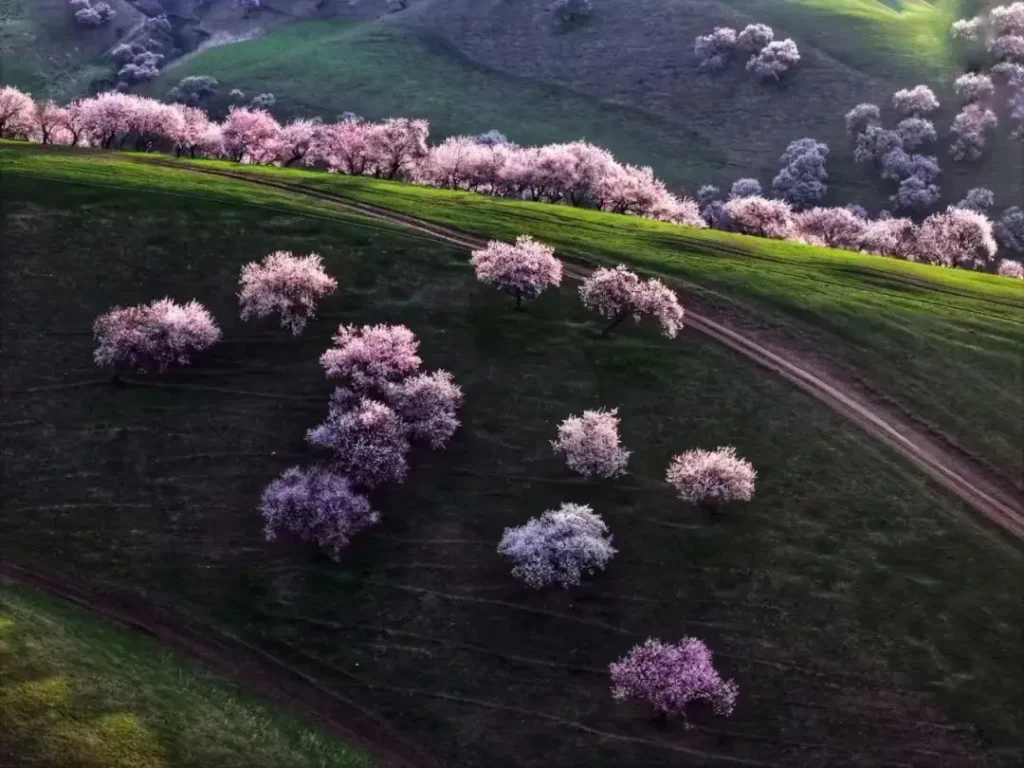
It is a paradise for photography enthusiasts. The best shooting times are one hour after sunrise (approx. 8:00–10:00) and one hour before sunset (18:00–20:00). Mornings often bring advection fog blanketing the valley, with soft, layered sunlight filtering through the mist onto the blossoms; at dusk, the setting sun gilds the snow peaks, wrapping the pink blossoms in warm twilight. The famous S-shaped pastoral path and “Ladder Pasture” are must-visit photo spots, where winding trails are framed by apricot blossoms, with flocks of sheep scattered like pearls across the slopes.
3. Immersive Kazakh Nomadic Culture
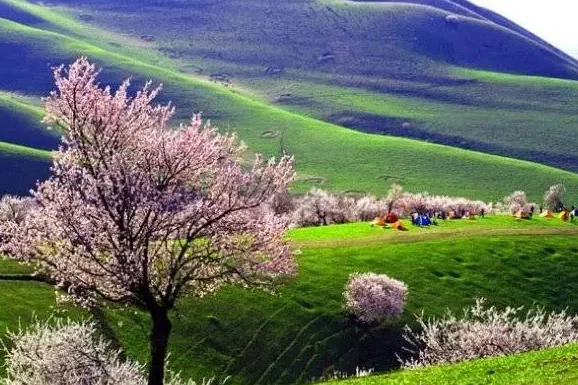
A trip to Turgen Apricot Valley is about more than just viewing flowers. You can stay in traditional Kazakh yurts and experience authentic nomadic life. Wake up in a yurt to a bowl of freshly brewed salty milk tea paired with borsak (fried Kazakh pastry). Try horseback riding (approx. 50–80 yuan per hour) to venture deep into the blossom groves, where hooves tread on petal-strewn paths, or learn basic sheep herding under the guidance of local herders. At night, gather around the stove to listen to epic folk songs played on the dombra, and gaze at the dazzling starry sky free of light pollution.
4. Limited-Time Spring Spectacle
The apricot blossom season is extremely short, lasting only 7 to 10 days, with the prime viewing window generally falling between April 10 and 20 (slightly adjusted annually based on temperatures). This fleeting beauty makes every successful trip to Turgen Apricot Valley a precious, unforgettable experience, witnessing a concentrated, explosive burst of life.
5. Balance of Adventure & Serenity
You can hike along challenging ridge lines, or simply picnic on the valley meadows and watch clouds drift by. The scenic area is moderately developed, preserving its primitive charm while offering basic footpaths and viewing platforms for safety. This sweet spot between wilderness exploration and comfortable travel is part of its unique allure.
Plan Your Trip: A Complete Guide from Transport to Budget
A perfect journey to Turgen Apricot Valley requires careful planning. Below is a breakdown of practical travel information.
Best Time to Visit & Sample Itinerary
- Core Travel Window: Mid-April. Plan your trip around April 15 as the focal date. Check the weather forecast for the Yili area before departure—warm springs advance the bloom, while late spring cold delays it.
- Classic 3-Day 2-Night Itinerary:
- Day 1: Arrive in Yining, then take a chartered car to Turgen Apricot Valley (approx. 2.5 hours’ drive). Take a light hike in the afternoon to explore the area, and photograph the sunset blossom sea in the East Valley. Stay overnight in a herder’s yurt near the valley entrance.
- Day 2: Shoot sunrise and morning mist at dawn. In the morning, ride a horse to explore the hidden West Valley or North Valley. Visit nearby Narat Grassland in the afternoon to admire wild lilies blooming through the ice. Return to the yurt for accommodation.
- Day 3: Venture deep into the blossom sea one last time for a farewell stroll or final photos. Head back to Yining after lunch, with a distant view of the magnificent Guozigou Bridge along the way.
Detailed Transport Guide
1. Getting to Yili (Long-Distance Transport)
- By Air (Recommended): Fly from major Chinese cities (Beijing, Shanghai, Guangzhou, etc.) to Urumqi, then take a connecting domestic flight to Yining Airport (approx. 1.5 hours). This is the fastest way to start your Turgen Apricot Valley trip.
- By Train: Take a high-speed train from Urumqi to Yining Station (approx. 5 hours), enjoying views of the Tianshan Mountains along the route—ideal for travelers with flexible schedules.
2. From Yining to Turgen Apricot Valley (Local Transport)
- Chartered Car (Most Convenient): Book a vehicle at Yining Airport or downtown, costing 500–800 yuan per day (seats 4 people). Local drivers know the roads well and double as tour guides.
- Self-Driving: Only recommended for travelers with extensive mountain road driving experience. Navigate to “Turgen Apricot Valley”—the 200-kilometer journey from Yining takes 3 hours, with winding mountain roads in sections.
- Public Transport (Budget-Friendly): Take a coach from Yili Prefecture Passenger Station to Xinyuan County (approx. 30 yuan), then take a taxi to the scenic area (approx. 50 yuan).
Budget Breakdown (Per Person, 3 Days 2 Nights)
| Item | Budget Option (CNY) | Comfort Option (CNY) | Notes |
|---|---|---|---|
| Entrance Ticket | 40–50 | 40–50 | Ticket for Turgen Apricot Valley, including basic viewing platforms |
| Shuttle Bus/Horse Riding | 50–100 | 150–200 | At least 1 hour of horse riding is recommended to explore the blossom sea |
| Accommodation (2 nights) | 200–400 | 600–1,200 | Budget: County hotels; Comfort: Herder’s yurts or luxury glamping tents |
| Meals (Daily) | 80–100 | 150–200 | Try local specialties: hand-grasped mutton, horse sausage pilaf, homemade yogurt |
| Local Transport (Chartered Car Split) | 300–400 | 400–500 | Per person cost for 3-day 4-person shared car |
| Long-Distance Transport (Round Trip to Yining) | 500–1,000 | 1,000–2,000 | Varies by departure city; flight prices fluctuate greatly |
| Extras (Souvenirs) | 100 | 200 | Local products: lavender honey, handmade cheese |
| Total Per Person | ~1,270–2,150 | ~2,740–4,350 | Travel on a budget, but the visual experience is priceless |
Can’t-Miss Experiences & Local Cuisine
- Must-Do Activities: Horseback riding through apricot blossom tunnels, stargazing in a Kazakh yurt, waiting for sunrise at the viewing platform.
- Must-Try Dishes:
- Horse Sausage Pilaf: Braised rice with carrots and oily horse sausage, a uniquely flavorful local staple.
- Borsak with Wild Honey: Traditional Kazakh fried pastry, paired with wild honey from the Tianshan Mountains—perfect for tea time.
- Freshly Brewed Salty Milk Tea: Boiled with brick tea, fresh milk and salt by herders, warm and rich in taste.
Essential Travel Tips Before Departure
To ensure a smooth and fulfilling trip to Turgen Apricot Valley, keep these key tips in mind:
- Clothing Preparation: The valley has extreme temperature differences in April (15–20°C by day, near 0°C at night). Use the “onion layering method”: moisture-wicking base layer, warm mid-layer (light down jacket), windproof and waterproof outer layer (hardshell jacket). Non-slip hiking shoes are essential.
- Photography Gear: Bring a wide-angle lens for panoramic shots, and a telephoto lens (70–200mm) to compress perspectives and capture close-ups of snow-capped mountains and blossoms. A CPL filter effectively reduces glare on snow and petals.
- Cultural Respect: This is the ancestral land of Kazakh herders. Stay on marked paths, do not trample grasslands or pick blossoms. Ask for permission before entering a yurt or taking photos of herders and their livestock.
- Flexible Itinerary: Blossom timing is highly weather-dependent, so keep your schedule flexible. Stay in touch with your chartered driver/guide for the latest bloom updates.
- Eco-Friendly Travel: Take all trash with you and protect this precious wild natural treasure.
A trip to Xinjiang Turgen Apricot Valley is a beautiful rendezvous with time and nature—fleeting yet brilliant, primitive yet awe-inspiring. Standing on the ridge, overlooking the endless pink blossom sea like rosy clouds, with the towering eternal snow-capped mountains behind you, you will understand that every long journey is worthwhile. This is not only a precious gift of Xinjiang’s spring to the world, but also a soul journey deep into the heart of Asia, embracing the resilience and beauty of life.
Start planning your trip for next April now, and chase this medieval pink sea left by time.
-
When is the best time to visit Ultimate Travel Guide to Xinjiang Turgen Apricot Valley: Step Into a Medieval Pink Sea Left by Time?
The best time to visit is from June to September when the weather is pleasant and the scenery is at its peak.
-
How do I get to Ultimate Travel Guide to Xinjiang Turgen Apricot Valley: Step Into a Medieval Pink Sea Left by Time?
You can reach Ultimate Travel Guide to Xinjiang Turgen Apricot Valley: Step Into a Medieval Pink Sea Left by Time by flight to the nearest airport, then by car or bus. Check our transportation guide for detailed routes.
-
Do I need a permit to visit Ultimate Travel Guide to Xinjiang Turgen Apricot Valley: Step Into a Medieval Pink Sea Left by Time?
Most areas do not require special permits for foreign tourists. However, some border areas may require advance notification.
-
What should I pack for Ultimate Travel Guide to Xinjiang Turgen Apricot Valley: Step Into a Medieval Pink Sea Left by Time?
Pack layers, sun protection, comfortable walking shoes, and a camera. The weather can change quickly in Xinjiang.