Why Sayram Lake Is Called the ‘Last Tear of the Atlantic’
{“@context”: “https://schema.org”, “@type”: “Article”, “headline”: “Why Sayram Lake Is Called the ‘Last Tear of the Atlantic’”, “url”: “https://www.xinjiangtraveltips.com/sayram-lake-the-last-tear-of-the-atlantic-a-complete-visitors-guide/”, “author”: {“@type”: “Organization”, “name”: “Xinjiang Travel Tips”, “url”: “https://www.xinjiangtraveltips.com/”}, “publisher”: {“@type”: “Organization”, “name”: “Xinjiang Travel Tips”, “logo”: {“@type”: “ImageObject”, “url”: “https://www.xinjiangtraveltips.com/wp-content/uploads/2026/01/logo.png”}}, “mainEntityOfPage”: {“@type”: “WebPage”, “@id”: “https://www.xinjiangtraveltips.com/sayram-lake-the-last-tear-of-the-atlantic-a-complete-visitors-guide/”}}
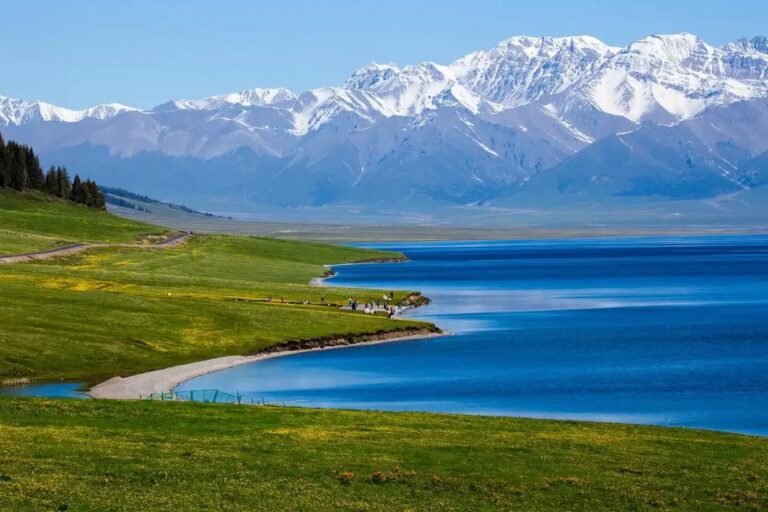
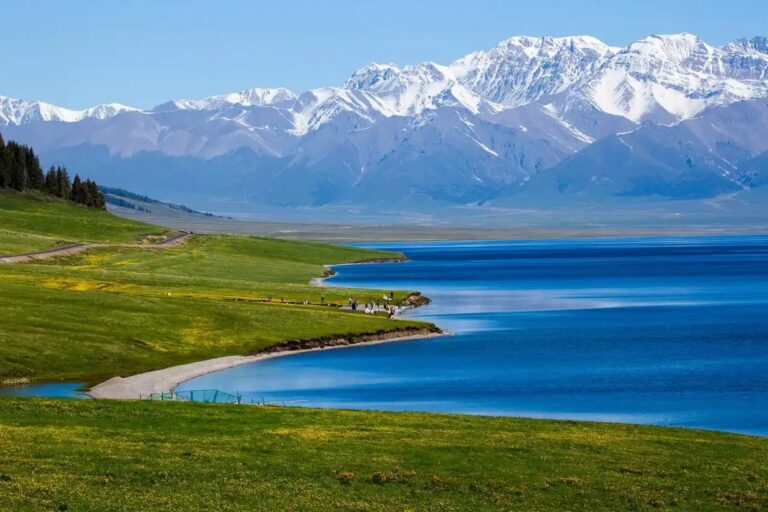
“The last tear of the Atlantic.” It is the single phrase every travel writer reaches for about Sayram Lake (赛里木湖) — and almost nobody explains where it comes from or whether it is true. It is both a piece of poetic licence and, oddly, a fairly accurate description of the lake’s meteorology. Here is what the name actually refers to.
The literal claim: Atlantic moisture, final stop
Sayram sits at roughly 2,073 m in the Bortala–Ili corridor of northwest Xinjiang, on the far eastern edge of the great Eurasian interior. The prevailing westerlies that leave the Atlantic Ocean cross Europe and the Steppe, losing most of their moisture along the way. By the time those air masses reach the Tianshan, Sayram is effectively the last place they can dump what little is left before the ranges squeeze them dry.
In that sense the “last tear” is real: this is among the easternmost points where Atlantic-derived precipitation still falls as meaningful, lake-feeding moisture. Everything east of here is genuinely continental rain-shadow.
Why it matters for the lake’s character
That westerly corridor explains two things visitors notice immediately:
- The wind. Sayram is almost always breezy by late morning because the same air masses keep moving through. It is the reason the photography window is so tight.
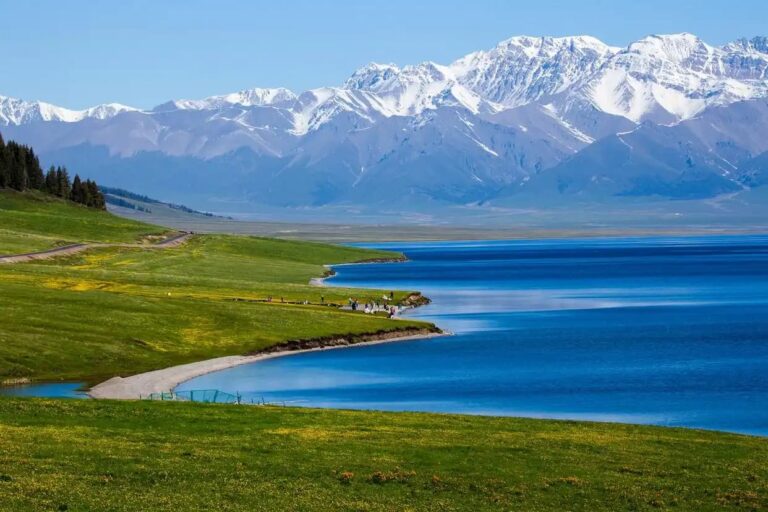
- The colour. Fed by meltwater and rain rather than rivers, the lake stays cold, clear, and nutrient-poor (oligotrophic) — which is what gives it the saturated blue rather than the green-brown of a lowland reservoir.
The legend layer
Local Kazakh and Mongol tradition wraps the lake in softer stories — a mourning woman turned to water, a lover’s tears frozen into the basin. These are the human version of the same idea: a body of water that feels too beautiful and too isolated to be ordinary. The “tear” in the folklore is grief; the “tear” in the geography is the last breath of an ocean 6,000 km away.
Three words that change the order
In Sayram Lake The Last that single gesture has never once got me the wrong dish, and it saves you ordering a second plate you did not want. You do not need Uyghur. Point at what the next table has. What you need is the phrase for not spicy, the hand signal for a smaller portion, and the knowledge that one word covers what locals drink in winter, which is salt and butter, and what visitors get, which is sweet. I wrote the driving side up in our [[sayram-lake-last-tear-atlantic-guide|Sayram Lake with Kids: A Family Plan and…]] as well.
What travels home and what does not
Nuts, dried grapes, an uncut flatbread and vacuum-packed lamb all survive a long-haul flight. It is cheaper, the staff wrap it properly, and it spends a week in your bag as the best thing about the trip. What does not work is anything fried or saucy, which turns in transit, and anything you cannot repeat at home. Buy the dried fruit in the market rather than at the airport and ask for it packed at the stall.
The one thing I order every time
It is the rhythm of it: someone puts a glass in your hand, another arrives, you sit for ten minutes, and suddenly the rest of the day is sorted. In Sayram Lake The Last that is the tea, and the reason is not the flavour. Ask for it plain the first time. The sweet version is the one for the market, not for a morning. I wrote the driving side up in our [[sayram-lake-last-tear-atlantic-guide|Sayram Lake with Kids: A Family Plan and…]] as well.
How to order, and what a portion really costs
Order one less than you think, because the rice arrives in a bowl the size of a small basin and the second helping does not need ordering. Card and phone payment both work everywhere in Sayram Lake The Last. The number on the board is for one, and one here is enough for a European adult if you share two. Tips are not expected in the small places and are quietly welcome where there is table service, but do not build the visit around it.
What the name gets wrong
It is not literally a tear, and it is not connected to the Atlantic by anything but air. There is no lost river. The phrase is a metaphor for a moisture path — accurate as meteorology, poetic as myth. I like it precisely because both readings are true.
Reading the lake on arrival
When you stand at the east causeway, the “last tear” idea is easiest to feel in the wind and the colour. If you want the practical side of a visit — how to get in, what it costs, where to stay — the main guide covers access and planning. For the drive around the shore and the Guozigou Bridge, see the ring-road guide.