Xinjiang Naan: The Flatbread That Runs Through Every Uyghur Meal
The first sound I associate with any Xinjiang town is not a call to prayer or a bus horn — it is the thwack of dough hitting the wall of a scorching clay oven. That noise belongs to the naan baker, and the flatbread he pulls out a few minutes later is the backbone of every meal in the region. For two months I ate naan at nearly every sitting, and I am still not tired of it. This is a field guide to the loaf that holds Uyghur tables together.
What Makes Xinjiang Naan Different
Naan across Central and South Asia shares a family resemblance, but the Xinjiang version is defined by the tonur — the cylindrical clay oven sunk into the floor of every neighborhood bakery. Dough is slapped onto the oven’s inner wall, where it bakes against radiant heat at around 300°C. The result is a bread with a blistered, chewy crust and a soft, faintly sour crumb. No oven at home reproduces it, which is why the bakery, not the kitchen, is where naan is born.
The Two Big Families
Broadly, naan here splits into girde (round, often with a raised rim and a dusting of sesame or onion) and sangza (thin, brittle, woven from twisted strips of dough). Within those, regional twists multiply: the long qigirma naan of Kashgar, the oil-rich ney naan of the north, and sweet versions studded with raisins for festivals.
| Type | Shape | Topping | Best Eaten |
|---|---|---|---|
| Girde naan | Round, rimmed | Sesame, onion | Warm, with tea |
| Sangza | Thin, woven | None / light oil | As a snack, day-old fine |
| Qigirma | Long oval | Onion, cumin | Breakfast, torn into soup |
| Shir naan | Round, sweet | Raisins, sugar wash | Festivals, with milk tea |
How a Loaf Is Made, From Dawn
Bakers start before sunrise. A basic dough of flour, water, salt, and a little yeast or sourdough starter is rested, divided, and shaped. The baker then presses it flat, sometimes pricks a pattern with a naanwend (a small stamped tool), brushes it with watered egg or onion water, and slaps it onto the oven wall with a padded cushion called a puqa. In roughly three to five minutes it is done — pulled off with a long hook and stacked still steaming.
Why It Keeps So Well
Fresh naan is best within hours, but the bread is engineered by climate to survive. The dry heat of Xinjiang means a loaf stays edible for days; travelers on the Silk Road relied on it as a portable ration. I have eaten four-day-old sangza on a train that was perfectly fine shattered into soup.
Naan and the Morning Tea Table
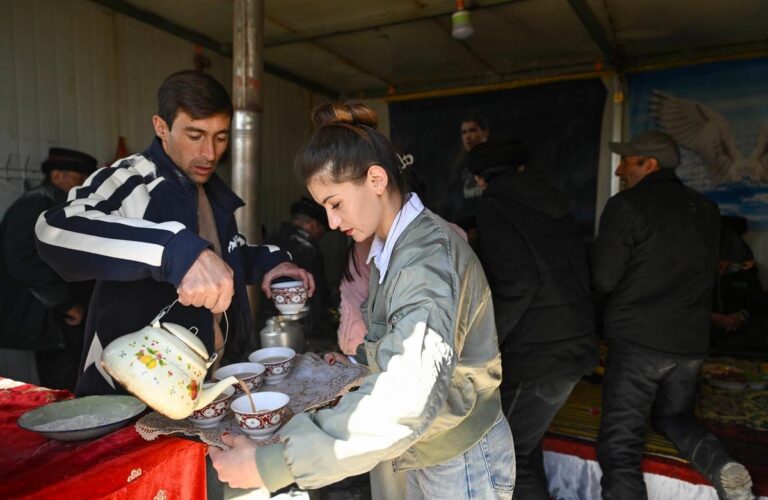
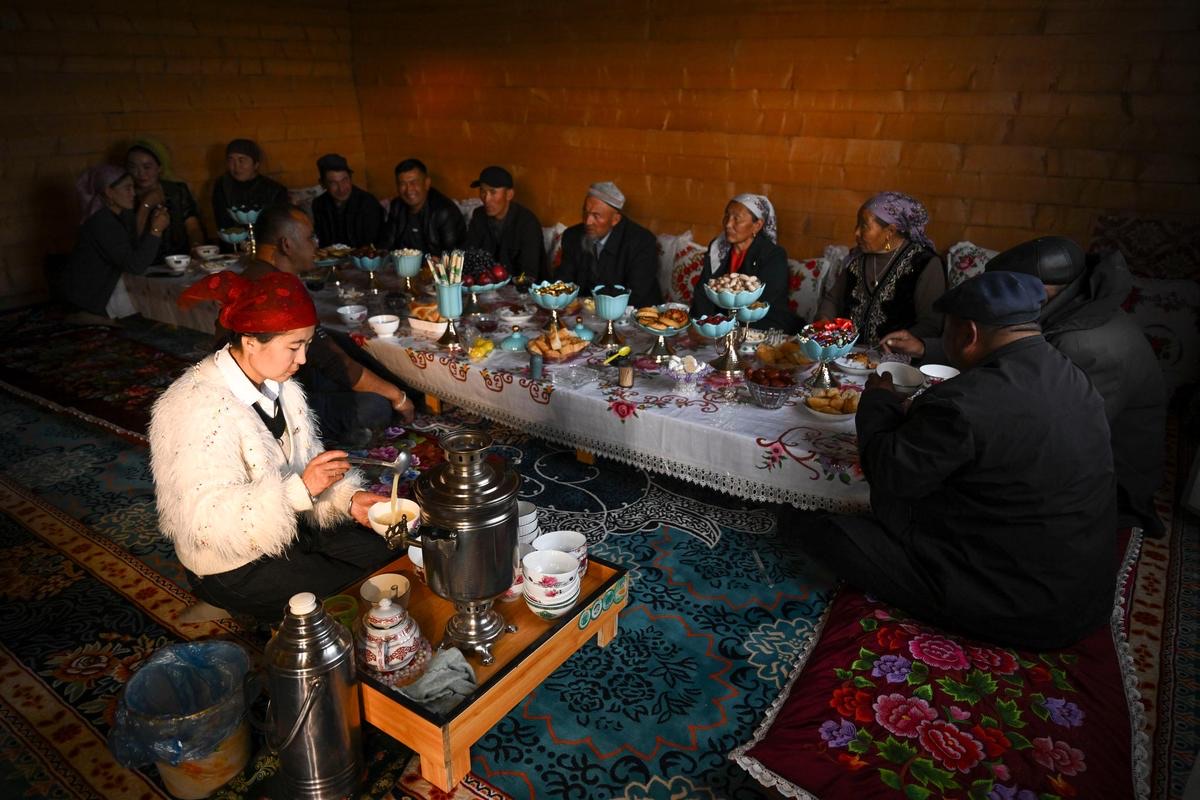
In a Uyghur home the day opens with tea, and naan is the vehicle. A round girde is torn into quarters and laid on the table beside a pot of black or milk tea, sometimes with a scrape of butter or a spoon of jam. Guests are never handed a whole loaf to cut — tearing is the etiquette, and offering the soft inner part to a visitor is a small sign of respect. I learned to wait for the elder at the table to break first; it is a quiet rhythm that repeats in every household from Kashgar to Hami.
Buying in Bulk for the Road
Bakers sell by the stack, and a bag of ten plain girde costs roughly what two cost in a restaurant. For long drives I buy a stack at the morning bake and stash it in the car; it doubles as breakfast, lunch, and the emergency snack when a roadside stop has nothing else. Ask for the warmest batch off the wall — it travels better and tastes of the oven for hours.
What to Eat Naan With
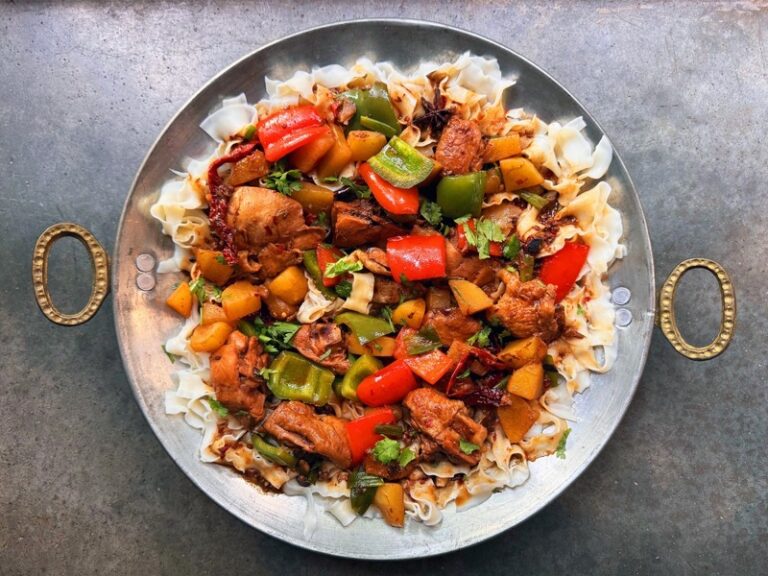
Naan is rarely the star — it is the vehicle. Tear a girde naan and use it to scoop Xinjiang milk tea or to mop up the gravy of da pan ji (big plate chicken). At breakfast, dip it in butter tea or wrap it around a hard-boiled egg. On long drives, a loaf and a few dates are a complete meal.
Ordering Like a Local
Point at the shape you want; bakers rarely label them in Latin script. A “girde” with extra sesame is a safe, delicious default. Buy two — one to eat warm on the street, one for later. Prices in 2026 run about 2 to 5 yuan per plain loaf, more for sweet or seeded versions.
Storing, Reviving, and Traveling With Naan
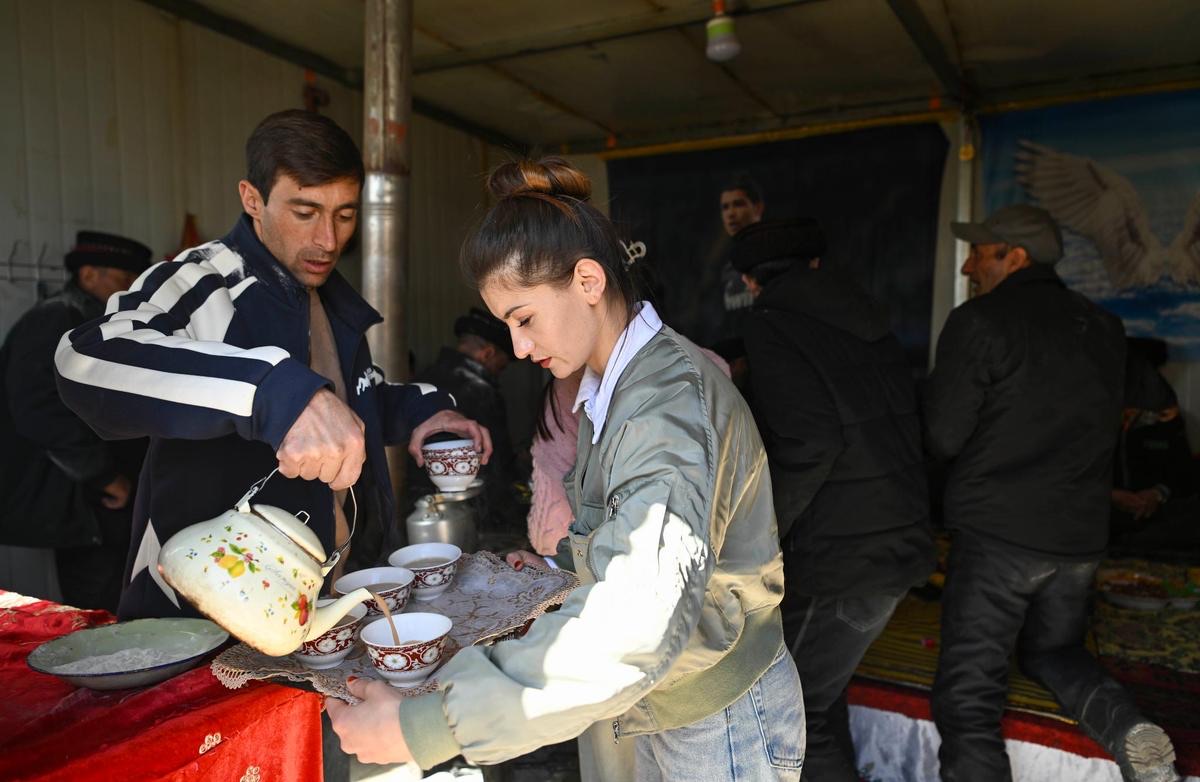
Naan is built for a dry climate, but humidity or a sealed plastic bag will turn a crisp loaf soggy within hours. At home I keep mine in a paper sack or a loosely closed bread box and refresh it the next day in a dry pan over medium heat for thirty seconds a side — it comes back almost like fresh. On multi-day trips, wedge whole loaves into a cloth bag away from direct sun; they stay edible for three or four days and make an instant meal with a handful of walnuts.
Naan at Festivals and Weddings
Naan is not everyday fuel alone — it carries meaning. At weddings the families exchange decorated shirek naan as a blessing, and during Corban and Eid the ovens run double shifts to meet demand. The sweet raisin shir naan appears on these tables and is the one version worth seeking out specifically for the occasion rather than the daily plain loaf.
A Quick Regional Bakery Map
Kashgar’s old city ovens are famous for qigirma and onion-heavy girde; Urumqi’s night-market rows stack every variety side by side; Hotan bakes a darker, wheat-forward loaf from local grain; and the Ili valley leans sweet, with honey-washed versions near the Kazakh border. Wherever you are, the bakery with the longest local queue at opening time is the right one.
Where to Find the Best Naan on the Road
Every town has a bakery district, usually near the bazaar or the long-distance bus station. In Kashgar, the old city ovens turn out the region’s most celebrated qigirma. In Urumqi, the night market rows glow with naan stacked like golden coins. My rule: follow the queue of locals, not the neon sign. The longest line at 8 a.m. is almost always the best bread on the block.
Bread is the quiet centre of a Xinjiang table and the fastest way to be treated as a guest rather than a customer. Breaking naan along its crack rather than sawing it, using the right hand, eating the top corner first: none of it is difficult and all of it reads instantly. I was corrected once, gently, and from that moment on every meal in the region tasted more like being invited.
Frequently Asked Questions
Is Xinjiang naan the same as Indian naan?
Only distantly. Both bake in a clay oven, but Xinjiang naan is usually unleavened or lightly leavened, larger, and less rich than the buttery Indian version. The word itself traveled the Silk Road from the same root.
Can I take naan home as a souvenir?
Yes, especially sangza, which travels well. Keep it in a paper bag, never plastic, or it sweats and softens. It survives a week of travel easily.
Is naan vegetarian?
Plain naan is vegan — just flour, water, salt, yeast. Sweet festival versions may use egg wash or milk, so check if that matters to you.
Why does my naan have a pattern stamped on it?
The stamped tool (naanwend) both decorates the loaf and helps it bake evenly by venting steam. The patterns are often family or bakery signatures.
What is the difference between naan and sangza?
Sangza is a thinner, crispier, often woven strip bread, while naan usually means the thicker round girde loaf. Both come from the same tonur oven.