Xinjiang Ethnic Clothing: What Locals Wear and How to Respect the Dress Code
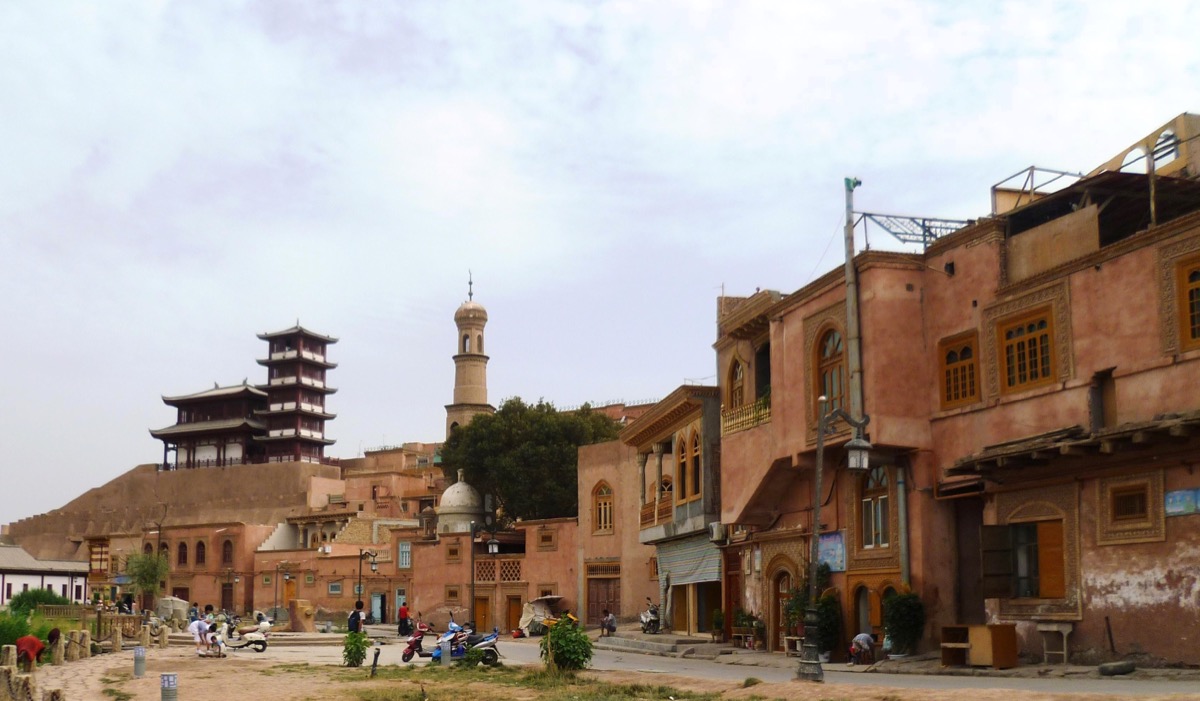
On my first morning in Kashgar’s old town I made a small mistake: I walked into a mosque courtyard in shorts and a tank top, and a kindly guard gently steered me back to the street. No one was angry, but I’d clearly missed something. Clothing in Xinjiang is not just weather protection — it signals respect, identity, and belonging across more than a dozen ethnic groups. Over several trips I’ve learned to read the wardrobes a little, and more importantly, to dress in a way that opens doors rather than closing them. This guide walks through what locals actually wear and how visitors can dress respectfully.
A Region of Many Wardrobes
Xinjiang is home to Uyghur, Kazakh, Kyrgyz, Tajik, Hui, Mongol, and Han communities, among others, and each brings its own dress traditions. In a single Kashgar market you might see a young woman in a embroidered Uyghur dress, a Kazakh rider in a felt cloak, and a Tajik man in a black-and-white embroidered cap — often side by side with jeans and puffer jackets. The point is not to memorise every group, but to notice that clothing here carries meaning, and that a little effort from a visitor goes a long way.
Uyghur Clothing
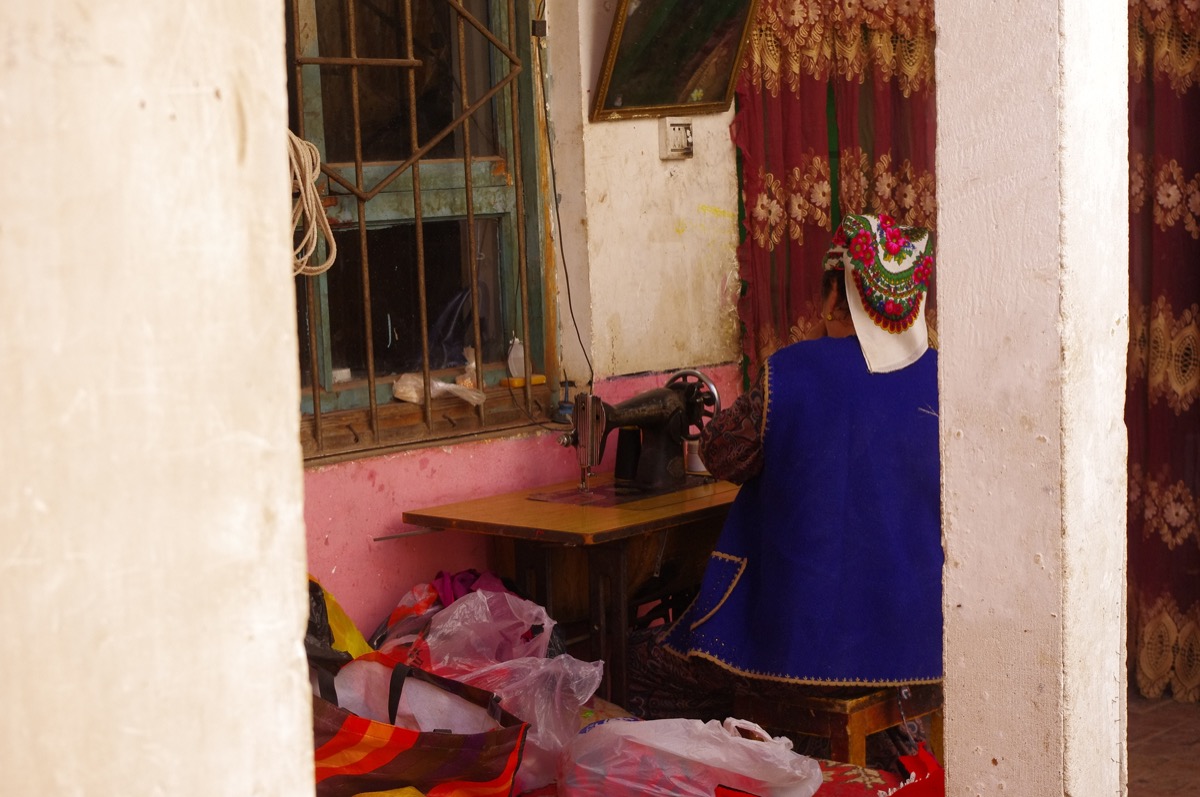
Traditional Uyghur dress favours bright colours and detailed embroidery, especially on women’s dresses (kelim or atlas silk) and on the famous doppa skullcap. Men often wear a long robe (qapan) over trousers, and many wear the doppa daily. Atlas (abr) silk, with its flowing, dye-bled patterns, is the showpiece fabric you’ll see at weddings and festivals. In Hotan and Kashgar you’ll also spot the embroidered waistcoat (qamzul) layered over a white shirt — a small detail that tells you the wearer dressed for an occasion, not just the weather.
Kazakh and Kyrgyz Clothing
Among nomadic groups the standout is the cloak: a wool or fur-trimmed overcoat for winter, and a lightweight felt or embroidered version for summer. Women’s headdresses can be elaborate, signalling marital status and region. The practical logic is clear — these are garments built for a life that moves between grassland and snow.
Tajik Clothing
In the Pamir, Tajik dress is distinctive: men wear a black-and-white embroidered cap and a long coat, while women wear embroidered hats with trailing ornaments. The embroidery patterns are specific enough that locals can often tell which valley you’re from.
Hui and Han
In cities the Hui and Han populations dress much like anywhere in China — modern, casual, seasonal. The visible “ethnic” wardrobes are most concentrated in the south (Kashgar, Hotan, the Pamir) and in pastoral areas of the north (Ili, the grasslands).
Dressing for Xinjiang’s Climate Extremes
The other thing worth understanding is that clothing here is also a survival tool. Xinjiang swings between desert heat that cracks your lips by noon and mountain cold that frosts the grass before dawn — sometimes on the same day during a Duku Highway drive. Locals layer by instinct: a thin cotton inner, a wool or fleece middle, and a wind-proof outer, plus a hat and sunglasses against the high-altitude sun. When you see a herder in a heavy felt cloak in July, it isn’t tradition for its own sake; it’s the only thing that works at 3,000 metres when the wind shifts. As a visitor, borrowing this logic — rather than buying a single “ethnic” outfit — is what actually keeps you comfortable, and it dovetails with the modest, covered approach that respects villages and mosques alike. A sun hat that also shades the neck, a scarf that doubles as a head-cover and a dust mask, and a packable down layer will take you from a Kashgar market to a Pamir pass without a second thought.
There is also a practical etiquette to the layers: remove your outer jacket when entering a home or a yurt, but keep your shoulders covered; shoes come off at many thresholds, so slip-on footwear spares you the awkward one-legged shuffle. None of this is written down, but watching what your hosts do and matching it is the whole game — and it is the same skill that keeps you appropriate at a mosque or a nomad’s felt tent.
The Doppa Skullcap
If there is one item that says “Xinjiang” at a glance, it is the doppa — the round, embroidered skullcap worn by Uyghur men and boys, and sometimes by women as part of a larger headpiece. They range from everyday cotton caps with simple geometric embroidery to silk festival versions. Buying one and wearing it respectfully (it’s a normal piece of local dress, not a costume) is a small gesture that often earns a smile. Our dedicated doppa guide covers the regional patterns and how to tell a handmade one from a machine copy.
When Clothing Matters Most
| Occasion | What to wear | Why |
|---|---|---|
| Mosque or shrine visit | Long trousers, sleeves past the elbow, women cover shoulders and often hair | Standard respect; some sites loan scarves |
| Village or herder home | Modest, covered shoulders and knees | Signals you’re a guest, not a tourist spectacle |
| Festival (Eid, Nowruz) | Your best, clean, modest clothes | Locals dress up; matching the effort is polite |
| High plateau / mountains | Layers, sun protection, wind shell | Practical, not cultural — but expected |
Where to Buy Ethnic Clothing and Textiles
| Item | Best place to buy | Typical price |
|---|---|---|
| Doppa skullcap | Kashgar old town, Sunday bazaar | 20–80 yuan (handmade more) |
| Atlas (abr) silk dress | Urumqi and Kashgar fabric shops | 150–500 yuan |
| Embroidered scarf / cap | Local bazaars, souvenir markets | 30–120 yuan |
| Felt cloak (collectible) | Pastoral Ili and northern markets | 200+ yuan |
For a broader plan on what to bring home, the Xinjiang souvenir guide lays out the markets and the bargaining rhythm.
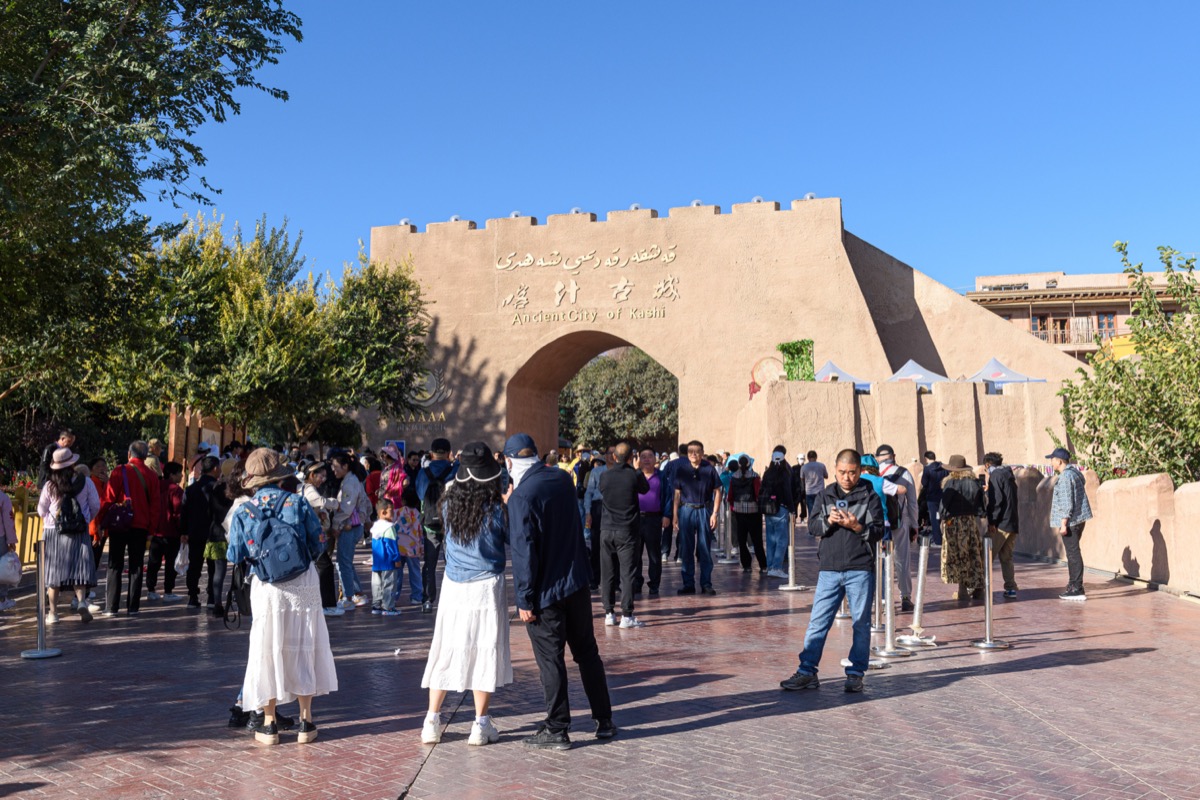
Photo Etiquette: Ask Before You Shoot
This is the rule I wish someone had underlined for me earlier. People in Xinjiang are often warm and happy to be photographed once you’ve said hello and asked — a thumbs-up and a smile translates everywhere. But pointing a lens at someone without a word, especially at women and especially in conservative areas, reads as rude. In markets and festivals, ask first, show them the photo if you can, and accept a “no” gracefully. The best portraits I have came from ten minutes of chat first, not from a stealth shot.
Clothes are worth buying a size generous and worth trying on with the shopkeeper’s help rather than a mirror. The fitted replica jacket I almost bought would have looked wrong within a season; the hand-embroidered waistcoat I took two sizes up has been worn constantly since. If you want to wear something here, wear it the way the person who made it would, and expect to be asked where it came from.
Frequently Asked Questions
Do I have to wear local clothing as a visitor?
No. You’re not expected to dress ethnically. The expectation is simply modest, weather-appropriate clothing that respects religious and village settings — covered shoulders and knees, nothing loud inside mosques.
Is it okay to buy and wear a doppa cap?
Yes. The doppa is everyday local dress, not a sacred item, and wearing one respectfully is usually appreciated. Just buy a proper one rather than a novelty version.
What should women pack for mosques and villages?
A long skirt or loose trousers, tops with sleeves, and a scarf you can drape over your hair and shoulders. Many sites lend scarves, but carrying your own is easier.
Will I offend anyone by wearing shorts in the city?
In Urumqi and other large cities shorts are common and fine in summer. The sensitivity is around religious sites and rural or conservative southern towns, where longer is better.
How can I photograph people respectfully?
Approach, smile, and ask — even with gestures. Show the result, thank them, and skip anyone who declines. Ten minutes of conversation beats a hundred candid shots.
Are ethnic clothes only for festivals?
No. Many older residents and people in rural areas wear traditional dress daily; festivals are simply when everyone dresses their best and the embroidery comes out in full.