Xinjiang Visa & Entry Guide 2026: Permits, Border Zones, and What Changed
A persistent myth says Xinjiang is off-limits to foreign travelers. It isn’t. The vast majority of the region — Urumqi, Kashgar, Turpan, the Ili Valley, the Duku Highway — is open to anyone holding a valid Chinese visa, exactly like the rest of the country. What’s different is a layer of border permits for the frontier zones near Pakistan, Tajikistan, and Kyrgyzstan. Get those right and Xinjiang is wide open.
This guide covers the practical 2026 picture. Rules shift, so treat it as a starting point and confirm at a Chinese embassy before you fly.

The China Visa First
You need a standard Chinese tourist visa (L) in your passport before arrival — there is no Xinjiang-specific visa. Visa-free transit and the expanding unilateral visa-free programs for some nationalities can also work, but only if your itinerary qualifies; don’t assume. Apply at a Chinese embassy or consulate with your itinerary, and list Xinjiang among your destinations so officials aren’t surprised later.

The Xinjiang Border Permit (边境管理区通行证)
Certain areas are designated border management zones and require a separate local permit, issued inside China (not at the embassy):
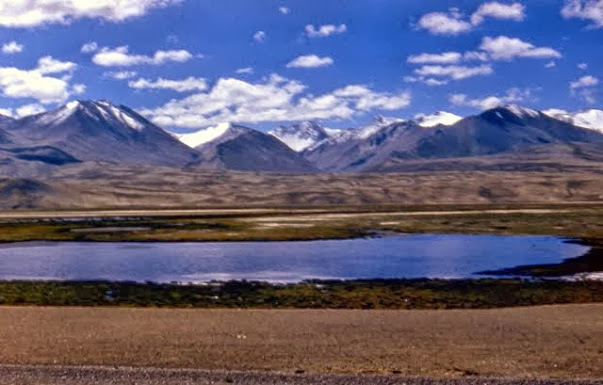
Tashkurgan (Taxkorgan) County — the Pamir, Karakul Lake, Khunjerab gateway. This is the big one; most Pamir trips need it.
Baihaba Village — the border village near Kanas, close to Kazakhstan.
Some stretches of the Karakoram route.
The permit is obtained in Kashgar (for Tashkurgan) or in Burqin (for Baihaba) with your passport and visa; allow a day. It’s free, paper-based, and checked at roadblocks. Without it you will be turned back at the Gez or similar checkpoint — non-negotiable.

Checkpoints and What to Expect
Xinjiang has more police checkpoints than inland China, especially on the roads south and west. Carry your passport at all times when driving the frontier. Hotels scan it on check-in (standard nationwide). The checks are routine, not personal; cooperate, have documents ready, and you’ll move through in minutes.
Staying connected, and why cash still matters
The eSIM is easy now and it works the moment you land. Keep cash anyway. The petrol station, the small hotel, the family kitchen with five tables and the driver who takes you back after hours are all cash, and one declined payment in the middle of nowhere is the problem that logistics cannot fix. Coverage on the main roads is genuinely good and thins out exactly where you would least want it to, which is the side road you took because the map said it went somewhere.
What a day actually costs
Food is the smallest of the three if you eat where locals eat and the biggest if you eat where the menu is in English. The shape is simple: the car and the fuel, the rooms, the food. The places where it stops being cheap are the entrance tickets and the guided days. For two people driving, a day that includes a hotel runs a small fraction of the same day in Western Europe, and the gap opens further once you stop paying restaurants.
Who this kind of trip suits
Someone with a week, or two, prepared to sleep in two different kinds of bed in four days. There is no version of this where you see the whole region in three days, and the guides promising it are lying. Someone who likes long horizons on the road and does not need a cafe on every corner. It is less good with a fixed number of days, a small budget for a guided solution, and a low tolerance for checkpoints. More on the other end of that day is in our [[xinjiang-border-pass-guide-how-to-get-permits-for-tashkurgan-and-the-pamirs|Xinjiang Border Pass Guide: How to Get…]].
What to sort out before you fly
The border permit if your routing goes near a closed frontier, because that one has lead time nobody can compress. The first two nights in the far cities, which is where the good rooms go. Everything else on this list can be sorted at the airport desk or the hotel lobby, and mostly is. And the car, if you are driving, well ahead in the peak months. Three things, in this order.
What people get wrong before they come
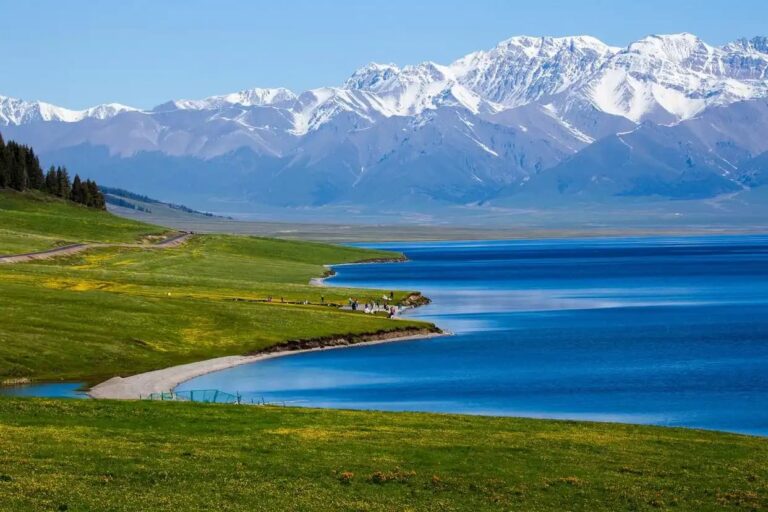
They come expecting desert to be the whole picture, then find the green is what stays with them. The oasis towns, the water running beside the road, the fields at the foot of a glacier: that is Xinjiang, and it is not in the photographs on the back of the bus seat. The second thing is scale. Distances here make a small itinerary feel enormous, and the fix is not more days but fewer stops with longer looks at each.
Registration and Stays
Foreign visitors must register their accommodation — hotels do this automatically, but if you sleep in a yurt or guesthouse that doesn’t, you may need to register at a local station. Ask your host. It’s a formality, but skipping it can cause a hitch at the next checkpoint.
Bottom Line
Plan for the main visa, add a border permit for the Pamir or Baihaba, carry your passport, and you can travel Xinjiang as freely as anywhere in China. The paperwork is a half-day, the reward is a third of the country almost nobody on your block has seen.