Kashgar Old Town: A Walking Guide to the Living Heart of the Silk Road
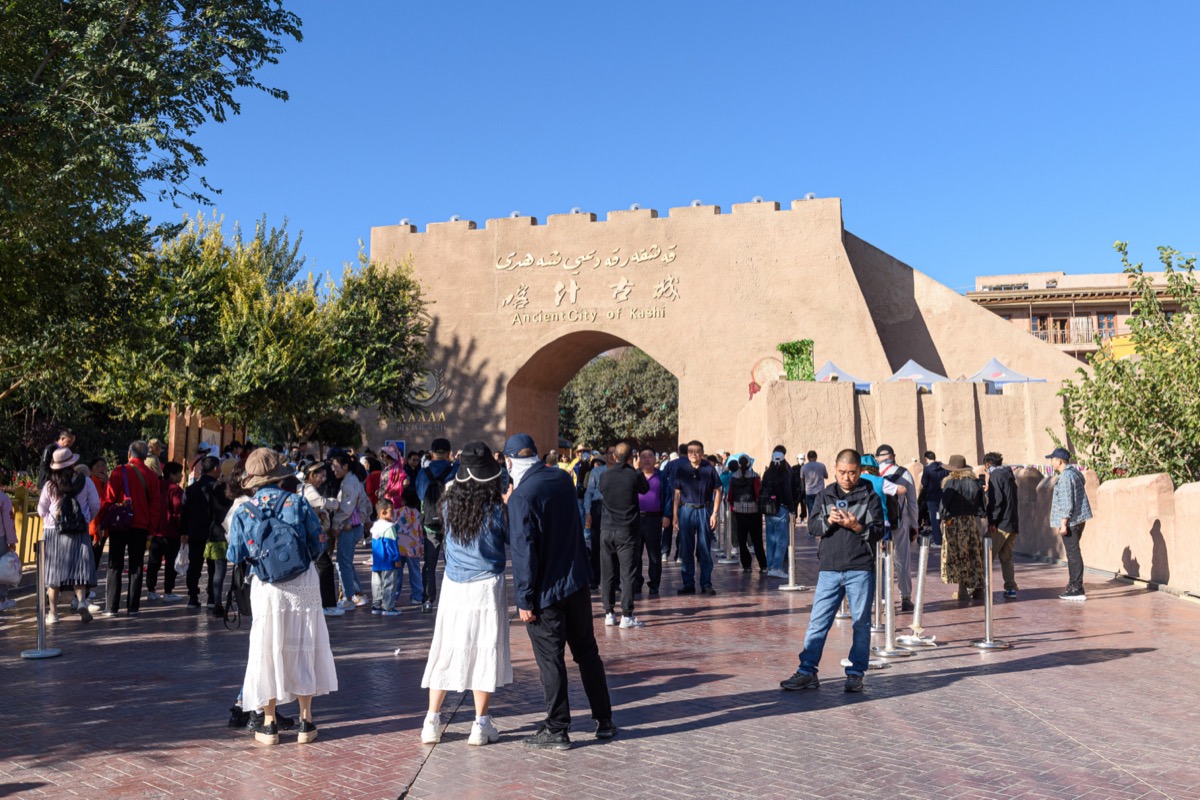
I have walked Kashgar’s Old Town more times than I can count, in every season, and it still rearranges my sense of time. Behind the rebuilt mud-brick facades — controversial to some, necessary to others after the 2010 earthquake — the old town remains a genuinely lived-in neighborhood: children racing down alleys too narrow for cars, grandmothers sunning themselves on doorsteps, the call to prayer rolling over rooftops at dusk. This is not a museum with a ticket booth and a gift shop. It is a place where 600 years of Silk Road life keep humming. Here is how to walk it properly.
A Quick History Before You Enter
Kashgar has been a trading crossroads for over two thousand years, where the northern and southern Silk Roads met before crossing the Pamirs. The Old Town (Shahar in Uyghur) clustered inside the city walls, a dense warren of courtyards built from sun-dried brick. Much was reconstructed after seismic damage, but the street plan, the crafts, and the daily rhythms are continuous with the past. Understanding that helps you look past the fresh plaster.
The Layout: Where to Start
Enter near the Id Kah Mosque, the largest in Xinjiang and the natural anchor of the old town. From there the lanes spiral outward. Don’t use a map religiously — getting lost is the point. But do keep a rough bearing: the west side tilts toward the craft streets, the east toward residential alleys and rooftop cafés.
| Area | What’s there | Best time to visit | Don’t miss |
|---|---|---|---|
| Id Kah Plaza | Mosque, main square | Early morning | Sunrise light on the facade |
| Craft Lane (south) | Blacksmiths, coppersmiths, hat-makers | Mid-morning | Live metalwork demos |
| Rooftop cafés (east) | Tea, views over the lanes | Late afternoon | Sunset over the old roofs |
| Residential alleys | Daily Uyghur life | Any quiet hour | Kids playing, bread ovens |
The Crafts You’ll Actually See
Kashgar’s Living Workshops
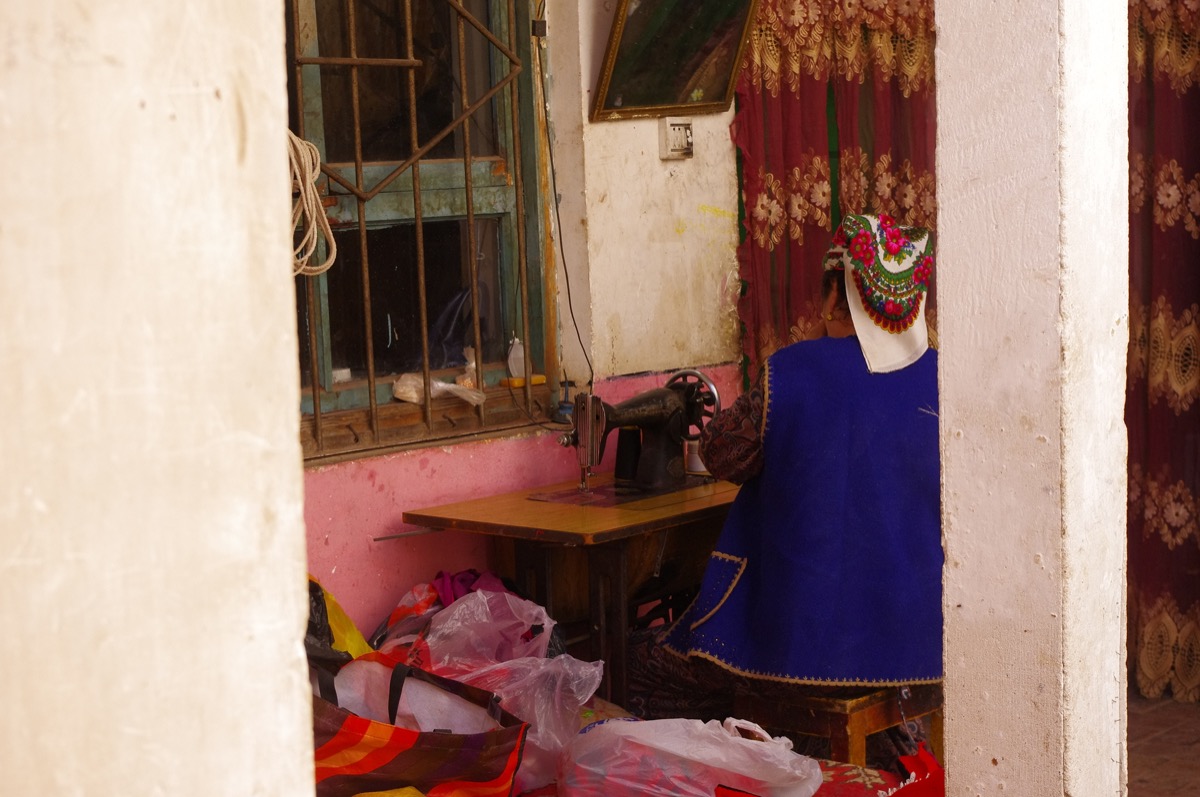
The south side of the old town is where makers still work in the open: coppersmiths hammering pitchers, knife-makers at small forges, and the famous doppa (embroidered cap) sellers. These are not performances — many are real family workshops. Buy directly and you support the craft; prices are fair and fixed-ish, but a gentle bargain is expected.
Food Inside the Walls
Some of the best eating in Kashgar is inside the old town itself. Follow the smoke to the grilled-meat stalls, find the nan ovens for warm bread, and don’t skip the Kashgar street food that spills out at dusk. A bowl of laghman from a hole-in-the-wall beats any restaurant on the ring road.
The Rooftops
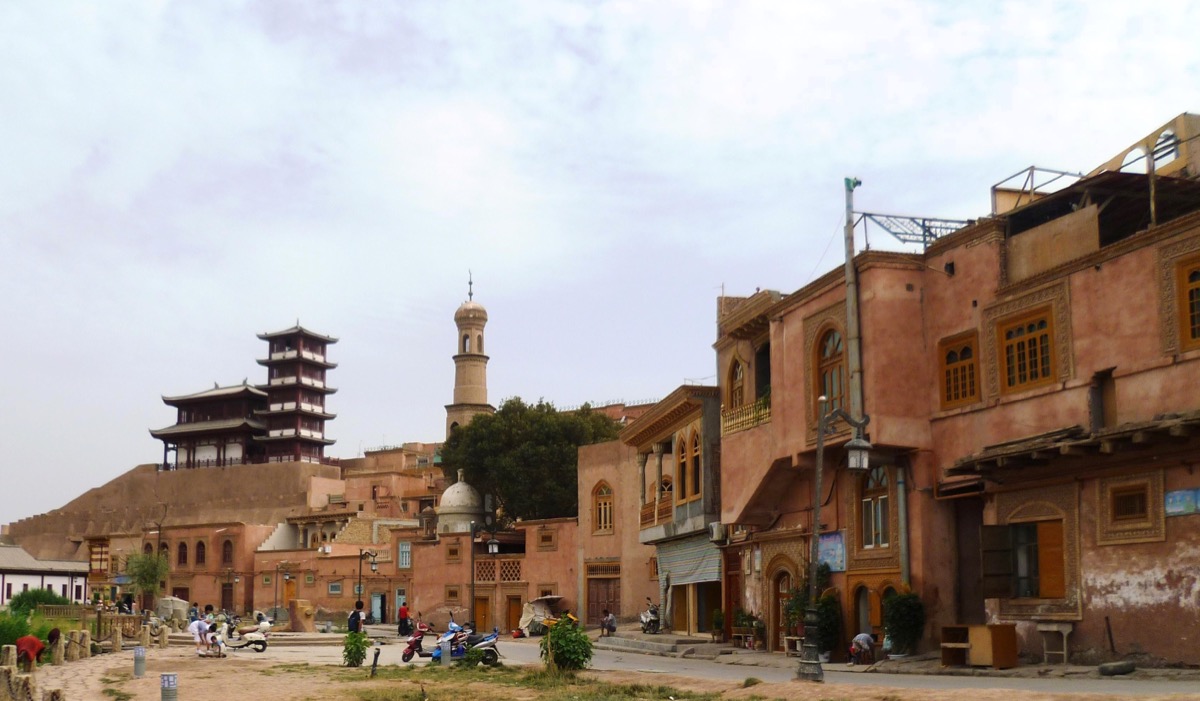
Pay the small fee at one of the designated rooftop cafés and climb. From above, the old town resolves into a sea of mud-brick waves, the mosque’s blue tiles catching the light, the Pamirs a faint line on the horizon. It is the single best photograph in the city and the best way to grasp how the maze fits together before you dive back in.
Beyond the Walls: The Sunday Bazaar
On Sundays the town explodes outward to the Kashgar Sunday Bazaar, one of the greatest markets on the old Silk Road — livestock, carpets, clothing, and more spices than you can name. Go early, wear shoes you can walk in, and keep half a day free. It is loud, joyful, and unmissable.
Getting to Kashgar and When to Visit
Most travelers arrive by the high-speed train from Urumqi (around fourteen to sixteen hours, or a short flight) or fly directly into Kashgar airport from a handful of Chinese cities. The old town itself is walkable from the center; a taxi from the station costs almost nothing. Spring (April–May) and autumn (September–October) are the kindest seasons — warm but not scorching, with light that is extraordinary for photography. Summer is busy and very hot at midday; winter is cold but wonderfully empty, and you may have whole lanes to yourself.
A Half-Day Walking Route
If you only have a few hours, do this: enter at Id Kah and turn left into the craft lanes, spend forty minutes with the coppersmiths, then drift east toward the residential alleys, climb a rooftop café for sunset, and finish at a street-food stall for laghman. That loop captures the old town’s full range — work, home, view, and meal — without rushing any of it. In the evening, reverse it: bazaar energy first, then quiet lanes as the call to prayer settles the town.
Where to Stay
Staying inside or just outside the old town changes the trip. Family guesthouses with courtyard rooms put you steps from the morning bread ovens; hotels on the ring road are more modern but less atmospheric. Either way, pick something within walking distance — the lanes are best at the hours when the tour buses are gone, and that means being there at dawn and dusk. For families, the courtyard guesthouses are a clear win: children can roam a contained space while you drink tea, and breakfast often includes fresh naan and the host family’s own jam. Book a few weeks ahead in peak season, as the good ones are small.
Respecting the Place You’re Visiting
The old town is someone’s home, not a stage. Keep voices reasonable in residential alleys, ask before photographing people, and dress modestly — shoulders and knees covered is a good rule. Buying from the workshops rather than the souvenir shops outside the walls puts money directly into the craft. None of this is complicated, and it is the difference between seeing the old town and merely consuming it.
What to Buy (and What to Skip)
The real finds are functional: a hand-hammered copper pitcher, a doppa cap, a small knife in its carved sheath, or a length of atlas silk. Skip the mass-produced “Silk Road” trinkets sold at the gates — they are made elsewhere and tell you nothing about Kashgar. A genuine workshop item costs more but outlives the trip, and you will remember exactly where you bought it.
Getting lost in the old town is not a failure of planning, it is the point. I stopped using the map after the second day and started using three landmarks I could always walk to: the square, the bread carts, the teahouse with the fake-Ford doors. Everything else folded itself around those. If you want a method, pick your anchors, then wander the gaps between them and let the backstreets decide the order.
Frequently Asked Questions
Is the Old Town real or rebuilt?
Both. Large sections were rebuilt after earthquake risk was addressed, using traditional methods and materials. The streets, crafts, and community are authentic and continuously inhabited; some individual buildings are new. Judge it as a living neighborhood, not a ruin.
How long should I spend there?
A half-day covers the highlights; a full day lets you sit, drink tea, and watch life happen. I always go back a second time with no plan at all.
Is it safe and easy to walk?
Yes. The lanes are flat, pedestrian, and patrolled. Surfaces are uneven in places — wear real shoes. Solo travelers, including women, are common and fine by day.
Can I take photos of people?
Ask first with a smile; most say yes and many will pose proudly. A few older residents prefer not to — respect that and move on. Buying something first never hurts.
What’s the best time of day to visit?
Early morning for quiet lanes and baking bread, late afternoon for rooftop sunsets. Midday is hot in summer; duck into shaded alleys or a teahouse.
Do I need a guide?
No. The old town rewards wandering. A guide helps with craft context and language, but you can absolutely do it alone with a translation app and an open afternoon.