Xinjiang Halal Food: A Traveler’s Guide to Eating Right Across the Region
On my first night in Kashgar I followed the smell of grilling lamb into a crowded hashian (night market) and realized something important: almost every plate in Xinjiang is halal. Whether you are Muslim or not, understanding how halal works here changes the way you eat, where you sit, and how welcome you feel. This guide is built from two months of road-tripping the region, and it answers the practical questions I wish someone had handed me at the airport.
What “Halal” Means in Xinjiang
Halal (清真, qīngzhēn) simply means “permissible” under Islamic law. In Xinjiang it governs the slaughter of animals, the separation of meat from pork, and the utensils used to cook. The Uyghur, Kazakh, Hui, Kyrgyz and Tajik communities here are predominantly Muslim, so halal is the default, not a specialty niche. You will see the green 清真 sign on restaurants, butcher shops, and even some noodle stalls. For travelers this is good news: you can eat almost anywhere without a second thought, and the food is some of the most flavorful in all of China.
Pork Is Essentially Absent
Do not expect to find bacon at a hotel breakfast buffet or pork dumplings at a roadside stop in majority-Uyghur areas — pork is rare to nonexistent there. In larger Han-run malls in Urumqi you might find a separate non-halal floor, but it is clearly marked with signage. When in doubt, look for the 清真 label or simply ask. The regional habit of halal-by-default removes most of the anxiety travelers feel elsewhere in Asia about hidden ingredients.
How to Spot a Trustworthy Halal Restaurant
Not every sign is honest, and not every “Muslim restaurant” follows strict practice. Here is what I check before sitting down, especially in borderline areas where Han and Uyghur eateries sit side by side.
| Signal | What to look for | Confidence |
|---|---|---|
| Green 清真 sign | Usually Arabic + Chinese; posted at the door or on the menu | High |
| Arabic script on the wall | Verses or the name “Allah” — common in Uyghur spots | Medium-High |
| Separate meat prep area | No pork products anywhere near the counter | High |
| Hui-owned canteen | Often labeled 回民 (Huímín) — reliably halal | High |
| All-male, tea-drinking crowd | Local regulars signal an authentic spot | Medium |
If you are traveling with strict dietary needs, the safest bet is a clearly signed Uyghur or Hui restaurant rather than a generic “Chinese” canteen. For background on the region’s signature drink and how it fits the halal table, see our Xinjiang food guide and the milk tea guide.
Common Halal Dishes You Should Not Miss
The halal kitchen of Xinjiang is one of the most rewarding in China. These are the plates I order again and again, and they appear from Urumqi’s boulevards to the Pamir villages.
| Dish | Type | Where it shines |
|---|---|---|
| Kawap (烤肉, kǎoròu) | Grilled lamb skewers | Every night market |
| Polo (抓饭, zhūafàn) | Lamb + carrot rice | Urumqi, Kashgar |
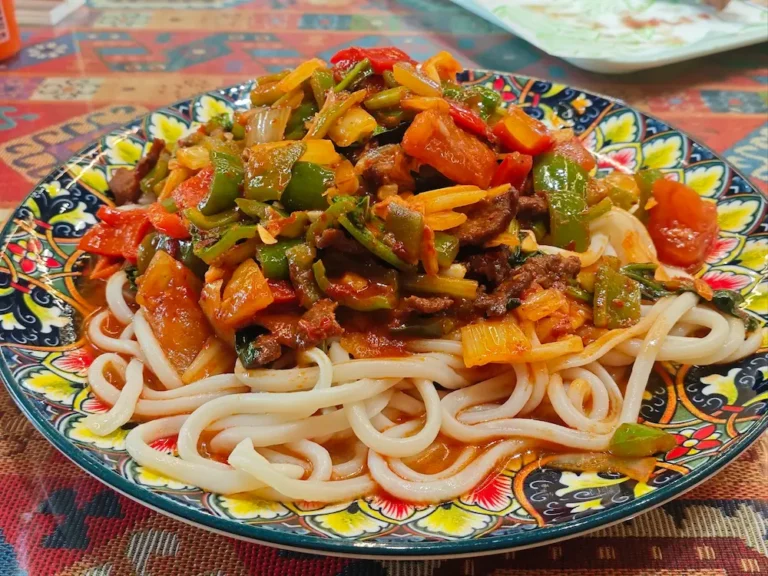
| Laghman (拌面, bànmiàn) | Hand-pulled noodles | Whole region |
| Samsa (烤包子, kǎobāozi) | Baked meat pastry | Oven bakeries |
| Nang (馕, náng) | Clay-oven flatbread | Everywhere |
| Gosh (köfte) | Steamed dumplings | Kashgar, Hotan |
Eating Etiquette That Earns Respect
Locals often eat polo and laghman with the right hand or a spoon — never the left, which is considered unclean. When tea is poured, a light tap of two fingers on the table is a quiet thank-you. Accepting food is a sign of friendship; refusing the first offer can read as cold. None of this is rigid, but the warmth you get back is worth the small effort, and it opens conversations that became the best part of my trip.

Halal on the Road: Trains, Stations, and Remote Stops
When you leave the cities, halal gets easier, not harder — the small towns along the southern Tarim route are almost entirely halal. On long-distance trains, the dining car usually offers halal boxes (清真餐), but they sell out early, so tell the attendant at boarding and ask for one when you find your seat. At highway service areas, the 清真 canteen is your friend; the “regular” one may serve pork. I kept a stash of nang and dried fruit in my daypack precisely so I’d never be stuck choosing between skipping a meal and compromising my rules.
Vegetarians and the Halal Rule
Being halal does not mean being meat-free. Most halal restaurants center on lamb and beef. If you don’t eat meat, you can still enjoy nang, mantou, tomato-and-egg noodles, and fried vegetable dishes — but confirm no meat stock was used. I learned to say “我不吃肉” (wǒ bù chī ròu, “I don’t eat meat”) clearly and point at the vegetables I wanted. Buddhist-run vegetarian restaurants do exist in bigger cities, but they are the exception, not the rule, out west.
During Ramadan
If you visit during Ramadan, many restaurants open only after sunset. Daytime eating in public is discouraged in observant areas, though hotels and tourist spots in Urumqi often keep daytime service. The evening iftar meals, when families break fast together, are warm and generous — if you are invited, go. It was one of the most memorable nights of my whole journey.

Buying Halal Food to Take Home
Dried fruits, nuts, nang (which travels surprisingly well for a few days), and vacuum-packed lamb jerky are all hallal and make excellent gifts. Check your home country’s rules on meat products before you fly — many places bar fresh or cured meat, while sealed dried fruit and nuts are usually fine. I shipped apricots and almonds home and they arrived perfectly.
Regional Differences in Halal Practice
Halal is not identical across the region. In the north, Kazakh and Kyrgyz communities favor dairy-heavy dishes — fermented horse milk (kymyz) and thick yogurt — alongside halal meat. In the south, Uyghur cooking leans on lamb, wheat noodles, and the spice routes’ legacy of cumin and chili. The Hui, scattered through every city, run many of the most reliable 清真 canteens and noodle shops. Knowing who cooks your meal tells you what to expect on the plate, and it’s a great opener for conversation with the owner.
When Strictness Matters Most
If your dietary rules are non-negotiable, the southern oasis towns are the easiest place to eat — halal is universal and you’ll rarely need to ask. The only place I’d double-check is a large Urumqi mall food court, where a separate non-halal stall might sit two doors down from a halal one. A quick glance at the sign removes all doubt.
Straight answers to what visitors ask
Is all food in Xinjiang halal?
No, but the overwhelming majority is. Uyghur, Kazakh, Hui, Kyrgyz and Tajik eateries are halal by default. Han-run places in big cities may serve pork on a separate floor. Look for the 清真 sign to be safe.
Can non-Muslims eat at halal restaurants?
Absolutely. Halal restaurants welcome everyone. Just respect the no-pork, no-alcohol-in-some-spots norms, and you’ll be treated like any other guest.
How do I ask if a place is halal in Chinese?
Say “这是清真吗?” (zhè shì qīngzhēn ma?) — “Is this halal?” Most owners will answer proudly and point to their certification.
Is the street food safe to eat?
Generally yes. Busy stalls with high turnover are your safest bet. Watch the meat get grilled in front of you, and favor boiled or fried items over anything sitting lukewarm.
Will I find alcohol with halal meals?
Traditionally no — many halal restaurants don’t serve alcohol. Some modern Uyghur spots in Urumqi may, but it’s the exception. Don’t assume.
Are there halal options at the airport?
Urumqi Diwopu airport has clearly marked halal restaurants in both terminals. Smaller airports usually have at least one 清真 canteen in the departure hall.