Xinjiang Souvenirs: What’s Worth Buying, Where to Find It, and What’s Fake
I came to Xinjiang expecting to buy a knife and leave. I left with a rolled bolt of atlas silk, two kilos of dried apricots, a doppa hat I will never part with, and a small jade pendant I am still not sure is real. Shopping here is not a side activity — it is the trip. The bazaars of Kashgar, the dried-fruit stalls of Urumqi, and the craft shops of the old towns are where the Silk Road still feels alive, and where a little know-how separates a great keepsake from a regretful purchase. This is the guide I wish I had before my first bargaining session.
What is actually worth buying in Xinjiang
The region’s souvenirs fall into a few honest categories: textiles, blades, dried food, jade, and small handicrafts. The table below is my ranking of what holds value, what it costs, and where to look.
| Item | Best place to buy | Realistic price | Worth it? |
|---|---|---|---|
| Atlas silk (ikat) fabric or scarf | Kashgar, Yili, Hotan | ¥80-400 | Yes — unique, packable |
| Uyghur doppa (embroidered skullcap) | Kashgar old city | ¥20-80 | Yes — cheap, iconic |
| Etlegen (Uyghur knife) | Yengisar, Kashgar | ¥50-300 | Yes, but mind customs |
| Dried apricots, raisins, nuts | Urumqi, Turpan, Hami | ¥20-60/kg | Yes — edible, giftable |
| Jade (hetian yu) | Hotan, Urumqi jade market | ¥20-∞ | Only if you know jade |
| Carpets / kilims | Kashgar, Hotan | ¥300-3000+ | Yes if shipping works |
The things I’d buy again
Atlas silk is the standout: the hand-tied ikat dyeing produces patterns you will not see anywhere else, and a scarf folds into almost nothing. Dried fruit is the safest bulk buy — Xinjiang’s grapes, apricots, and walnuts are genuinely better than what you get at home, and they survive the flight. A doppa hat is the cheapest souvenir with the most local signal; wear it and you will get smiles in every town.
Where to shop without getting lost
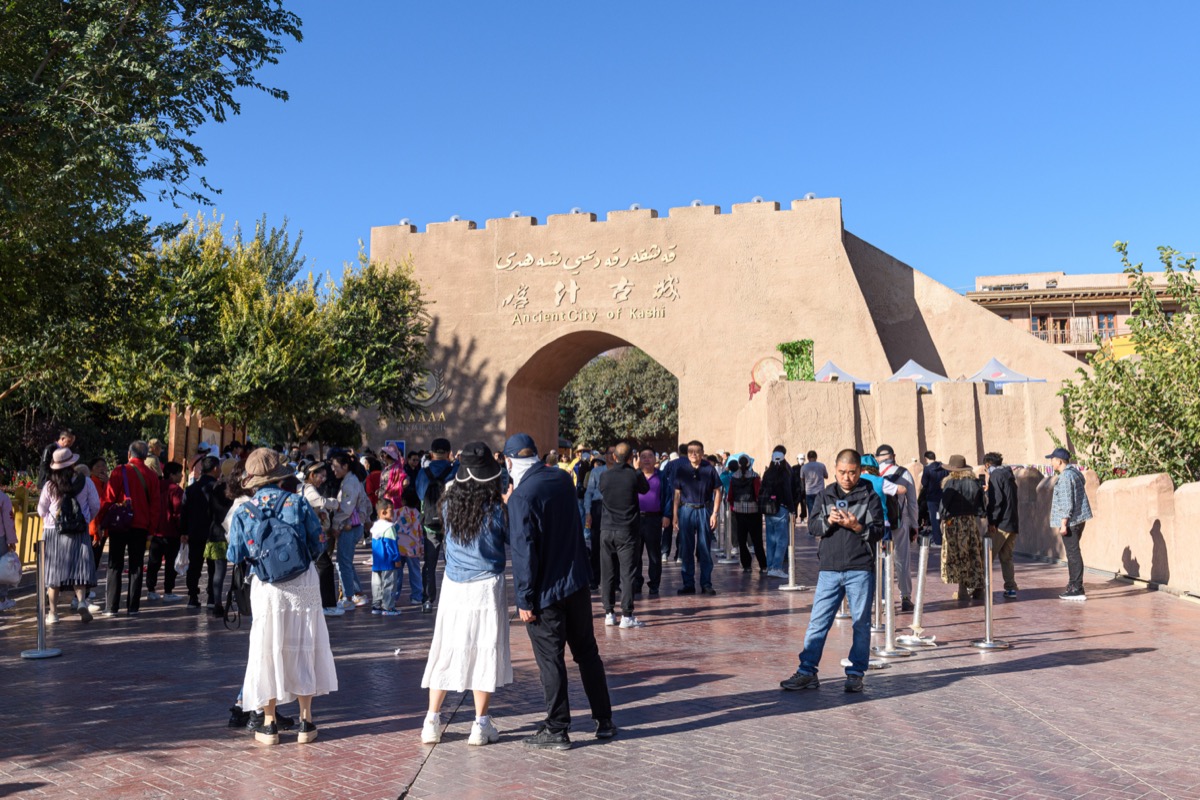
Kashgar’s Sunday bazaar and old-city lanes are the headline experience, but they are also where prices are most inflated for obvious tourists. Urumqi’s international bazaar (erdaoqiao) is huge and central. Turpan and Hami are best for fruit. Hotan is the jade and carpet capital. Build your shopping around your route; you do not need to buy everything in one city. For a city-by-city plan, start with our Urumqi city guide and work outward.
How to spot the fakes
Three categories attract the most fakery. Jade is the big one: most “jade” sold cheap at night markets is quartz or glass, and even serious shops blur the line between nephrite and worthless stone — only buy from a vendor who will issue a certification, and assume the bargain is fake. “Silk” scarves that cost ¥15 are printed polyester, not atlas; real ikat has slightly irregular, hand-feel patterns and a price above ¥60. Knives stamped with famous brand names in Yengisar are often mass-produced; the good ones have a hand-finished handle and a balanced weight. When in doubt, walk away — there is always another stall.
Bargaining tactics that actually work
The first price a stallholder quotes a foreigner is rarely the price a local pays, and that is not a scam so much as the rhythm of the bazaar. The trick is to engage as a buyer, not a bystander. Show real interest in one item, handle it, ask about the material, and only then offer roughly half. Expect to meet in the middle, and be willing to walk away — the single most effective negotiation move in a Xinjiang market is turning your back. If the seller calls you back, you have a deal; if not, there is another identical stall ten steps away. Keep it good-humoured: a laugh lands a better price than a frown, and the old men running the carpet stalls especially enjoy the theatre of it.
A city-by-city cheat sheet
Urumqi’s Erdaoqiao bazaar is the largest and most convenient but also the most tourist-priced; go there for one-stop variety, not for steals. Kashgar’s old city and Sunday bazaar are unbeatable for textiles, hats, and knives, and the atmosphere is the real draw. Turpan and Hami are your fruit headquarters — buy nuts and raisins by the kilo and skip the middleman. Hotan is the jade and carpet capital if you have shipping sorted. Yili and the Kazakh towns are best for atlas silk and felt work. Match the purchase to the place and you will both pay less and get something the region is actually known for.
What to skip
Every bazaar has a tray of mass-produced “ethnic” trinkets — painted keyrings, plastic prayer-bead bracelets, factory-printed scarves — that could have come from any tourist town in the world. They are not Xinjiang. If an item could plausibly be bought at an airport gift shop anywhere, leave it. The keepsakes worth the luggage weight are the ones tied to a specific place and craft: a scarf dyed in Yili, a knife forged in Yengisar, dried apricots from the Turpan vines.
Shipping, customs, and the knife problem
Two practical traps. First, Uyghur knives with fixed blades are treated as weapons by many airlines and postal services; carry-on is a hard no, and many countries ban importing them by mail. If you buy one, ask the shop about shipping and check your home country’s rules before you do. Second, carpets and large silk bolts are bulky; Chinese postal services and courier companies (SF Express, China Post) can ship internationally from the bigger cities, but get a written quote and insurance. Dried food and textiles are easy to post and rarely cause customs issues in small quantities.
Getting between the bazaar cities is straightforward by rail and air — see our transportation in Xinjiang guide for routing between shopping hubs without backtracking. One last tip: keep the shop’s receipt and, for anything valuable like jade or a carpet, ask for a description in both Chinese and English on the parcel so customs on either end knows what it is. Fragile items — ceramics, framed embroidery — should be double-boxed; couriers here are efficient but not gentle with awkward shapes.
Straight answers to what visitors ask
What is the single best souvenir from Xinjiang?
An atlas silk scarf. It is unique to the region, light to carry, and reads as genuinely local rather than mass-produced tourist kitsch.
Is bargaining expected everywhere?
In bazaars and old-city shops, yes — start around half the first price and settle somewhere in between. In malls, supermarkets, and fixed-price stores, no.
Can I take a Uyghur knife home?
Possibly, but it is restricted. Never pack it in carry-on; check your airline and destination country’s import rules, and prefer asking the seller about postal shipping with documentation.
How do I know if jade is real?
You mostly can’t by eye. Buy only from established vendors who provide a stone-certification card, and treat anything suspiciously cheap as decorative, not genuine nephrite.
Should I buy dried fruit at the airport?
It is convenient but pricey and lower quality than the city bazaars. Buy in Urumqi or Turpan and pack it in checked luggage; it travels fine.
Are credit cards accepted in the bazaars?
Rarely. Bring cash (small notes) and a working mobile-payment app; many stallholders scan QR codes but few take foreign cards.