Xinjiang Ancient Trees: Living Silk Road Monuments From Walnut Kings to Golden Poplars
I went to Xinjiang for the lakes and left obsessed with the trees. Not the forests — individual, ancient trees that locals treat as relatives: a 500-year-old walnut outside Hotan that still fruits, an apricot “king” in Kuqa said to predate the nearby caves, a Hu Yang poplar in the Tarim basin that was old when the Silk Road was young. These living monuments outlast empires, and chasing them is one of the most rewarding low-cost itineraries in the region.
Why Ancient Trees Matter on the Silk Road
For oasis communities, a single old tree was survival — shade, a water indicator, food, and a meeting point. Many villages are literally built around one. They also carry belief: a walnut or mulberry ancestor is often credited with protecting the hamlet, and you will see cloth prayers tied to low branches. Respecting them is respecting the place, and photographing them without that context misses the point.
Scientifically they are equally compelling. The wild apple stands of Yili are the ancestors of every cultivated apple on earth; the Hu Yang poplar is one of the few trees that thrives in shifting desert sand. Standing under a 400-year-old spruce on a Tianshan ridge puts the human timeline in its place.
Famous Living Trees to Seek Out
| Tree | Location | Approx. age | Why it matters |
|---|---|---|---|
| Walnut “King” | Hotan (south) | ~500 yrs | Still produces nuts; village landmark |
| Apricot King (Kuqa) | Kuqa, Tian Shan foot | 1,000+ yrs (claimed) | Tied to local orchard lore |
| Hu Yang poplar | Tarim basin, Lop Nur edge | up to 1,000 yrs | Desert survivor; golden in autumn |
| Tianshan spruce | Tianshan forests (north) | ~400 yrs | “Living fossil” conifer of the range |
| Old mulberry | Kashgar / Yarkand | several centuries | Silkworm & silk-road heritage |
| Wild apple (Malus sieversii) | Yili valleys | ancestral stands | Forerunner of every cultivated apple |
Tree Folklore You Will Hear
Every famous tree comes with a story, and locals will happily tell you theirs. The Hotan walnut is said to have been planted by a pilgrim who paused on the road and never left; the Kuqa apricot is credited by villagers with surviving droughts that killed everything around it; the Tarim poplars are called “heroes of the desert” in folk song because they turn gold as everything else goes grey. None of this is botanical fact, but it is the reason the trees survive — a community that calls a tree a hero will not let it be cut. Listen for these stories; they are the cheapest, best context you can collect, and they make the photo mean something.
Where to See Them
They are scattered, so plan by region. Southern Xinjiang (Hotan, Kuqa, Kashgar) holds the fruit and desert trees; northern Xinjiang (Yili, Tianshan) holds the spruce and wild apple. The Tianshan forest roads near Ürümqi and the Yili apple valleys are the easiest to combine with normal sightseeing, while the Hotan walnut and Tarim poplars need a dedicated southern loop with a car or driver.
The Tarim poplars in autumn
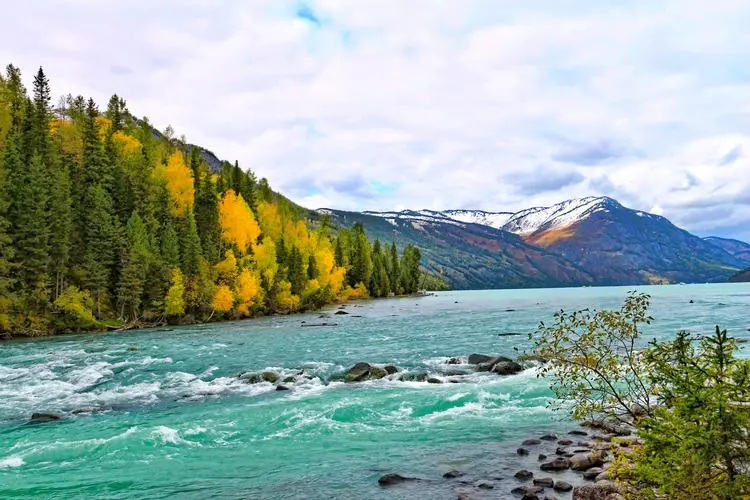
If you time one trip, make it late October to early November along the Tarim river, when the Hu Yang turn electric gold against the grey desert. It is the most photographed tree scene in Xinjiang for a reason, and the old individuals stand tallest in the groves. Go a week after the first hard frost and you will catch the peak before the leaves drop.
Best Season to Visit
| Tree type | Best window | Note |
|---|---|---|
| Hu Yang poplar | Mid-Oct to early Nov | Golden canopy, cold nights |
| Walnut / apricot | Apr–May (blossom), Sep (fruit) | Blossom is quieter than harvest |
| Tianshan spruce | Jun–Sep | Green all summer, road-open |
| Wild apple (Yili) | Apr–May blossom, Sep fruit | Blossom festivals in some valleys |
How the Trees Are Protected
China lists notable old and “famous” trees at county and national level, and many of the specimens above carry a small government plaque with an ID number and an estimated age. That paperwork matters: it makes cutting one a legal offense, not just a local embarrassment. Villagers often act as informal guardians, fencing the root zone and sweeping the ground. When you see a plaque, you are looking at a protected monument, so behave accordingly.
A Sample Southern Tree Route
If you have three days and a driver, a satisfying loop runs Kuqa (apricot king + nearby caves) to Aksu, then south to Hotan (walnut king) and on to the Tarim poplar fringe near Lop Nur. It is long driving, but each stop is free, roadside, and genuinely old. Pair it with the autumn travel window and the poplars alone justify the distance.
Photography and Respect
Old trees draw photographers, but behave like you would at a grave. Do not carve initials, do not pull branches for a frame, and do not climb the sacred ones. Ask before photographing locals who may be praying at the tree — the same caution you would show in a mosque applies here. A polarizer cuts glare on leaves; a low angle makes the trunk look monumental; patience at golden hour does the rest.

Pairing Trees With Nearby Sights
The famous trees rarely sit alone, which is what makes them practical stops. The Hotan walnut is a short drive from the jade-market district; the Kuqa apricot pairs naturally with the nearby Kizil caves; the Yili wild-apple stands sit inside valleys you are already visiting for the grasslands. Build your tree hunt around a main sight and treat the ancient specimen as the free bonus that anchors the day. In a region where headline attractions can feel crowded, the old tree five minutes off the coach route is often where you actually meet people.
Practical Notes
Most ancient trees are free and roadside, but signage is often only in Chinese, so download offline maps and the Chinese name before you set out. Carry water — these sites are hot and shadeless except under the tree itself. Combine a walnut or apricot stop with a nearby bazaar so the half-day feels full rather than like a single photo, and tell your driver the Chinese name to avoid a wrong turn into a different village’s “king.”
The mistakes worth avoiding
The trap here: Ages real
Mixed. Spruce and poplar ages are botanically plausible and often dated; the “1,000-year” fruit trees are usually local tradition rather than radiocarbon fact. Enjoy them as heritage either way.
Where people slip: Visiting these trees independently
Yes. Most are by roads or in village grounds. A car or driver helps in the south; the Yili and Tianshan trees are reachable on day trips from the nearest city.
The usual error: There an entrance fee
Almost never for a single roadside tree. Fees apply only if the tree sits inside a managed park or scenic area, which is rare for the famous individual specimens.
Easy to get this wrong: Poplar gold season
Late October to early November in most years, but it shifts with the first hard frost. Check local reports the week before you go.
The trap here: Touch
Look, don’t handle. If you wish to honor the custom, tie a clean cloth loosely to a low branch without damaging it — but as a visitor, simply appreciating it respectfully is enough.