The Doppa: Why Every Man in Xinjiang Wears a Little Embroidered Cap
I bought my first doppa in a hurry at a stall because it was cheap and blue, and wore it for a week before a tailor in Yining told me, kindly, that it was machine-made in a factory three provinces away. The real ones are quieter and the stitching is uneven in a way you learn to trust.
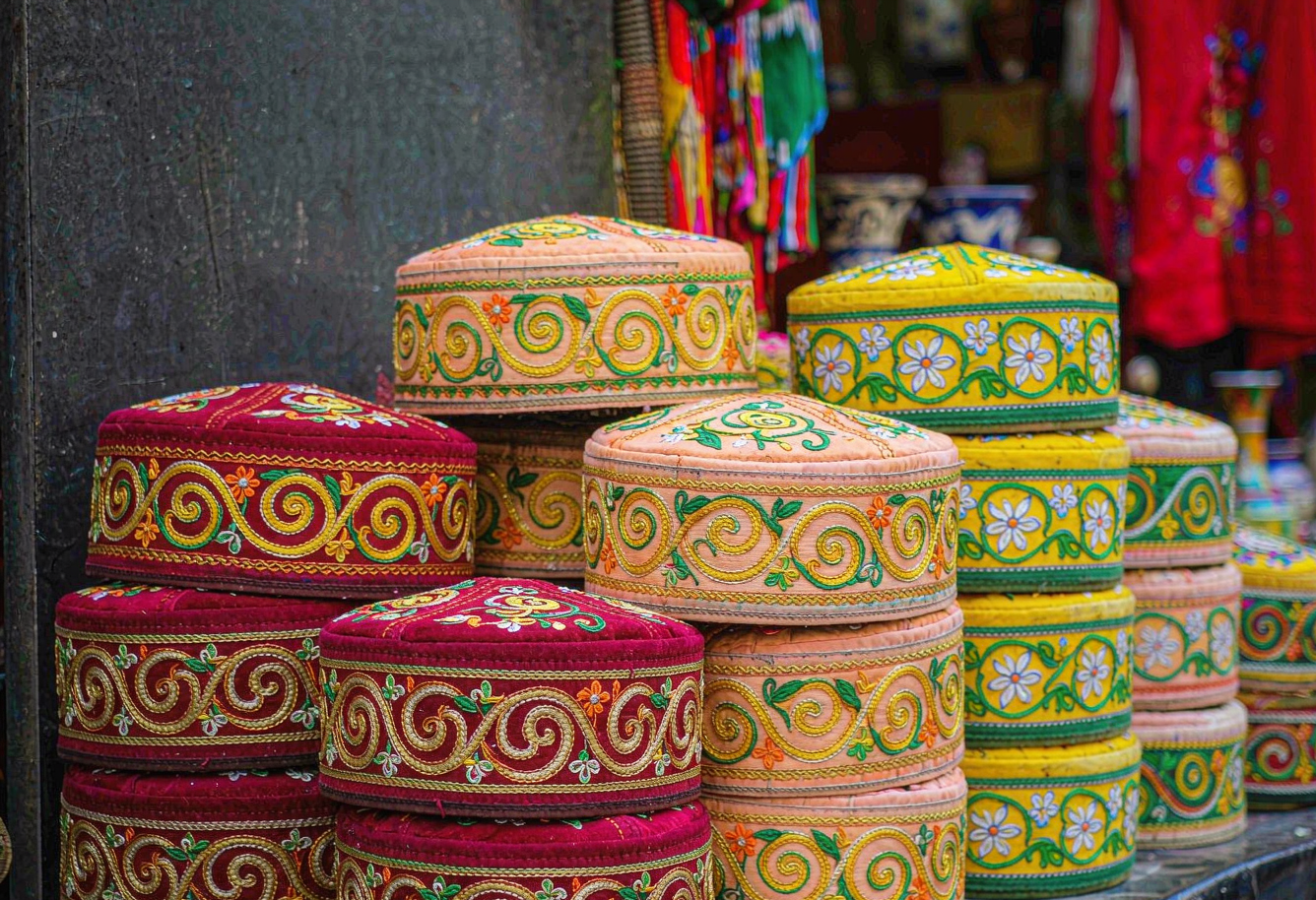
The doppa is the small round cap Uyghur, Uzbek, and many other men wear daily. The embroidery is not decoration for its own sake. Different towns have different patterns, and a person who grew up there can read the origin in the stitches the way I read a logo. The handicraft world of the region runs through this kind of coded identity.
What I did not get at first is that the doppa is also a courtesy. Men keep it on indoors in ways that surprised me, and removing it is not the automatic sign of respect it is elsewhere. The etiquette guide covers the basic do-nots, but the short version is: do not touch a man’s doppa without reason, and do not treat it as a costume.
If you want one that is actually made here, the embroidery tradition is the thing to look at up close, and the shopping guide points to the workshops rather than the stalls. For pieces I would vouch for, this where-to-buy list is where I send people.
Mine now is a dark indigo doppa with a pattern I cannot name, bought from a woman who showed me the back of her own before she would sell me one. It cost more than the blue stall cap and looks worse in photos. I wear it anyway.
The doppa I wear now I nearly did not buy, because the woman selling them was reluctant to part with the one on her own head. She took it off, turned it over, showed me the inside stitching, and only then offered it. I have bought smarter-looking caps since, and none carry that moment. The pattern on it is one I later learned marks her hometown, though she did not say so; a friend in Yining read it for me months later from a photo. Wearing it, I am occasionally greeted in the street by someone who recognizes the origin and smiles. It is a small, quiet belonging I did nothing to earn, and I like it more than any souvenir that came in a bag with a receipt.
Wear it or do not, but do not photograph it on a stranger’s head without asking; the doppa is personal, and a stranger’s is not a prop. The where-to-buy list points to makers, and the handicraft markets page lists the workshops. A real doppa is light, the embroidery sits proud of the cloth, and the base is usually black or indigo with colored thread, not a bright cap with a printed pattern. Mine has faded to the color of old denim and I like it more for it. The cap is a small thing to carry home and a large thing to understand, and the understanding, not the cloth, is the souvenir that actually lasts.
Reaching {P} on buses, taxis and shared rides
Leave two hours of slack on the return. Xinjiang Doppa Skullcap sits an hour or two from the nearest town, which sounds close until you work out there is no reliable public bus to the gate. The last vehicles back leave in the early evening, and after dark on a mountain road the local buses stop running entirely. What does exist is an intercity coach leaving the Xinjiang long-distance station early, a taxi share at the stand that costs a few tens of yuan a head if you are patient, and the tour vans that pick up at hotels. We came twice.
The first time we chartered a car for the round trip and it was worth every yuan. The second a driver on a return leg dropped us at the entrance and waited in the car park, which is the cheap way to do it if you do not mind setting your own clock. The trick is finding the vehicle rather than the timetable. In Xinjiang the drivers wait where drivers always wait, in the little offices a few hundred metres off the main terminal, and they will put together a half-day for a price the meter would never quote. That stretch of the trip is described in our [[xinjiang-doppa-skullcap-crafts-guide|The Xinjiang Doppa: Uyghur Embroidered…]] too.
How much time the place really needs
That covers the walk in, the slow look at the main feature, the side trails almost nobody does, and getting back to the car before the light goes flat. Ninety minutes is enough to tick the box. A full day is what you want when the point of coming was Xinjiang Doppa Skullcap itself rather than a stop on the way. Half a day is enough to understand it. The first time I rushed it and spent the whole visit looking up at the same rock from one spot.
The second I gave it a morning and a late-afternoon return and saw two completely different places, because the light moved across the surface and the crowds thinned to nothing. My own rule now: if I have to choose between this and an extra evening in Xinjiang, I keep the evening. Most first-timers plan two hours and then get stranded. Budget the full morning. The gates open early and the last entry tends to stop a couple of hours before closing, so the promise of coming back for sunset is not always possible.
The short version, with the numbers, is in our [[xinjiang-doppa-hat-culture|The Xinjiang Doppa: Why Every Traveler…]].