Following the Nomads: Xinjiang’s Seasonal Migration You Can Actually Witness
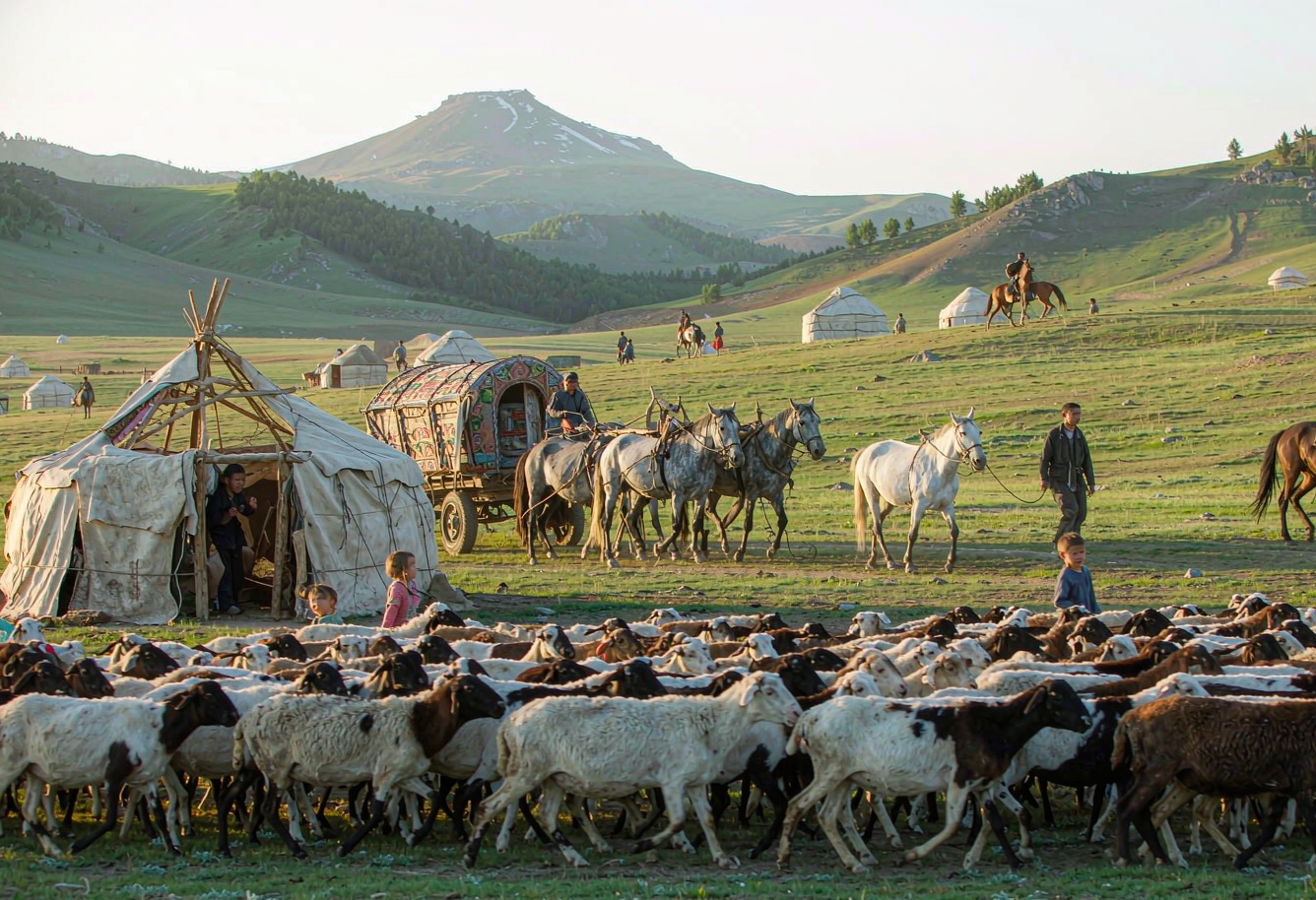
The first time I understood Xinjiang was not a postcard was on the road to Nalati, watching a family move a whole household on the back of three donkeys. The grandmother rode the last one, the sheep trailed behind, and nobody was in a hurry. That is the seasonal migration, and it is still real, not a show put on for buses.
The Kazakh move is the visible one. In spring they push herds up to the alpine meadows; in autumn they bring them down before the snow. A yurt stay in summer puts you right in the path of it, which is the point of going. The Kyrgyz on the Pamir move shorter distances but higher, and their节奏 is older than any border nearby.
I timed one trip badly and hit Nalati after the families had already moved on, so the meadow was empty and the guest yurts were the only sign anyone had been there. The Nalati grassland is worth it regardless, but if you want the migration itself, ask locally about the week, because it shifts with the weather, not the calendar. The Bayinbulak grassland to the east has its own rhythm, slower and colder.
The Xibe of Qapqal are not nomads, but they are the other side of the same story: people who kept a life intact while everyone else redrew the map. Seeing both in one trip is why I keep coming back.
The rule I follow: watch from a distance that lets the herd keep moving. Drivers who chase the sheep for a photo are why some families now close their routes. Pay for the yurt, buy the cheese, and let the moving happen without you in the middle of it.
The migration I remember best was not the big spring move but a small one. A family near Nalati shifted their yurt two hundred meters because the stream they drew water from had moved a little after a night of rain. I watched them take the felt walls down in under an hour, load the wooden lattice on a tractor, and stand the whole thing back up by dusk, the grandmother directing from a camp stool. What looked to me like a permanent home was, to them, a thing you could move before dinner. That is the part no guidebook conveys: the nomad’s house is light on purpose. I have since stopped calling these meadows ’empty’ in my notes, because they are full of decisions I cannot see, made by people reading weather I do not.
If you want to time a visit to the migration, the honest answer is ask when you arrive, because the weather sets the week and the weather does not publish. The Nalati and Bayinbulak grasslands are the two anchors I use, and a yurt stay in either puts you close to the move. Do not drive your own car into a moving herd; pull over, wait, let it pass, and someone will wave you on. The nomads are not annoyed by visitors who wait. They are annoyed by visitors who do not. I have been waved through a herd by a child on a horse, which is a better border crossing than any passport office I have been through.
Not everyone should build a trip around this
If you are short on days, this is the thing to cut, and no guidebook will tell you that. Xinjiang Nomadic Migration is superb, but it is also an hour or more in each direction from everything else you planned, and the drives are what eat the schedule. It suits a traveller with a car and a flexible morning. It suits people who like landscape and can walk a few kilometres at their own pace. It does not suit a family with a small child who needs a shade stop every forty minutes, and it does not suit anyone in week two of a high-altitude trip still feeling it. The honest version: take half a day if that is all the arithmetic allows, and save the full day for the thing that is genuinely once in a lifetime.
I am not going to pretend this is gentle. There is a lot of unshaded ground, the altitude is real if you came from a low-altitude city, and the swing between the car and the viewpoints is enough to give you a headache on an empty stomach. Who it does suit: someone wanting one strong memory, someone driving the Xinjiang loop anyway, someone willing to be out before breakfast. Who it does not: anyone whose main goal is a relaxed few days, and anyone who has already done this same thing twice here. The evening version of that plan is in our [[xinjiang-kazakh-nomadic-culture|Kazakh Nomadic Culture in Xinjiang: Yurts,…]].
Timing your visit to {P}
Most first-timers plan two hours and then get stranded. The gates open early and the last entry tends to stop a couple of hours before closing, so the promise of coming back for sunset is not always possible. Budget the full morning. Ninety minutes is enough to tick the box. That covers the walk in, the slow look at the main feature, the side trails almost nobody does, and getting back to the car before the light goes flat.
Half a day is enough to understand it. A full day is what you want when the point of coming was Xinjiang Nomadic Migration itself rather than a stop on the way. The first time I rushed it and spent the whole visit looking up at the same rock from one spot. My own rule now: if I have to choose between this and an extra evening in Xinjiang, I keep the evening. The second I gave it a morning and a late-afternoon return and saw two completely different places, because the light moved across the surface and the crowds thinned to nothing.
The evening version of that plan is in our [[how-to-go-to-xinjiang|How to Get to Xinjiang: Entry Requirements…]].