Eating Vegetarian and Vegan in Xinjiang: A Plant-Based Silk Road Survival Guide
I am not a strict vegetarian, but I have traveled Xinjiang with two friends who are — one vegan, one lacto-vegetarian — and watching them eat for two weeks taught me more about the region’s food than any menu crawl. The short version: Xinjiang is a meat-and-bread culture, but it is far from impossible for plant-based eaters. You just have to know which dishes are naturally meat-free, how to spot hidden broth and animal fat, and how to ask in a way that survives translation. This is the guide I wrote for them, and the one I now hand to any vegetarian planning a Silk Road trip.
Is Xinjiang Hard for Vegetarians?
Honestly, harder than Chengdu or Yunnan, easier than Inner Mongolia. The Uyghur, Kazakh, and Kyrgyz cuisines lean heavily on lamb, beef, and dairy. But they also have a deep bread culture, a love of noodles, and — in summer — extraordinary fruit and melons. The challenge is not a total absence of options; it is that “vegetarian” as a concept is not automatically understood the way it is in Buddhist parts of Asia. You will often need to specify no meat and no meat stock rather than assume a vegetable dish is truly plain. There is also strong regional variation: the Ili valley (Yining) eats far more fresh produce in summer, while the southern Tarim towns are meat-and-noodle strongholds where vegetable options thin out. Knowing which town you are in changes your strategy.
Dishes You Can Eat
These are the workhorses of a plant-based trip here.
Naan and other flatbreads
Most plain naan is just flour, water, salt, and yeast, baked in the tandoor. It is usually vegan. Fancier versions brushed with egg or milk exist, but the everyday round naan you buy from a street oven is safe. It is also the single best travel food in the region — cheap, filling, and keeps for a day.
Vegetable laghman (hand-pulled noodles)
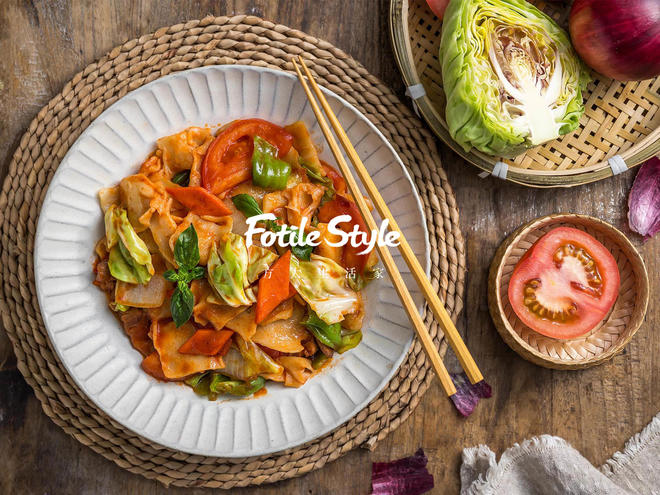
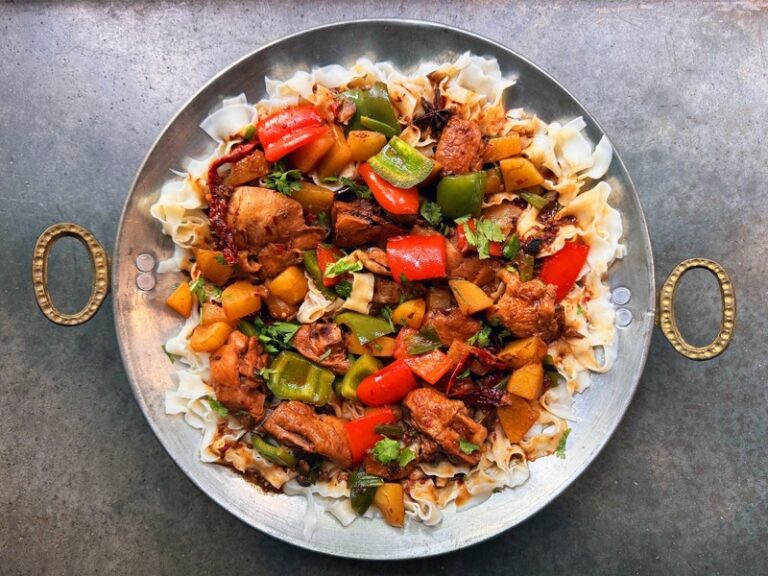
Laghman is belt noodles with a topping. Ask for sabzi laghman (vegetable noodles) and confirm the sauce is not meat-based. In cities you can usually get a tomato-and-pepper version that is genuinely good.
Polo without meat?
Polo (plov, the rice-and-carrot dish) is normally cooked with lamb and meat stock, so the standard version is out. Some home-style or festival polo is made with oil instead, but you must ask. Do not assume.
Seasonal vegetables, salads, and fruit
Summer brings tomatoes, peppers, cucumbers, and eggplant; the fruit — grapes, melons, apricots, peaches — is among the best on earth. A plate of cold tomatoes and naan is a legitimate, happy meal in July.
| Dish | Usually vegan? | Where to find it |
|---|---|---|
| Plain naan | Yes | Street ovens everywhere |
| Sabzi laghman (veg noodles) | Often, confirm sauce | Noodle shops, cities |
| Polo (pilaf) | No (meat stock) | Ask for oil-cooked version |
| Boiled vegetables / salads | Yes | Summer, restaurants |
| Fresh fruit & melon | Yes | Markets, roadside |
| Yogurt (katyk) | No (dairy) | Lacto-veg only |
Hidden Meat: What to Watch For
This is where vegetarians get caught out.
Broth and oil
Vegetable stir-fries are frequently cooked in lamb fat or finished with a meat stock. Noodle soups are almost always meat-broth based. If you say “no meat” but the cook uses lamb oil, you may still react. The phrase “yaq!” (none/without) plus “gosh” (meat) — “gosh yaq” — gets the point across better than a polite smile, and pairing it with a written note removes the last ambiguity.
Cross-contamination
Small woks and shared cutting boards mean true strict veganism is hard in a busy laghman shop. If you are vegan for health rather than allergy reasons, you will be fine with plain naan, fruit, and clearly vegetable dishes. If you have a serious allergy, stick to packaged food and fruit you peel yourself, and avoid the open woks entirely.
How to Order as a Vegetarian
For the wider food picture beyond plant-based eating, see our Xinjiang cuisine guide and the dedicated Xinjiang naan guide.
Learn three phrases and write them down: “I don’t eat meat” (méng ròu yě bù chī / or in Uyghur, “gosh yemey men”), “no meat stock” (shāngtāng yaq), and “vegetables only” (sabzi). Showing this on your phone in Chinese characters helps enormously outside the big cities. In Urumqi, Kashgar, and Yining you will also find explicitly vegetarian and even vegan-friendly cafes and international restaurants where the concept is understood without explanation.
One trick that saved us repeatedly: lead with what you CAN eat rather than a list of restrictions. Saying “I’d like plain naan, tomatoes, and vegetable noodles, no meat, no stock” gives the cook something concrete to make, whereas “I’m vegetarian” can read as a preference they quietly round off. Concrete requests in writing beat abstract labels every time.

Best Cities for Plant-Based Eating
Urumqi has the widest range, including international restaurants and a few explicitly vegetarian spots. Yining (Ili) is strong in summer because of the local produce. Kashgar’s Old Town has fruit, naan, and some veg noodle options, but fewer dedicated vegetarian venues. Small southern towns are the hardest — there, your reliable meals are naan, fruit, and tomatoes. Plan accordingly and you will eat well.
A simple daily rhythm that works
After two weeks of trial and error, my friends settled into a pattern: a big fruit-and-naan breakfast from a market, a vegetable laghman lunch in a city noodle shop, and a dinner built around plain bread, tomatoes, and cucumbers with yogurt for the lacto-vegetarian. On long travel days they carried naan and apricots in the bag so a delayed bus never became a hunger crisis. The key was treating bread and fruit as the backbone and restaurants as a bonus, not the other way around.
Common traps at this stop
The trap here: Vegans eat in xinjiang
Yes, with effort. Plain naan, fruit, peeled vegetables, and explicitly oil-cooked noodles are your base. Watch for dairy in yogurt and for lamb fat in “vegetable” dishes, and you can stay vegan for the duration.
Where people slip: Buddhist-style vegetarian food available
Not commonly outside Han Chinese restaurants in larger cities. The local cuisines do not have a vegetarian temple tradition, so do not expect mock-meat temples the way you might in central China.
The usual error: Saying “i’m vegetarian” be understood
Partly. Many people hear “vegetarian” as “doesn’t want a big chunk of meat” and may still add a little stock or fat. Be specific about no meat and no meat stock, and show it in writing.
Easy to get this wrong: Famous dishes like polo safe
Standard polo is cooked with lamb and meat stock, so no. You must specifically request an oil-based version, and even then confirm. Naan and laghman are safer defaults.
The trap here: Dairy — is it vegetarian-friendly
Dairy is everywhere and welcome for lacto-vegetarians: yogurt (katyk), milk tea, and cheese-like products appear daily. Vegans should avoid these and lean on bread and produce.
Where people slip: Fruit safe to eat washed
Peeled fruit (melons, apricots, grapes you wash) is safe and excellent. Avoid unpeeled items washed in untreated water if your stomach is sensitive, and stick to cooked vegetables when in doubt.