Yarkand (Shache): The Forgotten Silk Road Kingdom of the Tarim Basin
Most travelers who reach southern Xinjiang stop at Kashgar, photograph the Old Town, and turn around. I did the same on my first trip. It was only on a second, slower loop that I kept going east and found Yarkand — known in Chinese as Shache (莎车) — and realized I had been skipping one of the oldest, least performative oasis towns in the whole Tarim Basin. Yarkand was once the capital of a khanate that rivaled Kashgar for control of the southern Silk Road. Today it is a working agricultural town where the music never stopped, the markets are for locals, and you can walk a royal cemetery older than most European capitals without seeing another foreign face.
This is a practical guide to Yarkand written from the road: what the place actually is, why it matters, what to see, and how to fit it into a southern Xinjiang itinerary without the usual Kashgar-centric rush.
What Exactly Is Yarkand?
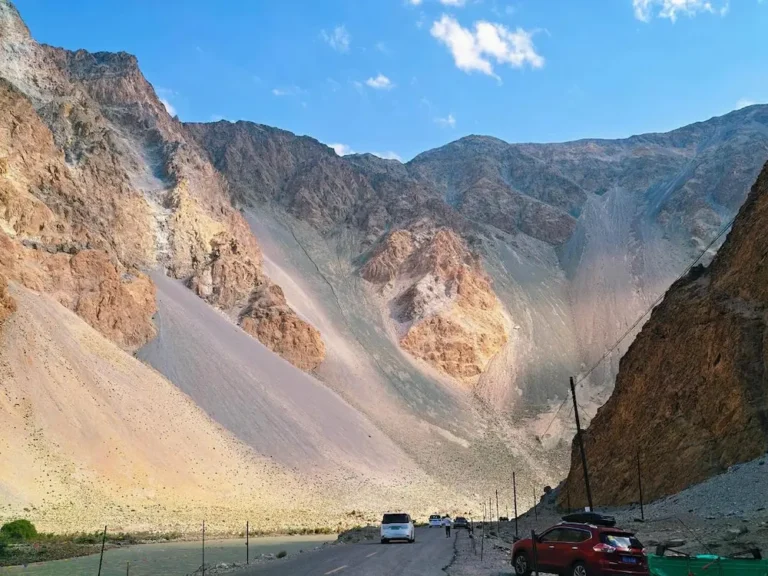
Yarkand sits on the southern edge of the Tarim Basin, about 200 km east of Kashgar, where the Yarkand River (the Zarafshan’s smaller cousin) fans out into farmland. The name appears in texts as early as the 2nd century, and for long stretches of history the town was the seat of the Yarkand Khanate (1514–1705), a Muslim polity that at its peak controlled most of the Tarim’s southern rim. The khanate’s court became a center of Uyghur literature, theology, and above all music — a tradition that survives today in the town’s claim to be the birthplace of the Muqam, the sprawling classical suite of song, dance, and instrumental music now recognized by UNESCO.
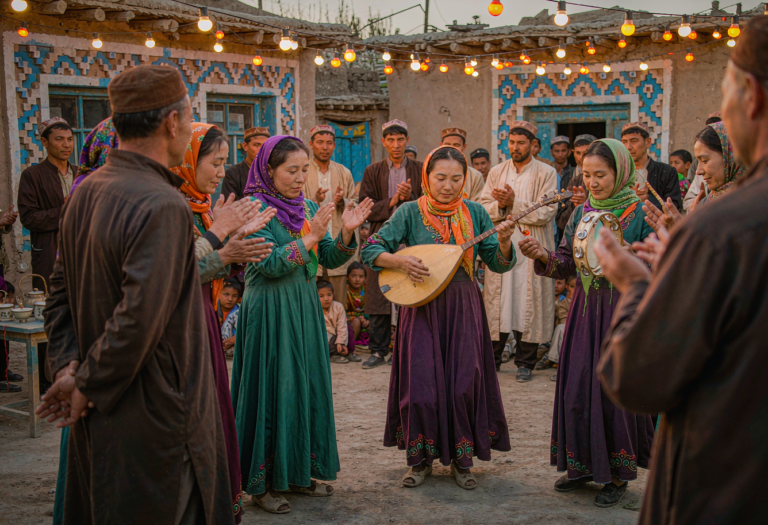
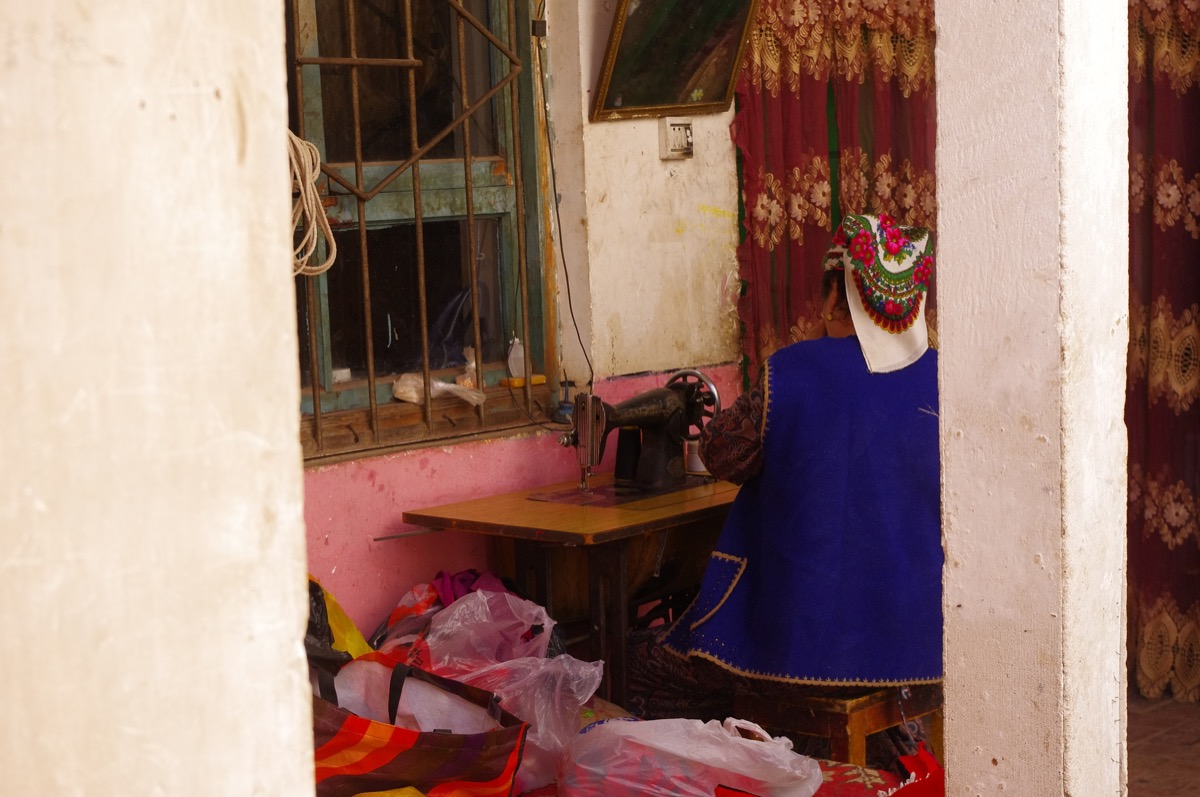
What you feel on arrival is not a museum. It is a provincial town of maybe half a million people where the bazaar still trades in cotton, walnuts, and sheep, and where the call to prayer overlaps with the sound of the rawap (a long-necked lute) drifting out of a teahouse. That ordinariness is the appeal.
Why Visit Yarkand Instead of (or After) Kashgar
Kashgar’s Old Town is spectacular but increasingly polished for visitors. Yarkand offers the same depth of history with almost none of the stagecraft. Three reasons stand out:
- The music. Yarkand is the heartland of the Twelve Muqam. On most evenings you can find live performances in teahouses or at the cultural center, and during festivals the whole town seems to play.
- The cemetery. The Royal Cemetery of Yarkand (Shache Wangling) holds generations of khans and is one of the largest Islamic cemeteries in Xinjiang — quiet, shaded, and genuinely moving.
- The freedom from crowds. I spent two full days there and counted perhaps three other foreign tourists. For photography and unhurried wandering, that alone is worth the detour.
Top Things to See
1. The Royal Cemetery (Shache Wangling / 莎车王陵)
This walled necropolis on the town’s edge is the single must-see. Rows of earthen and tiled tombs, some capped with the distinctive multi-tiered roofs of Central Asian funerary architecture, sit under old poplars. The most famous occupant is Sultan Satuq Bughra Khan’s descendant line and various Yarkand khans. Go in the late afternoon when the light is low and the tour groups (such as they are) have left.
2. The Old Town Lanes
Unlike Kashgar’s rebuilt core, Yarkand’s older residential quarters are still lived-in mud-brick warrens. Get lost deliberately. The best frames are the unrenovated alleys where bread ovens vent into the street and kids kick footballs between the walls.
3. The Muqam Cultural Center
A modest museum and performance space dedicated to the Twelve Muqam. Even if your taste in classical Uyghur music is untested, a 30-minute live set here is a better introduction than any book. Check the schedule at the gate; performances are not daily in the low season.
4. The Thursday Livestock Market
On market day the outskirts fill with herders selling sheep, cows, and the occasional horse. It is louder, funnier, and more authentic than Kashgar’s famous Sunday market, simply because almost nobody is performing for cameras.
Getting There
Yarkand sits on the main Kashgar–Hotan highway, so it is easy to reach:
- From Kashgar: roughly 2.5–3 hours by car or bus along the G3012. Shared taxis and long-distance buses leave from Kashgar’s south bus station.
- From Hotan: about 3 hours west. If you are doing the southern loop, Yarkand makes a natural midpoint.
- By train: the Kashgar–Hotan railway has stops; confirm the current timetable locally as services change.
If you are self-driving the southern Tarim loop, build in a night here rather than treating it as a photo stop. The town rewards a slow evening.
Where to Stay and Eat
Accommodation is functional rather than characterful — a couple of mid-range hotels near the main square. Eat in the night market: Polo (pilaf), laghman noodles, fresh naan, and the region’s excellent watermelons and walnuts in season. Yarkand is also known locally for its Yellow Muqam pear and for walnut pastry; try both.
Best Time to Visit
Spring (April–May) and autumn (September–October) are kindest — the basin is brutally hot in July and August, often above 35°C, and winter is a cold, quiet parenthesis. If your dates are flexible, aim for a market day in October when the light is good and the heat has broken.
Practical Tips
- Documents: carry your passport; southern Xinjiang has checkpoints, and hotels will register you.
- Photography: ask before photographing people, especially at the market and cemetery. A smile and a gesture at the camera goes a long way.
- Language: outside hotels, little English is spoken. A translation app and the Chinese name 莎车 will get you far.
- Time: give it a full day plus a night; half a day is not enough to shake the Kashgar habit of rushing.
Common questions
Is Yarkand safe for foreign travelers?
Yes. Like the rest of southern Xinjiang it is heavily policed and the real risks are heat, checkpoints, and the occasional language gap, not personal safety.
Do I need a permit for Yarkand?
No special permit is needed for the town itself. Only the Pamir destinations near Kashgar (Taxkorgan) require the border permit.
Can I visit Yarkand as a day trip from Kashgar?
You can, but I would not. The round trip eats most of the day and you arrive after the best light. An overnight stay is the better plan.
Is the Muqam performed year-round?
Not daily. Expect regular performances in summer and on festivals, and spottier ones in winter. Ask at the cultural center on arrival.
How does Yarkand compare to Kashgar?
Kashgar is the headline — bigger, more famous, more restored. Yarkand is quieter, older in feel, and more musical. They complement each other; seeing both is the smart southern Xinjiang move.
Conclusion
Yarkand will not wow you with a single postcard view. It wins slowly, through music, market days, and the unselfconscious rhythm of an oasis town that has been here for two thousand years. If you have already done Kashgar, or if you simply prefer places that have not been styled for visitors, Shache is the southern Xinjiang detour I would make every time.