5-Day Xinjiang Highlights: Urumqi, Turpan, and Heavenly Lake
{ “@context”: “https://schema.org”, “@type”: “Article”, “headline”: “5-Day Xinjiang Highlights: Urumqi, Turpan, and Heavenly Lake”, “description”: “Why Choose This 5-Day Route\nMany foreign travelers land in Urumqi with grand ambitions—Kanas, Kashgar, the Taklamakan—only to realize that time is limit…”, “datePublished”: “2026-06-26T03:00:22”, “dateModified”: “2026-06-27T08:33:09”, “author”: { “@type”: “Organization”, “name”: “Xinjiang Travel Tips”, “url”: “https://www.xinjiangtraveltips.com/” }, “publisher”: { “@type”: “Organization”, “name”: “Xinjiang Travel Tips”, “logo”: { “@type”: “ImageObject”, “url”: “https://www.xinjiangtraveltips.com/wp-content/uploads/2026/01/logo.png” } }, “mainEntityOfPage”: { “@type”: “WebPage”, “@id”: “https://www.xinjiangtraveltips.com/5-day-xinjiang-highlights-urumqi-turpan-heavenly-lake/” }
}
Why Choose This 5-Day Route
Many foreign travelers land in Urumqi with grand ambitions—Kanas, Kashgar, the Taklamakan—only to realize that time is limited and distances are vast. This 5-day itinerary is designed for exactly that scenario: it packs the most iconic, culturally rich, and visually spectacular destinations within a manageable radius of Urumqi, giving you a concentrated but unhurried introduction to Xinjiang’s diversity.
Last updated: July 15, 2026 · Written by Karl Huang, a Xinjiang travel specialist who has spent time across the region. Practical details are cross-checked against official tourism, transport, and border-regulation sources.
You’ll experience three distinct landscapes: the modern Uyghur cultural gateway of Urumqi, the sub-sea-level desert oasis of Turpan with its 2,000-year-old water engineering, and the glacial alpine mirror of Heavenly Lake framed by 5,000-meter peaks. Each day builds logically, with minimal backtracking and maximum contrast.
For a deeper dive into planning your Xinjiang adventure, explore our Xinjiang Travel FAQ to prepare for practicalities before you fly.
Day 1: Arrive in Urumqi & the Museum Foundation
Land in Urumqi Diwopu International Airport. Currency exchange is available at the airport, but rates are better in the city. If you arrive in the morning, head straight to the Xinjiang Uyghur Autonomous Region Museum (free entry, passport required, reserve in advance via WeChat mini-program). This is not optional—it is the cultural foundation layer that makes every subsequent site click into place. Allow 2–3 hours.
What to see inside:
- The Tarim Basin Mummies gallery—3,800-year-old naturally desiccated burials in full textile regalia, showcasing the region’s ancient Caucasian and East Asian populations
- Silk Road trade artifacts: Sogdian silver plates, Kushan coins, Tang dynasty tri-color ceramics that trace the flow of goods between China and Central Asia
- Ethnic minority galleries: Uyghur, Kazakh, Kyrgyz, Tajik costumes, yurts, and musical instruments including the rawap and dutar
- Modern history wing: 20th-century railway expansion, border history, and the development of Xinjiang as China’s northwest gateway
After the museum, walk the International Grand Bazaar (free to enter, shopping optional). The architecture is a modern interpretation of Islamic timber-and-tile motifs, and the surrounding streets are where you’ll find your first laghman noodles and chuanr (lamb skewers). Dinner at the bazaar food court is a low-risk, high-reward introduction to Xinjiang cuisine. Try the samsa (baked meat pastry) and fresh pomegranate juice.
Overnight: Urumqi city center (Hilton, Jinjiang, or mid-range options near Renmin Road). Book at least a week ahead in peak season (July–August).
Practical note: Urumqi is GMT+8 but locals often operate on a “Xinjiang time” (~2 hours behind Beijing). Restaurants may not open for dinner until 8:00 PM. Embrace the rhythm.
Day 2: Heavenly Lake (Tianchi) — The Blue Mirror
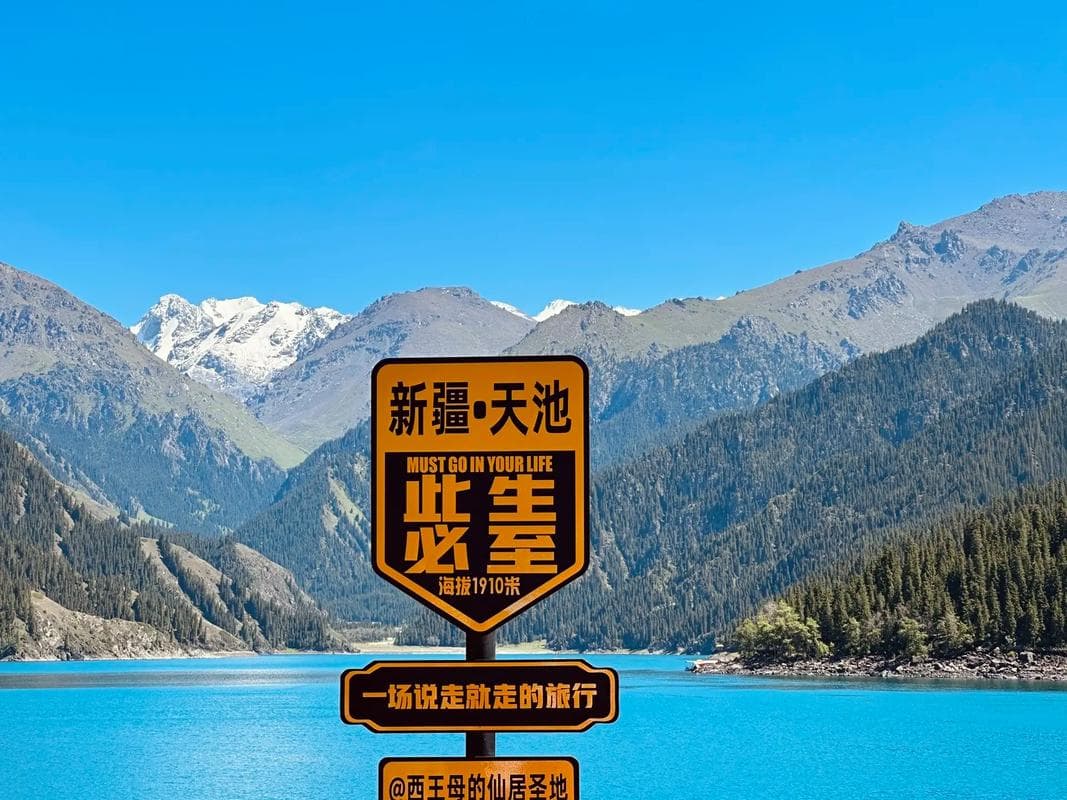
Depart Urumqi at 7:30 AM for Heavenly Lake (Tianchi), ~110 km / 2 hours each way via G216. This glacial moraine lake at 1,980 meters is the most iconic “postcard view” within half-day reach of Urumqi. The Uyghur name ties to the Tengri (“sky”) tradition, and its setting—a sapphire oval framed by the Bogda Peak (5,445 m) ridgeline—justifies the crowds if you time it right.
Tickets & logistics:
- Entrance: ~¥155/person + mandatory shuttle bus ~¥60 round-trip
- You cannot self-drive up to the lake rim; all cars park at the Heavenly Lake Tourist Center lower lot
- Passport required at ticket gates (standard procedure for foreign visitors)
- Optional cable car to Maya Peak (马牙山): ~¥220 round-trip for aerial perspective
What to do:
- Walk the West Shore plank trail (~3 km easy loop) for classic Bogda reflection shots. The best light is within 90 minutes of sunrise.
- Take the cable car up Maya Peak for the aerial perspective over the lake and the moraine ridge. If you only do one paid extra, make it this.
- Picnic under the spruces—bring nuts, fruit, water from Urumqi. There are designated rest areas with wooden tables.
- Visit the Tianchi Legend Museum (small exhibit near the south shore) explaining the Mongol “West Queen Mother” mythology tied to the lake.
Best light: Arrive before 9:00 AM on a weekday to beat the tour buses. September light is crisp and golden; June–August is lush but crowded. If you’re a photographer, the “golden hour” here starts around 7:00 PM in summer.
Return to Urumqi by 6:00 PM. Have dinner at a local Urumqi restaurant to sample dapanji (big plate chicken) in its home city. This dish—chicken, potatoes, and wide noodles in a cumin-scented sauce—was invented in Urumqi in the 1980s.
Overnight: Urumqi (same hotel or switch to one near the south bus station for tomorrow’s Turpan departure).
Day 3: Turpan — The Hottest Place in China
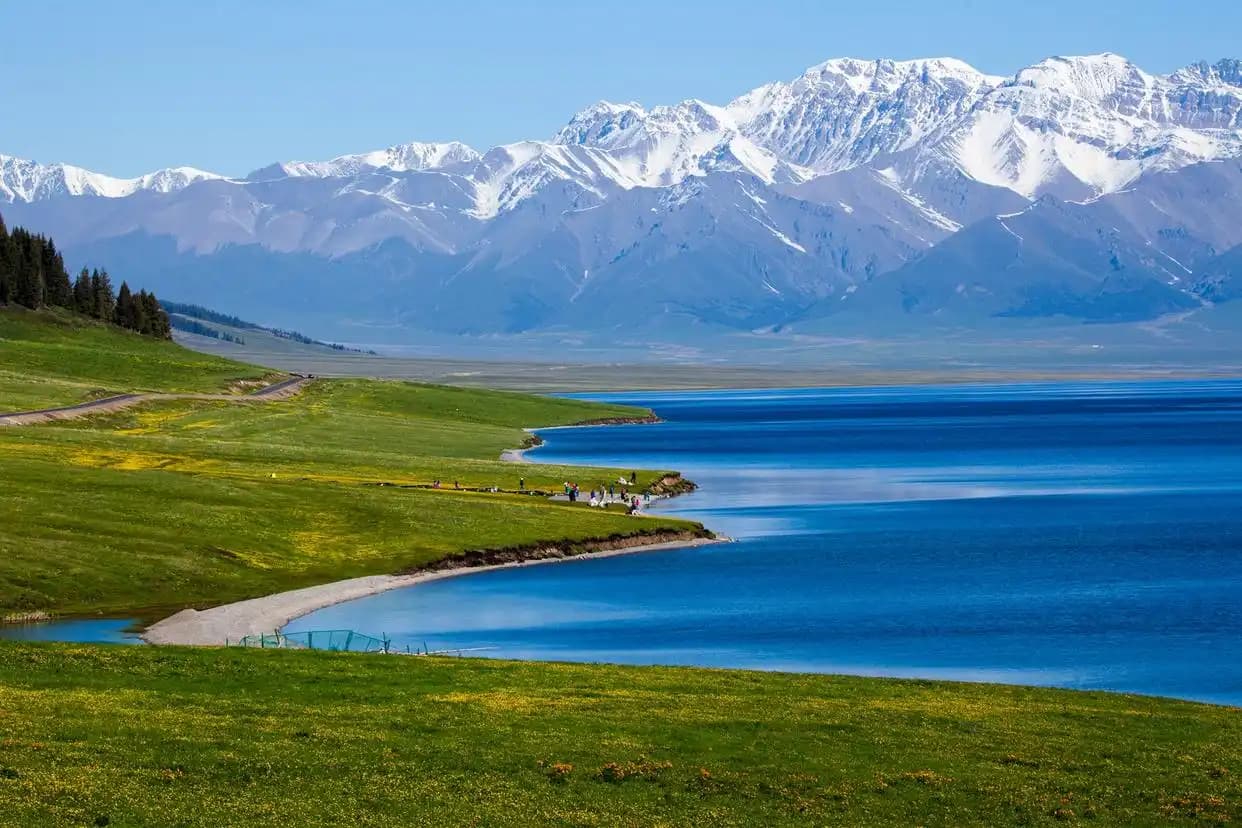
Take the early morning expressway south to Turpan (~180 km / 2.5 hours). Turpan sits in a depression below sea level (−154 m), holds the record for the hottest place in China (regular summer highs of 45°C+), and is home to the Karez—a 2,000-year-old underground irrigation network that carries snowmelt through tunnels under the desert.
Morning: Karez Well System (坎儿井)
Ticket: ~¥40/person. Walking into the cool tunnel air (about 22°C year-round) after the blazing street heat is a visceral lesson in desert survival. This UNESCO-listed hydraulic engineering feat is not just “wells”—they’re vertical shaft → horizontal tunnel systems stretching tens of kilometers, excavated entirely by hand through packed earth. The system taps groundwater from the Tian Shan mountains and delivers it to the oasis without surface evaporation. At its peak, Turpan had over 1,000 Karez channels; about 400 still flow today.
Late morning: Sugong Minaret (苏公塔)
Ticket: ~¥45/person. A stunning 18th-century Uyghur Islamic tower in sun-dried brick, standing 44 meters tall, with intricate geometric masonry and almost zero crowds. One of the most photogenic architectural subjects in Xinjiang. The minaret was built in 1777 by the local ruler Emin Khoja as a tribute to the Qing emperor’s support. Climbing the internal spiral staircase is allowed on some days—ask the ticket office.
Afternoon: Grape Valley (葡萄沟)
Ticket: ~¥60 entrance + ¥25 shuttle. A narrow green canyon threaded with pergola-shaded walkways hung with 20+ grape varieties. Uyghur folk dance performances in season (usually 12:30 and 16:00 in summer). July–August is peak ripeness—buy a bag of seedless white grapes for ¥10–20 and eat them in the shade. The valley also has a Grape Exhibition Hall explaining the 2,000-year history of viticulture in Turpan (yes, Chinese wine grapes originated here, not in France).
Evening: Turpan old town for laghman noodles and chuanr. The night food street near the city center comes alive after 8:00 PM. Try the yak meat hotpot if you’re feeling adventurous—Turpan is one of the few places in Xinjiang where yak is on regular menus.
Overnight: Turpan city (simple hotels, ¥150–400/night). The Khan Palace Hotel is a reliable mid-range option with English-speaking staff.
For more context on Turpan’s role on the Silk Road, read our Silk Road heritage guide before you visit.
Day 4: Jiaohe Ancient City & the Flaming Mountain
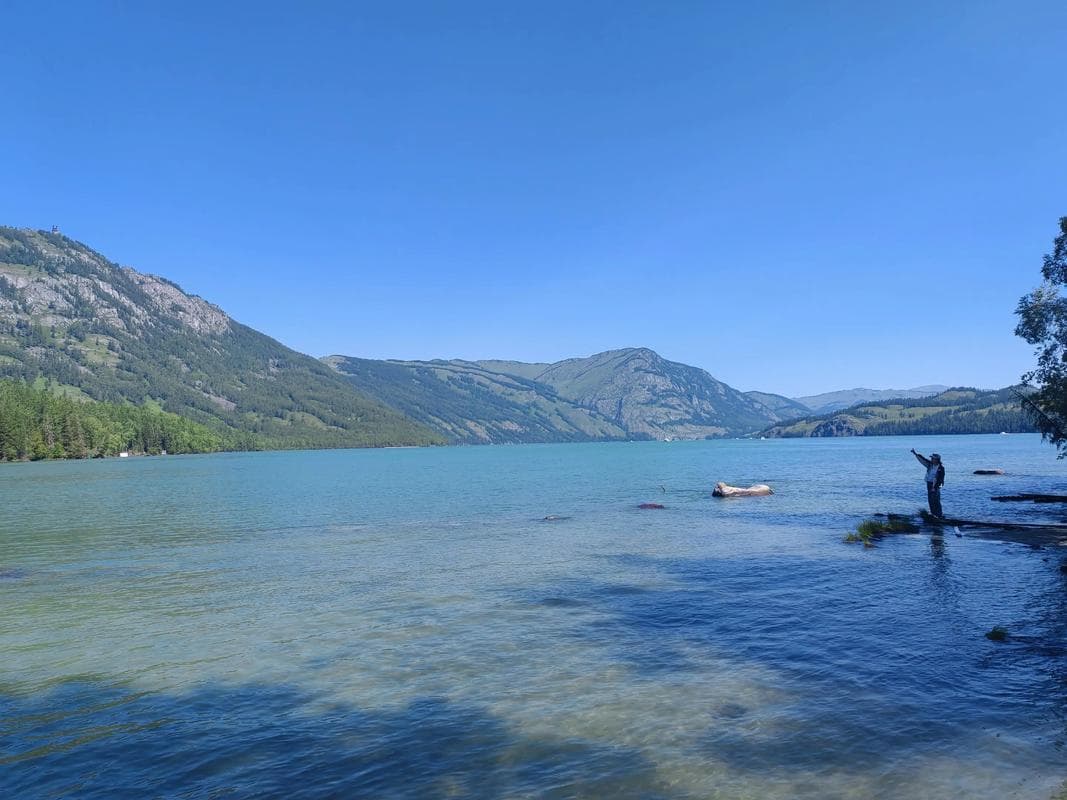
Morning: Jiaohe Ancient City (交河故城)
If you leave Turpan without seeing Jiaohe, you missed the most haunting place in the basin. Unlike looted stone ruins elsewhere on the Silk Road, Jiaohe is built from—and carved into—the solid loess plateau itself. An entire city-state of 2,100+ years ago, shaped rather than assembled, on a narrow spit of land between two rivers (hence “Jiao-he” = “river confluence”).
Jiaohe was the capital of the ancient Jushi (Chesshi) kingdom, later absorbed into Han Chinese and then Uyghur spheres. At its peak, it housed ~7,000 people. The city layout is still logical: the wide central spine (South Gate avenue) lined with temple mound remnants and residential block foundations, the Buddhist stupa mound on the northern cape (the spiritual anchor), and residential quarters to the east and west where you can trace room-by-room floor plans pressed into the earth.
Ticket: ~¥70 + ¥25 shuttle (mandatory). Walking time: 1.5–3 hours. Photography tip: Best in late afternoon when the western walls catch side-light and shadows define the relief. The site faces east-west, so morning lights the approach; evening lights the inside textures.
Late afternoon: Flaming Mountain (火焰山)
Ticket: ~¥40/person. A striking red sandstone ridge that genuinely radiates heat. The site has a large thermometer sculpture (often reading 60°C+ in summer) and some kitschy Sun Wukong (Monkey King) theme elements from the classic novel Journey to the West, which fictionalized this area as the “Flame Mountain” that Sun Wukong had to extinguish. Worth a 30-minute photo stop if you’re passing on the way back toward Urumqi, but it’s not a “hike” destination in summer.
Return to Urumqi: ~2.5 hours. Arrive by 8:00 PM. Have a farewell dinner at the Erdaoqiao meat market area for the most authentic lamb skewers in the city.
Overnight: Urumqi (consider a hotel near the airport for tomorrow’s departure).
Day 5: Departure or Extension
If you fly out today: allow 1 hour to the airport from city center. If you have more time, consider these extensions:
- North Xinjiang loop: Fly or drive to Kanas and Hemu (requires 3–4 additional days). This adds the iconic alpine lake and birch-forest village that most travelers associate with Xinjiang. See our North Xinjiang loop guide for details.
- South Xinjiang cultural tour: Fly to Kashgar for the Old City, Sunday livestock market, and Pamir Highway extension (4–5 additional days). Kashgar is the cultural heart of the region and the best place to experience Uyghur architecture and hospitality.
- Seasonal extension: If visiting in June, add a day in Huocheng for lavender fields (the “Provence of China”). If in September, add a day in the Ili Valley for golden grasslands and Kazakh horse games.
- Karakul Lake & the Pamirs: If you extended to Kashgar, continue to Karakul Lake at 3,600 meters for glacial reflections and Kyrgyz yurt stays. Requires a border permit arranged in Kashgar.
Practical Tips for This Route
Transport: Private charter (~¥600–900/day for a standard sedan with driver) is the most flexible option. Didi/rideshare works within Urumqi and Turpan city cores but not for intercity travel. The Urumqi–Turpan high-speed rail (~1 hour, ~¥50) is an alternative if you prefer trains and don’t mind fixed schedules.
Best season: May–June and September–early October offer the best balance of weather and crowds. July–August is very hot in Turpan (45°C+) but pleasant at Heavenly Lake. Winter (December–February) is crowd-free but cold; some facilities close. Spring (April–May) brings dust storms—check weather forecasts daily.
What to pack: SPF 50+ sunscreen (the high-altitude UV is intens), wide-brim hat, sunglasses, layers (Urumqi 30°C, Heavenly Lake 15°C, Turpan 40°C in summer), sturdy walking shoes, and cash (many small vendors don’t take cards or international mobile payments). A portable power bank is essential—heating and cooling drain phone batteries fast.
Border permits: Not required for this route. If you extend to Kashgar and the Pamirs, arrange a PSB border permit in Urumqi or Kashgar (usually free through your hotel or a travel agency). Bring your passport and one photo.
Food & water: Hydrate aggressively in Turpan—the dry desert air hides sweat loss. Urumqi and Turpan have excellent Uyghur and Chinese restaurants; Heavenly Lake has basic food stalls but bringing your own picnic is better. Tap water is not safe to drink—stick to bottled water (¥2–3 in cities, ¥10 at scenic areas).
Internet & connectivity: WeChat and Alipay are essential for daily life in Xinjiang. International credit cards don’t work widely. Arrange a Chinese SIM card at the airport or use your hotel’s Wi-Fi for mapping and translation. Google Maps doesn’t work reliably; use Baidu Maps (with a translation app) or ask your hotel to write destinations in Chinese for taxi drivers.
Sample Budget (Per Person, Mid-Range)
| Item | Cost (CNY) |
|---|---|
| Accommodation (4 nights, mid-range) | ¥800–1,200 |
| Entrance tickets & shuttles | ¥600–800 |
| Transport (private charter or HSR) | ¥800–1,500 |
| Food (5 days, mix of local & mid-range) | ¥400–600 |
| Incidentals (water, snacks, souvenirs) | ¥200–300 |
| Total estimate | ¥2,800–4,400 |
Budget tips: Stay in guesthouses rather than hotels (¥150–300/night), eat at local noodle shops (¥15–30/meal), and use public buses between cities (¥60–100) to cut costs by 40–50%.
Why This Route Works
This 5-day itinerary is just the beginning. Xinjiang is 1.6 million square kilometers—roughly the size of Iran or one-sixth of China’s total territory. Every extra day unlocks a completely different landscape and culture. Plan well, travel respectfully, and let the Silk Road surprise you.
The route is designed so you never backtrack: Urumqi → Heavenly Lake (day trip) → Turpan (south) → Jiaohe (near Turpan) → back to Urumqi. It’s loically paced, with the museum on Day 1 giving you context for everything you’ll see in the following days. Turpan’s desert heat contrasts with Heavenly Lake’s alpine cool. The ancient ruins at Jiaohe provide a contemplative close before you fly out.
Most importantly, this route keeps you on paved roads with reliable services. If this 5-day taste awakens your curiosity, the 10-day and 14-day extensions into northern and southern Xinjiang await. The Silk Road is not a destination—it’s a direction. Start here, then keep going.
What other travelers wrote in to ask
Is Karakul Lake different from Sayram Lake?
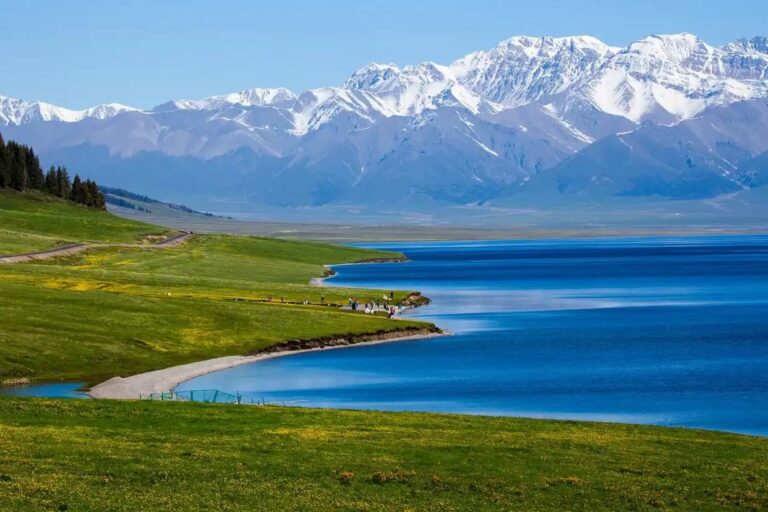
Yes! Karakul Lake (3,914m altitude) is a high-altitude glacial lake on the Pamir Plateau with snow-capped Muztagh Ata as backdrop. Sayram Lake (2,071m) is lower, larger, and known as the ‘last tear of the Atlantic.’
Can I get altitude sickness at Karakul Lake?
At nearly 4,000 meters, some visitors experience mild symptoms. Rest upon arrival, stay hydrated, avoid strenuous activity for the first few hours, and consider bringing altitude sickness medication.
What’s the road condition on the Karakoram Highway to Karakul Lake?
The paved highway is generally good but has mountain passes over 4,000m. Winter (November-March) can bring closures due to snow. Check conditions before traveling in colder months.
For more Xinjiang travel guides and detailed information about the region’s most spectacular destinations, explore our comprehensive collection of attraction guides.
For the wider city plan, my Urumqi City Guide: What to Do in Xinjiang’s Capital Beyond the Layover maps out what’s worth your time beyond the layover.