Xinjiang 7-Day Itinerary: A Silk Road Adventure That Actually Works
Your complete day-by-day guide to experiencing the best of China’s most spectacular region — from glacial lakes and desert highways to Silk Road ruins and living oasis cities.
Last updated: July 15, 2026 · Written by Karl Huang, a Xinjiang travel specialist who has spent time across the region. Practical details are cross-checked against official tourism, transport, and border-regulation sources.
Planning a trip to Xinjiang (新疆) can feel overwhelming. At 1.66 million km² — larger than Iran and nearly as big as Alaska — this is China’s largest province, and the distances between its highlights are measured in half-days, not hours.
But here’s the good news: with 7 well-planned days, you can experience the essential Silk Road trifecta — snow-capped alpine lakes, living desert oasis culture, and the Silk Road’s most atmospheric ruins — without spending your entire holiday in a car seat.
This itinerary is designed for travelers who want depth over checkbox tourism. It follows a logical geographic arc, minimizes backtracking, and gives you enough time at each stop to actually feel the place.
Before You Start: The 3 Things You Must Know
1. North vs. South (Pick One)
Seven days is enough for a deep dive into either North Xinjiang (阿尔泰山 + 伊犁) or South Xinjiang (塔里木盆地 + 喀什). Trying to do both will turn your holiday into a road marathon. This itinerary covers North Xinjiang — the route with the most dramatic scenery and the best infrastructure for independent travelers.
If your heart is set on South Xinjiang (Kashgar, the Taklamakan, and the Pamir Highway), see the “South Xinjiang Alternative” section at the end of this article.
2. The Border Permit (边防证)
If your itinerary includes Kanas, Hemu, or Baihaba, you’ll need a PSB border-zone permit (边防证). Arrange this in Urumqi or your home city before departing. Bring your passport and allow 1–2 hours. Hotels in Urumqi can usually help with this.
3. Best Season
- June–early October: Full access, warm days (15–25°C), all scenic zones open.
- Mid-September to early October: The sweet spot. Larch trees turn gold, crowds thin, and the light is incredible.
- November–March: Kanas and Hemu are snowed in; only accessible for ski trips or winter festivals.
Day 1: Urumqi Arrival & Heavenly Lake (Tianchi)
Overnight: Urumqi city | Drive time: 2 hours round-trip
Landing in Urumqi (乌鲁木齐), the capital of Xinjiang, you’re immediately aware you’re somewhere different. The air is dry, the sun is intense, and the sky has that high-altitude clarity.
Spend your first morning at the Xinjiang Regional Museum — 2 hours that will give you the historical framework to understand everything else you’ll see. The 3,800-year-old Tarim mummies alone are worth the visit.
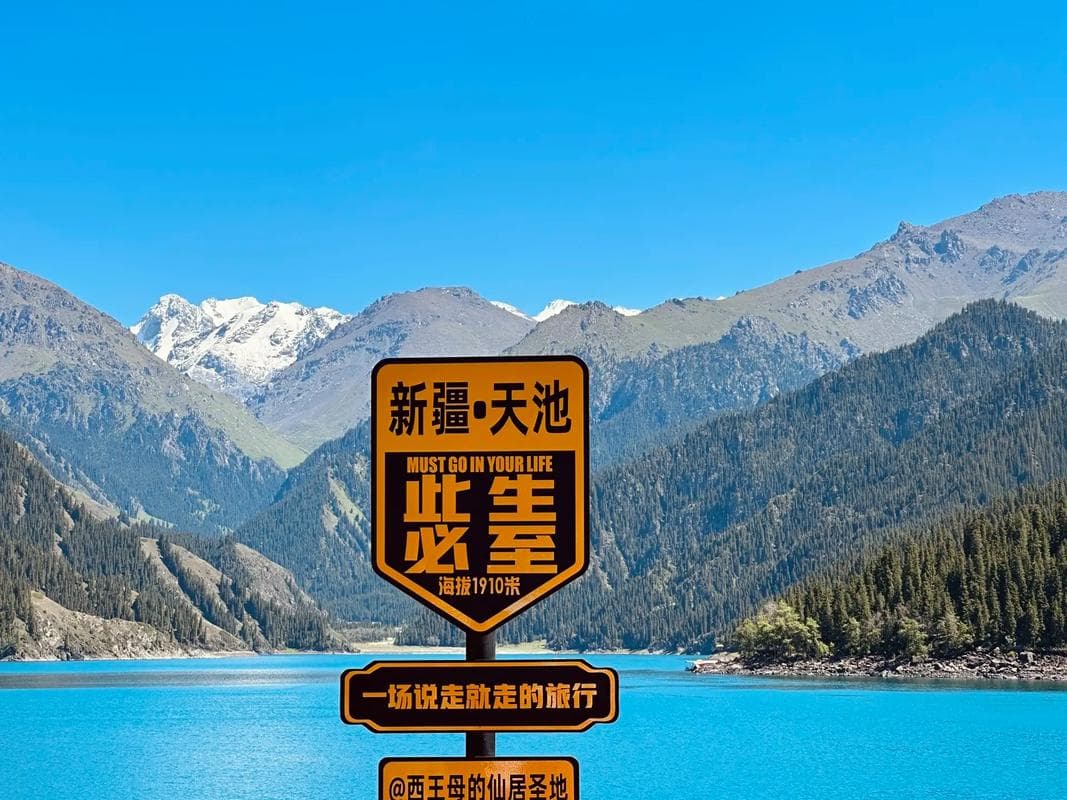
In the afternoon, head northeast to Heavenly Lake (Tianchi / 天池), a glacial moraine lake at 1,980 m framed by the snow-covered Bogda Peak (5,445 m). The drive takes about 90 minutes each way. Once at the lake, walk the west shore plank trail for classic reflection shots, or take the cable car up to Maya Peak for an aerial view.
Where to eat tonight: Try laghman (pulled noodle) or da pan ji (big plate chicken) at a busy local spot in the Saybagh district.
Day 2: Urumqi → Sayram Lake (via Guozi Gorge)
Overnight: Lakeside yurt or yurt-style guesthouse near Sayram | Drive time: 5–6 hours
This is the day the landscape changes. Leaving Urumqi, you’ll drive west on the G30 expressway toward Yining (Ili Valley). The route passes through Guozi Gorge (果子沟大桥), a spectacular highway bridge cutting through a steep forested canyon — one of the most photographed road sections in China.
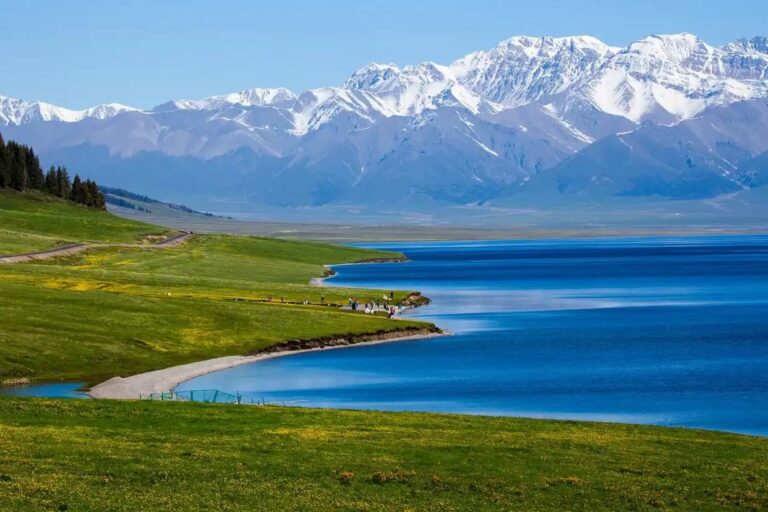
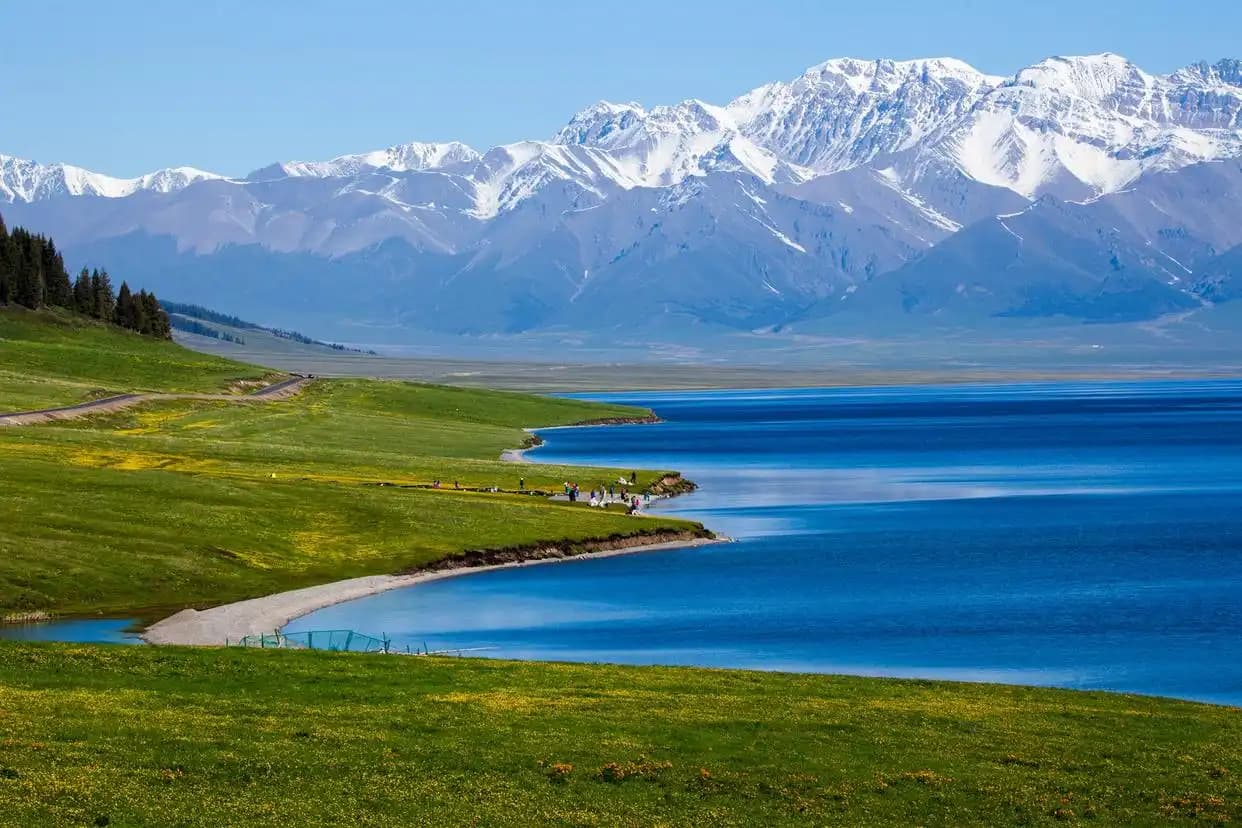
By mid-afternoon you’ll reach Sayram Lake (赛里姆湖), Xinjiang’s largest alpine lake at 2,073 m. The water here cycles through jade, teal, and electric cyan depending on cloud cover and angle. Drive the ~90 km ring road around the lake, stopping at pull-offs for glacier viewpoints and nomad tent encounters.
If you’re there in June, the south shore wildflower meadows are in full bloom.
Pro tip: Stay overnight in a Kazakh yurt camp by the lakeshore. Waking up to the sound of wind across water and no light pollution is unforgettable.
Day 3: Sayram Lake → Kanas Village (via Beautiful Valley Road)
Overnight: Kanas Village wooden lodge | Drive time: 5–6 hours
After a sunrise lakeshore walk, begin the drive north toward the Altai Mountains and Kanas Lake (喀纳斯湖). The route takes you through the Beautiful Valley (美景公路) and past rolling grasslands where you might spot herds of horses being moved by Kazakh riders.
Arrive at Kanas Village in the late afternoon. Check into a wooden lodge and head straight to Wolong Bay (卧龙湾) for the classic “reclining dragon” sandbar photo at golden hour.
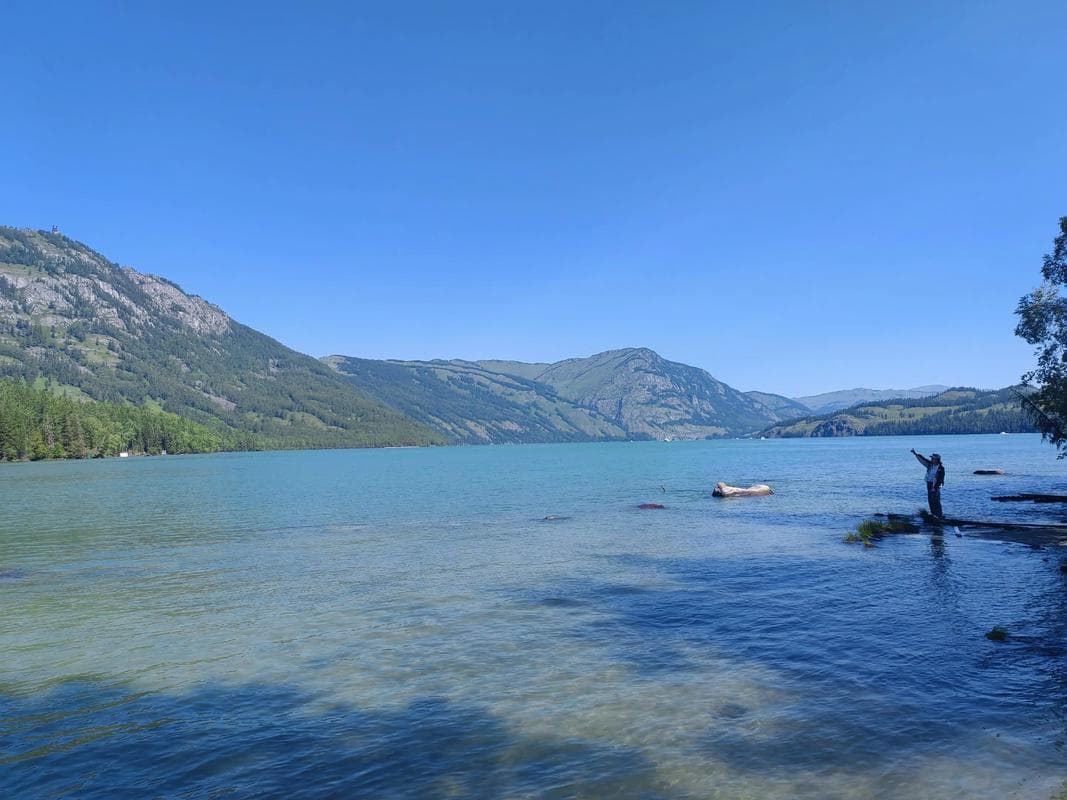
Kanas is the single most famous landscape in Xinjiang — and for good reason. The glacial lake sits in a tectonic dammed valley, surrounded by Siberian taiga and snow peaks that shift color with the light.
Note: During peak season (July–August), you’ll park at Jiadenyu and take the mandatory park shuttle (30 km) into the core zone.
Day 4: Kanas Three Bays — Shenxian, Moon, and Guanyu
Overnight: Kanas Village or Jiadenyu | No driving (shuttle buses only)
Today is about slow walking and photography. The Kanas core area is best experienced on foot, not from a tour bus window.
Start at Shenxian Bay (神仙湾) at sunrise. This is the mist spot — early morning calm creates layered fog ribbons over the braided river channels. It’s the iconic Kanas shot, and you’ll have it to yourself if you stay inside the park.
Next, take the shuttle to Moon Bay (月亮湾) and walk down the wooden stairs to water level. The crescent curve of the river, backed by birch-covered ridges, is why this place is called “God’s Garden.”
Finish at Guanyu Tai (观鱼台) — climb the 1,066 steps (or take the escalator) to the overlook platform above the lake’s eastern arm. This is where you see the S-shaped bend and understand the scale of the reserve.
Day 5: Kanas → Hemu Village
Overnight: Hemu Village timber guesthouse | Drive/transfer time: 1.5–2 hours
Hemu (禾木) is the quieter sibling of Kanas — a Tuvan timber village where pine-log cabins smoke at dawn and birch groves glow gold in September light. It’s become one of China’s most photographed sunrise spots, and the only way to get the shot is to stay overnight inside the village.
Spend the afternoon walking the birch river trail or renting a horse from a local family (¥80–150/hour). In the evening, climb to the Hemu Viewing Deck above the village for sunset.
Cultural note: Hemu is a Tuvan village (a Mongolic-speaking mountain people related to those in Mongolia and Tuva Republic). Respect private property — don’t wander into someone’s yard uninvited.
Day 6: Hemu Sunrise → Urumqi (or Yining)
Overnight: Urumqi or Yining | Drive time: 6–7 hours (or 1.5-hour flight from Kanas Airport)
Wake before dawn for the Hemu sunrise — the reason most travelers come. As the first light hits the birch tops and smoke rises from log cabin chimneys, you’ll understand why this is considered one of China’s most beautiful villages.
After breakfast, begin the journey back. You have two realistic options:
- Drive back to Urumqi (6–7 hours from Jiadenyu/Kanas staging area). Stop in the Beautiful Valley for photos on the way back.
- Fly from Kanas Airport (KJI) to Urumqi (1.5 hours, multiple flights daily in summer). This saves a full day of driving and is highly recommended if your budget allows.
Spend the evening in Urumqi soaking your tired legs in a local hammam or enjoying a farewell feast of Xinjiang cuisine.
Day 7: Urumqi → Turpan Day Trip (or Departure)
Departure day | Drive time: 3 hours round-trip (or fly out)
If your departure flight is in the evening, spend your final day on a Turpan (吐鲁番) day trip — a 3-hour round-trip from Urumqi that takes you to China’s hottest and lowest city.
Visit the Karez Well System (坎儿井), a 2,000-year-old underground irrigation network that carries snowmelt through hand-excavated tunnels under the desert. Walking into the cool tunnel air (22°C year-round) after the blazing street heat is a visceral lesson in desert survival.
If time allows, swing past Jiaohe Ancient City (交河故城), the best-preserved mud-brick ancient city on Earth, built on a narrow spit of land between two rivers. It’s a UNESCO World Heritage Site and hauntingly beautiful at sunset.
South Xinjiang Alternative (7 Days)
If your fascination is with Silk Road history, desert landscapes, and Central Asian culture rather than alpine scenery, swap the north for this South Xinjiang loop:
- Days 1–2: Urumqi → Turpan (Karez, Jiaohe, Flaming Mountain)
- Day 3: Turpan → Kuqa via desert highway (or flight)
- Days 4–5: Kuqa (Kizil Caves, Subash Ruins, Tianshan Grand Canyon)
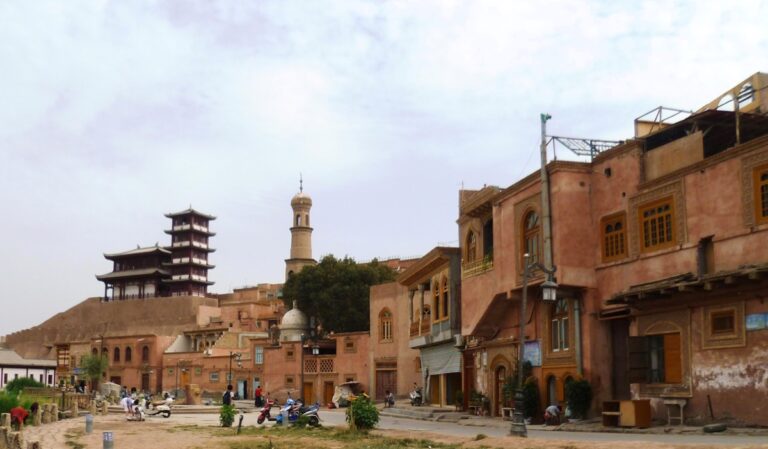
- Days 6–7: Kuqa → Kashgar (Old City, Id Kah Mosque, Sunday Livestock Market)
This route requires at least one internal flight (Urumqi → Kuqa or Kashgar) to fit into 7 days. The cultural payoff is immense — you’ll experience Uyghur and Tajik heritage, apricot orchards, and the edge of the Taklamakan Desert.
Practical Planning: Costs, Transport & When to Book
| Item | Budget (¥) | Mid-Range (¥) | Notes |
|---|---|---|---|
| 4×4 charter (per day) | 800–1,200 | 1,500–2,500 | Incl. driver, gas, parking |
| Guesthouse (per night) | 150–300 | 400–800 | June–August book 2 weeks ahead |
| Park entrance (total) | ~800 | ~1,200 | Kanas, Sayram, Heavenly Lake |
| Meals (per day) | 80–120 | 150–250 | Local noodles, kebabs, naan |
| Flights (internal) | 600–1,200 | 1,200–2,500 | Urumqi ↔ Kanas, book early |
Getting Around
- Self-drive: Allowed with a Chinese license. Foreign-plated cars may face restrictions at some scenic zone gates — check current rules.
- Private charter: The most flexible option. Drivers know the checkpoints, the best photo stops, and the road conditions.
- Flights: Kanas Airport (KJI) connects to Urumqi in summer. Book early — prices spike in July–August.
What to Pack
- SPF 50+ sunscreen: The high-altitude sun is punishing.
- Layers: Temperatures swing 15–20°C between day and night.
- Cash: Many yurt camps and remote guesthouses don’t take cards.
- Passport: Required at every ticket gate and hotel check-in.
- Reusable water bottle: 1.5L minimum per person per day.
Seven days in Xinjiang isn’t enough to see everything — and that’s the point. This itinerary gives you the region’s greatest hits while leaving room for the unexpected: a conversation with a Kazakh herder, a sunset that stops you in your tracks, or a meal that redefines what you think Chinese food is.
For detailed guides to each destination mentioned above, explore our individual attraction articles — each one written by travelers who’ve actually been there, not AI-generated fluff.
Ready to start planning? Browse all our Xinjiang travel guides or dive into our Xinjiang Travel category page for more itineraries and practical tips.
Frequently Asked Questions About Xinjiang Travel
What is the best time to visit Sayram Lake?
June through September offers the best weather with temperatures between 15-25°C and wildflowers in full bloom around the lake.
How do I get to Sayram Lake from Urumqi?
Sayram Lake is about 450km from Urumqi. You can drive via the G30 highway (5-6 hours), take a bus from Urumqi West Bus Station (6-7 hours), or hire a private driver for the most flexibility.
Is there an entrance fee for Sayram Lake?
Yes, the entrance fee is approximately 70 RMB per person. Additional fees may apply for the lake island boat tour (about 100 RMB) and the scenic area shuttle bus.
Can I camp near Sayram Lake?
Camping is allowed in designated areas around the lake. The best spots are on the eastern shore where you can wake up to stunning sunrise views over the water.
What should I pack for a trip to Sayram Lake?
Even in summer, temperatures can drop significantly at night. Bring layers, a windproof jacket, sunscreen (UV is strong at high altitude), and comfortable walking shoes.
Planning your trip? Check out our complete Xinjiang travel tips including practical advice on transportation, accommodation, and seasonal considerations.