Xinjiang Mug Lamb Guide
Mug Lamb, a traditional specialty dish originating from Kashgar, Xinjiang, has become a shining gem in Xinjiang’s culinary culture thanks to its unique cooking vessel and authentic flavor. Wandering through Xinjiang’s bustling streets, especially at dawn bazaars, you’ll encounter rows of steaming enamel mugs simmering fragrant lamb. Xinjiang Mug Lamb isn’t just a perfect breakfast choice for locals—it’s an exceptional way for visitors to immerse themselves in authentic regional culture.
I. The History and Cultural Significance of Mug Lamb
The origins of Mug Lamb trace back to the 1960s during the construction of water conservancy projects in the Kashgar region. In the harsh conditions of the construction sites, where cooking utensils were scarce, resourceful workers devised a method to stew lamb using their personal enameled drinking mugs. This ingenious approach yielded a convenient and delicious culinary technique.
This distinctive cooking technique quickly gained popularity locally and gradually spread throughout Xinjiang. Mug Lamb not only embodies the innovative spirit of Xinjiang’s people under challenging conditions but has also become a symbol of ethnic unity and labor wisdom.
In Uyghur, Mug Lamb is known as “qayinashorba,” while it also carries the Russian-derived nickname “gurushbashoriba,” reflecting Xinjiang’s distinctive blend of diverse cultures. Today, Mug Lamb has evolved from its humble beginnings as a construction site meal into one of Xinjiang’s most iconic dishes, even serving as a defining symbol of the region’s culinary culture.
II. The Unique Appeal of Mug Lamb
1. The Distinctiveness of the Cooking Utensil
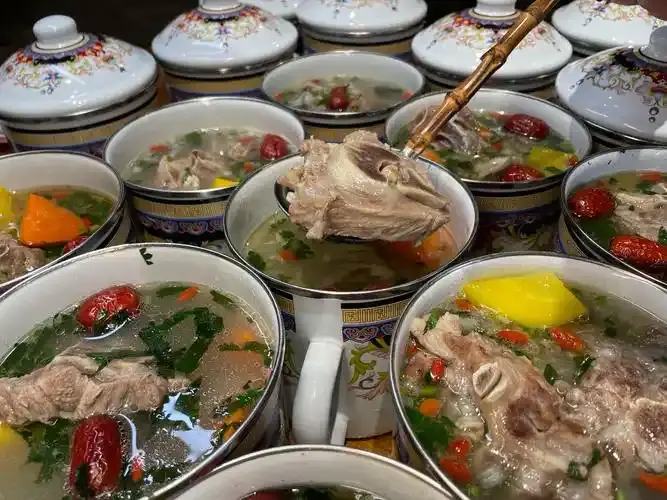
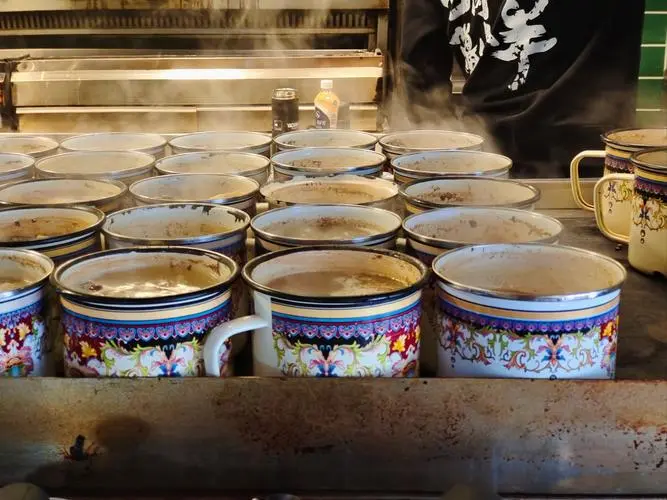
The defining feature of Mug Lamb lies in its use of traditional enameled pots as the cooking vessel. Though these utensils, common in the 1950s and 1960s, have gradually faded from daily life, they remain preserved in the preparation of Mug Lamb.
The enamel pot excels at heat retention and even heat distribution, allowing the lamb to fully release its aroma during slow simmering while maintaining tender, succulent meat. Compared to standard pots, the small-batch individual stewing method better locks in the ingredients’ natural juices and flavors—a key factor in Mug Lamb’s distinctive taste.
2. Ingredients and Culinary Essence
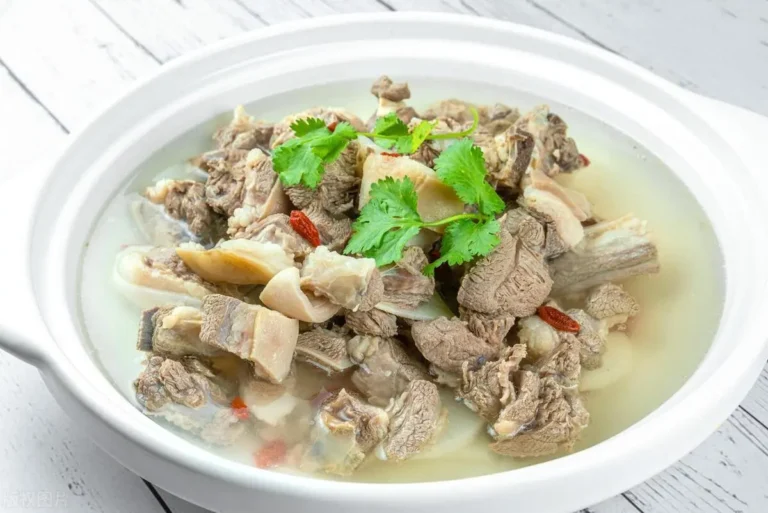
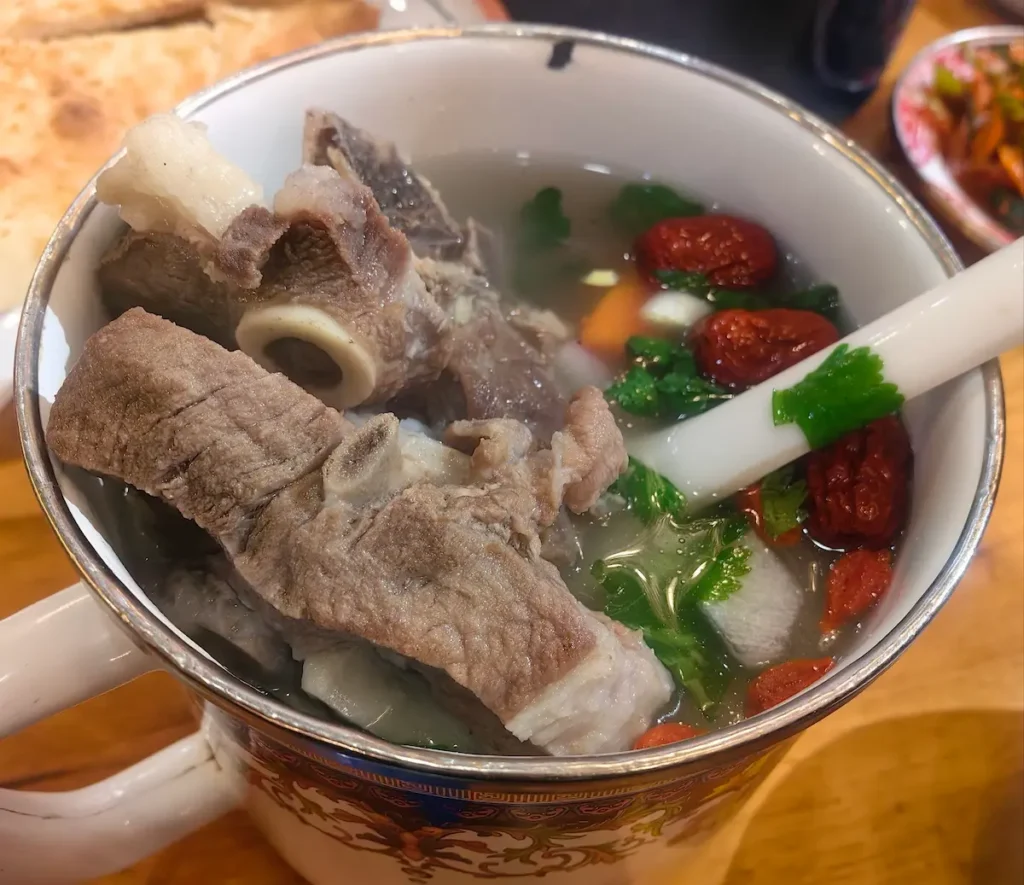
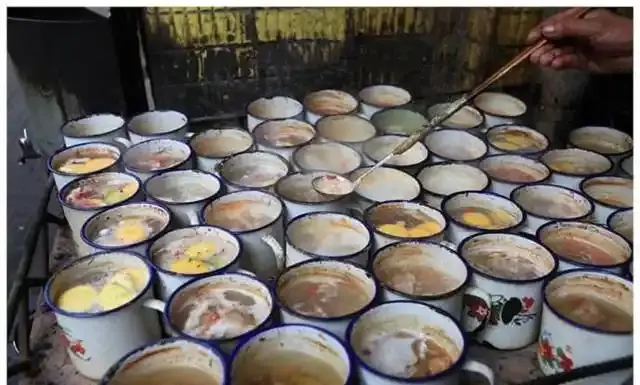
Authentic Mug Lamb uses premium Xinjiang lamb, typically selecting bone-in cuts like leg or ribs. Xinjiang lamb is renowned for its tenderness and lack of gaminess, attributed to the region’s unique natural environment and rearing methods.
The ingredient selection emphasizes simplicity and purity, usually including only a few accompaniments like yellow carrots (or regular carrots), onions, and chickpeas. Seasoning is minimal, relying solely on salt to highlight the lamb’s inherent savory flavor.
The preparation requires patient slow-cooking for 1.5 to 2 hours until the lamb is tender and the broth is clear. This traditional cooking method maximizes the retention of nutrients and the ingredients’ original taste.
3. Unique Serving Style
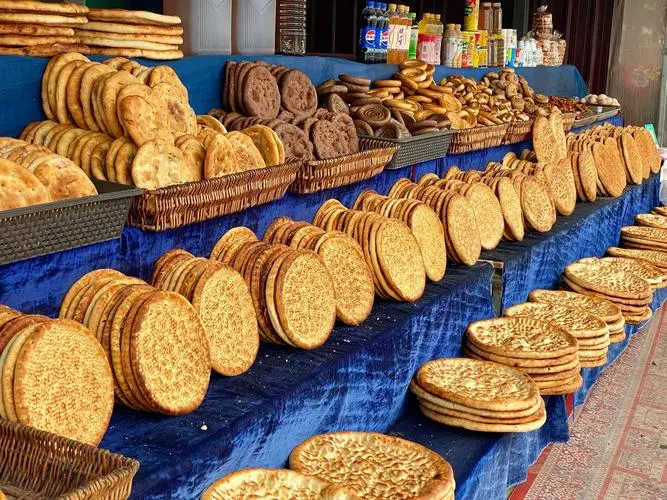
Mug Lamb’s consumption method is equally distinctive. Locals typically pair it with naan bread, especially wowo naan or sesame naan. Tear off pieces of naan and soak them in the broth; as they absorb the rich flavors, they become soft and delicious, creating a perfect complement to the lamb.
This “one pot, one person” eating style is both hygienic and convenient, reflecting the down-to-earth philosophy of Xinjiang life. For Xinjiang people, eating Gāngzǐ Ròu is not merely about satisfying hunger; it is a lifestyle enjoyment and cultural experience.
III. Must-Try Mug Lamb Establishments in Xinjiang
1. Kashgar Region: Birthplace of Mug Lamb
The ancient Abulimiti Clay Pot Roast Restaurant, situated at the junction of Qasa Road and A’erya Road in Kashgar City, stands as one of the most renowned Mug Lamb establishments in the region. This venerable establishment boasts a long-standing history, reportedly selling over a thousand portions of Mug Lamb daily during peak periods. The pot-roasted lamb portions here are generously sized with a satisfying chew, while the broth is exceptionally flavourful – a highly recommended spot within the old city. Established in 1947, this venerable establishment has become a popular Instagrammable destination. A set meal including broth and meat costs 25 yuan, offering excellent value.
Wushi Liuhua Mutton Soup Restaurant is situated on Kashgar County Road 433, within the area known as ‘Mutton Stew Alley’. Its name symbolises ethnic unity. The restaurant employs traditional clear-broth stewing methods, seasoned solely with salt to highlight the superior quality of Xinjiang mutton. The mutton is stewed until deeply flavoured, carrying subtle notes of yellow turnip and chickpeas. The broth is sweet and clear, while the mutton is rich, tender, and delicate.
Lao Gongdi Mug Lamb Restaurant, situated at No. 12 Qiliqiao East Road in Kashgar, preserves the most authentic flavour of clay pot lamb. Its clear, savoury broth evokes the warmth and simplicity of bygone construction sites.
2. Ürümqi Region: Fusion and Innovation
Gardener’s Mug Lamb, situated at 294 Heping South Road in Tianshan District, Urumqi, on the street behind Jinquan Shopping Centre, is a local favourite. Though seating is limited, the atmosphere is wonderfully homely. Mug Lamb arrives pre-portioned with lamb, corn, potatoes, and carrots. The lamb is exceptionally fresh with no gamey flavour, and the broth is wonderfully savoury.
Yijiaqin Grilled Buns Restaurant sits approximately 30 metres southeast of Qinghai Temple Residential Area on Heping South Road, Tianshan District, Urumqi. This establishment primarily caters to locals, operating as a humble eatery. Served as a substantial portion with broth, the overall flavour profile is quite commendable. The yellow and white turnips alongside chickpeas within the clay pot stew enhance the broth’s richness, while the mutton remains tender and succulent.
3. Regional Specialities
Hotan Bazaar Mug Lamb Stall, situated at No. 26 Bazaar Street in Hotan City, is a popular breakfast choice. Here, Mug Lamb is deeply embedded in daily life; a pot first thing in the morning sets the day off right.
Aksu Gāngzǐ Ròu Snack Shop, situated at No. 45 Qingnian Road in Aksu City, adheres to the traditional practice of serving one pot per person, allowing diners to savour their own personal portion of deliciousness. Paired with nan bread, it offers the most authentic taste of southern Xinjiang.
IV. A Guide to Savouring Mug Lamb
1. Optimal Timing for Enjoyment
Mug Lamb is a traditional breakfast choice for Xinjiang locals. At dawn, when the city stirs to life, a steaming pot of this dish paired with a freshly baked nan bread marks the perfect start to the day. However, Mug Lamb has now become an all-day culinary delight, available for lunch and dinner as well.
2. Proper Tasting Method
When savouring Mug Lamb, begin by sipping the broth to appreciate the pure, savoury essence of the mutton. Then sample the meat itself – authentic Mug Lamb should be tender and melt-in-the-mouth.
Next, tear the naan into small pieces and soak them in the broth until they absorb the flavours before eating. This method not only enhances the taste but also effectively cuts through the richness. If you find it too greasy, pair it with a bowl of unsweetened yoghurt, topped with a layer of rich, creamy milk skin carrying a subtle hint of fermented rice aroma.
3. Eating Tips
Temperature Caution: Mug Lamb is served piping hot; avoid rushing to eat it to prevent scalding.
Tea Pairing: Xinjiang brick tea or milk tea perfectly complements Mug Lamb, aiding digestion and cutting through richness.
Seasoning Adjustment: While Mug Lamb possesses a pure flavour profile, one may add pepper or coriander to taste according to personal preference.
V. The Cultural Significance of Gāngzǐ Ròu
In Xinjiang, Gāngzǐ Ròu is not merely a dish but a bond that connects people emotionally. Whether at family gatherings or social gatherings with friends, it serves as an excellent medium for fostering relationships.
For Xinjiang natives far from home, Gāngzǐ Ròu embodies the flavours of their homeland, carrying deep nostalgia for their native land. A simple pot of Gāngzǐ Ròu embodies Xinjiang people’s passion for life, reverence for tradition, and warm hospitality towards guests.
It also reflects the unpretentious attitude towards life characteristic of Xinjiang people. Pursuing perfection in simplicity and creating beauty in the ordinary – this is the very philosophy of life encapsulated within Gāngzǐ Ròu.
When you have the opportunity to visit Xinjiang, be sure to step into a local eatery and order a steaming bowl of Mug Lamb. As the aroma fills the air and the savoury broth spreads across your palate, you’ll experience not merely the flavour of the dish, but the warmth and simplicity of Xinjiang’s land itself. A bowl of Mug Lamb, a taste of Xinjiang’s soul – let this distinctive flavour become the most unforgettable memory of your journey through Xinjiang.