Xinjiang Breads Beyond Naan: Sangza, Girdeh, Katlama and the Tone Oven
Ask anyone in Xinjiang what they eat at every single meal and the answer is almost always the same: bread. Most travellers know naan, the round flatbread pulled from the domed tone oven. But naan is only the headline of a much deeper bread culture. On my first long trip here I assumed every loaf I was handed was “naan” — until a baker in Kashgar laughed, pointed at a spiral of fried dough, and said that was sangza, not naan at all. Since then I have made a point of tasting the whole family, and it changed how I order, shop, and eat across the region. This is a field guide to the breads of Xinjiang beyond the basic naan.
More Than Just Naan
The Uyghur word for bread is nen (馕), and it covers a surprising range of shapes, fats, and cooking methods. What unites them is the tone (馕坑), a cylindrical clay oven fired with apricot wood, where dough sticks to the inner wall and bakes against radiant heat. But not every bread is baked in a tone, and not every loaf is round. Understanding the differences helps you order exactly what you want and appreciate the craft behind it.
Why Bread Matters Here
In a landscape where meals are built around mutton, noodles, and tea, bread is the constant carbohydrate. It is broken by hand, shared from a single round, and never cut with a knife at the table — a small etiquette point that surprises many first-time visitors. For travellers, bread is also the cheapest, most portable food on the road: buy two rounds at a morning market and you have lunch sorted for a desert drive.
The Bread Family at a Glance
Here are the loaves you will actually meet, beyond plain naan:
| Bread | Shape | Key ingredient | Typical use |
|---|---|---|---|
| Sangza (سەنجىدە) | Thin fried ribbons, woven | Flour, egg, oil | Festivals, gifts, tea |
| Girdeh (گىردە) | Thick dome with a hole | Sesame, oil | Everyday tone bread |
| Katlama (قاتلىما) | Spiral, flaky layers | Butter or oil, scallion | Breakfast, snacks |
| Toghach (توغاچ) | Soft, thick disc | Milk, oil | Special meals, guests |
| Qatlama-piti | Small layered squares | Oil, sometimes meat | Street snack |
Sangza — The Fried Ribbon Bread
Sangza is the showpiece. Thin ropes of egg-enriched dough are wound into a lattice, then deep-fried until pale gold and crisp. It shatters like a good biscuit and keeps for days, which is why it appears at weddings, festivals, and as a gift taken to someone’s home. In southern Xinjiang you will see women selling huge woven discs at the bazaar; buy one, break it, and eat it with black tea.
Girdeh — The Dome Bakery Loaf
Girdeh is what many people mean by “naan” but with a denser crumb and a central hole. Coated in sesame or black cumin (zira), it is the workhorse tone bread sold by the kilo at neighbourhood bakeries. The hole is practical: bakers stack them on a horizontal rod to cool and carry. It is chewier than the thin varieties and excellent for scooping stew.
Katlama — Layered Oil Bread
Katlama is the flaky one. Dough is rolled with oil (sometimes butter or sheep tail fat), folded into a spiral, and baked or pan-fried so it separates into buttery layers. Scallion katlama is common at breakfast stalls; sweet versions get a brush of syrup. It is richer than plain naan and best eaten warm within an hour of baking.
Toghach and the Softer Loaves
Toghach is a thicker, milk-softened disc reserved for guests and special meals — softer and less dry than tone naan, closer to a Central Asian flatbread. You will not find it at every corner bakery, but if you are invited to a home meal, this is often what appears first, torn and offered with butter and jam.

How They Are Baked: The Tone Oven
The tone is the heart of it all. Dough is slapped against the hot inner wall, where it cooks in two or three minutes and develops a blistered, faintly smoky bottom. Bakers judge doneness by sound and colour, pulling loaves with a long iron hook. Watching a tone at 8 a.m., when the neighbourhood queues for warm bread, is one of the best cheap cultural experiences in any Xinjiang town. A good naan guide explains the oven in more detail, but the short version is: the oven, not the recipe, defines the bread.
When and How Xinjiang Bread Is Eaten
Bread is not a side dish here — it is the meal’s backbone. The table below shows how different breads fit different moments.
| Moment | Best bread | How served |
|---|---|---|
| Breakfast | Katlama, soft toghach | With tea, butter, jam |
| Road trip lunch | Thin naan, girdeh | Plain, stuffed with kebab |
| Festival visit | Sangza | Whole, as a gift |
| Home guest meal | Toghach | Torn, offered first |
At the Breakfast Table
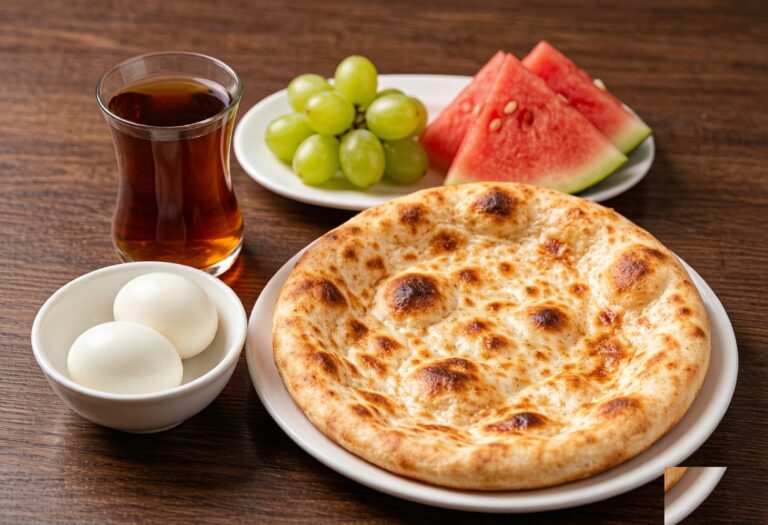
Breakfast is where bread shines. Tear a warm katlama, lay on a slice of butter, add a spoon of rose or apricot jam, and wash it down with salty milk tea. In Urumqi cafes you can build an entire morning around this. It is filling, cheap, and far more interesting than toast.
On the Road
For self-drivers and bus travellers, bread is survival food. A round of girdeh costs a few yuan and survives a day in the car. I keep two in the boot on desert legs and pair them with bought mutton skewers at a roadside stop — instant picnic, no utensils.
Buying Bread: Markets and Bakeries
Every town has a tone bakery, usually marked by the smell and a stack of round loaves by the door. Markets sell sangza and katlama from dedicated stalls. Look for bread that is same-day: tone naan goes stale within a day in the dry air, so freshness matters. In the broader Xinjiang food guide you will find market tips, but the rule for bread is simple — buy where the queue is, early.
Gluten, Storage, and Etiquette
Almost all Xinjiang bread is wheat and therefore not gluten-free. If you need to avoid gluten, rice and noodle dishes are safer bets. Store tone bread in a cloth bag, not plastic, to keep the crust crisp; revive a day-old loaf by warming it against the tone or in a dry pan. And remember the etiquette: never place bread upside down, never waste it, and tear it with your hands rather than cutting it at the table.
The money side of it
| Item | What it costs | Note |
|---|---|---|
| sangza the same as naan | varies | No. Naan is baked in the tone oven, while sangza is deep-fried ribbon dough. They taste and feel completely different — sangza is crisp and brittle, naan is chewy and blistered. |
| cost | varies | A round of tone naan runs about RMB 2-5; sangza and katlama cost more by weight, often RMB 10-20 for a decent piece. It is among the cheapest food you can buy. |
The numbers above are what I paid on my own trips; add roughly a fifth for a private car and driver if you are travelling with someone else. Anything marked roughly is a bazaar price in high season, and it moves with demand.