Fenghuang Ancient Town Travel Guide: History, Highlights and Where to Stay
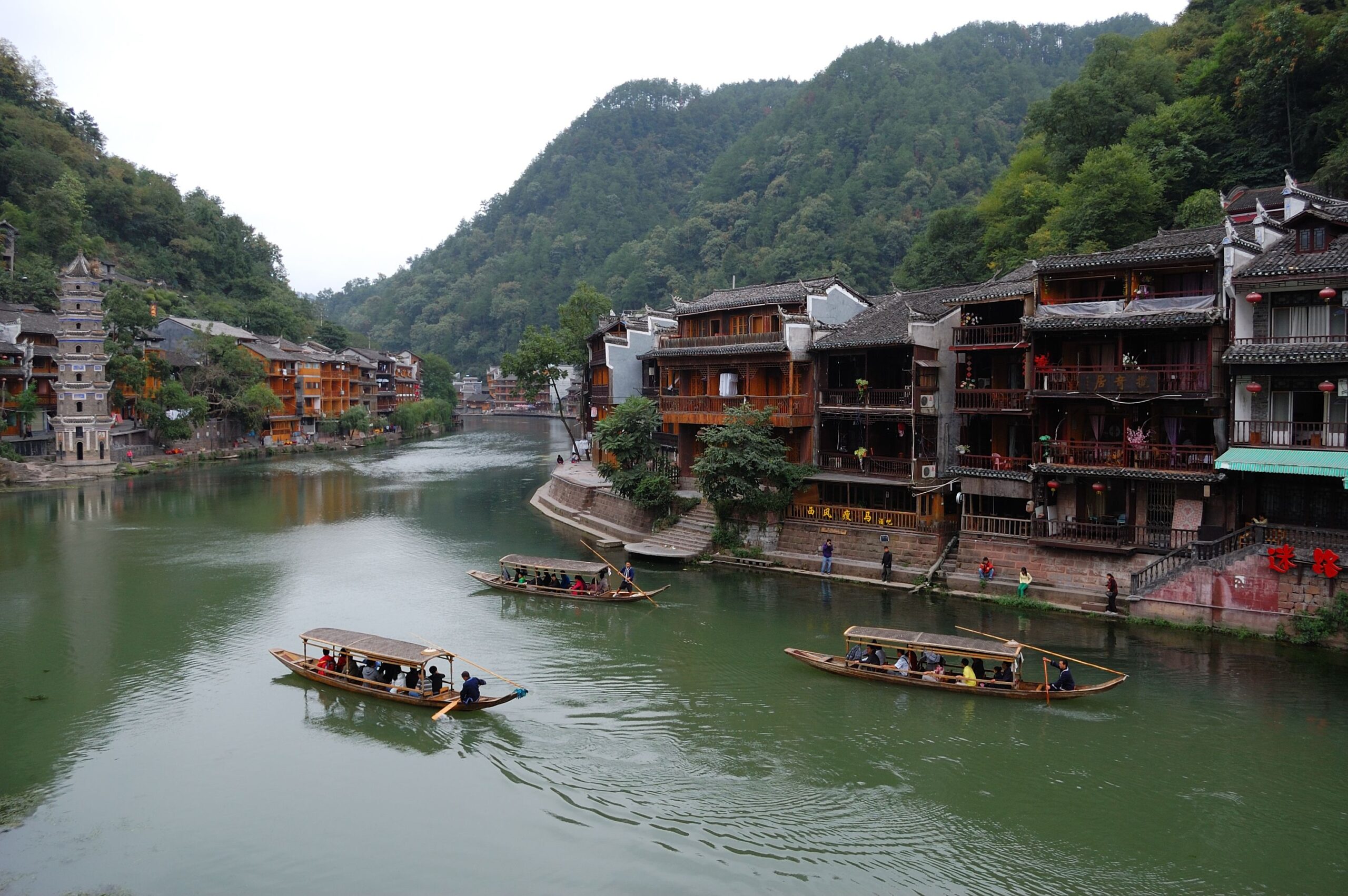
Fenghuang is a Miao and Tujia town in western Hunan built along the Tuo River, with timber stilt houses standing in the water and a walled core that goes back to the Ming. It is one of the most photographed towns in China, and it is heavily commercialised — which means the only way to see it properly is to stay the night and be there at seven in the morning, before the day-trippers arrive.
Why Visit Fenghuang Ancient Town
Fenghuang Ancient Town (凤凰古城) earns its place among China’s essential stops because a riverside miao-town of stilt houses and lantern-lit nights.
Honestly: the riverfront is beautiful and the lanes behind it are genuinely old, but the middle of the street is a souvenir bazaar and the bars are loud until late. Come for the early morning and the hills around, and accept what the town has become in the evening.
The Story Behind Fenghuang Ancient Town
The town was a military garrison on the frontier, and the ‘Southern Great Wall’ that runs through the hills nearby was built to contain the Miao communities of the region. Fenghuang’s modern fame comes from literature: the writer Shen Congwen was born here and wrote about the river, the boatmen and the border country in a way that made the town famous in the twentieth century.
Top Things to Do in Fenghuang Ancient Town
The Tuo River and the stilt houses
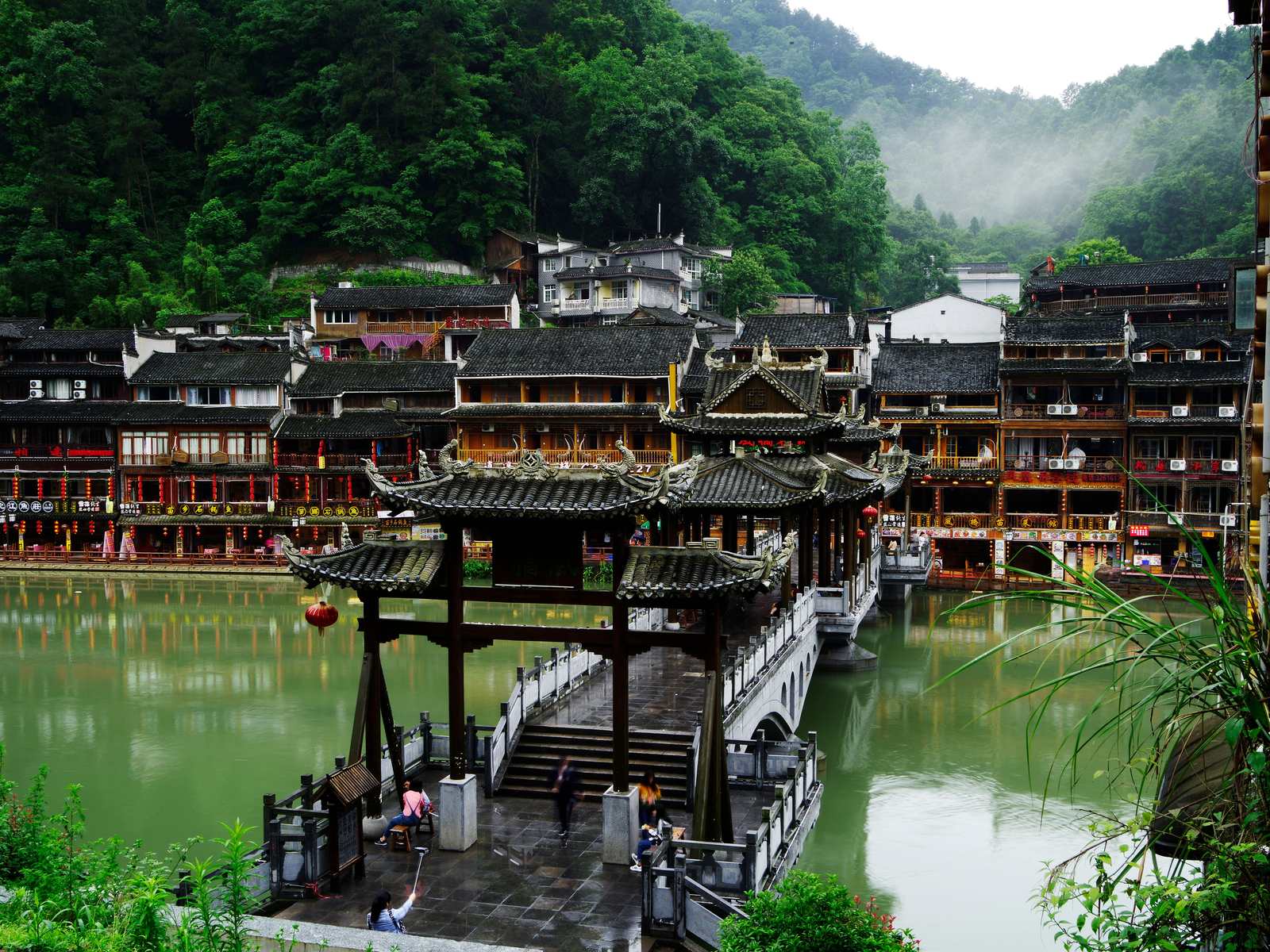
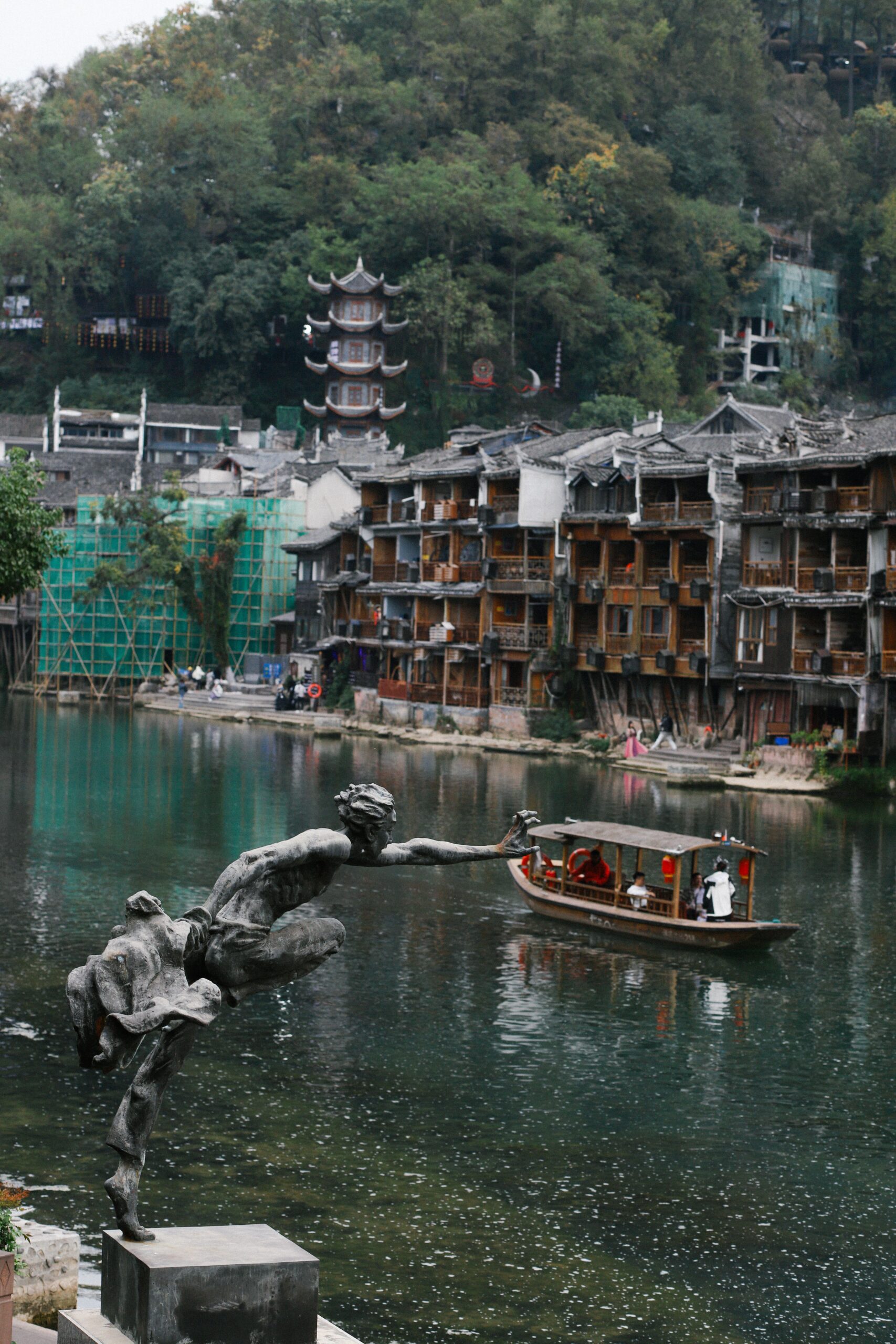
The reason everyone comes: timber houses on piles above the water, reflected at dusk and quiet at dawn. Walk both banks; the far side is calmer.
Hongqiao, the covered bridge
The arched bridge across the river with shops and a roof — the town’s emblem and the best vantage point over the stilt houses. Cross it and look back.
The old lanes behind the riverfront
Step away from the water and there are stone lanes, courtyard houses and temples with almost no one in them. This is where the town still feels like a town.
The city wall and gates
Sections of the Ming wall survive with gates and towers, and the walk along the top is the quickest way to understand the town’s shape.
The Southern Great Wall
Twenty minutes away in the hills: a long stretch of Ming frontier wall, rough and largely unrestored. Very few visitors, and a real sense of why the garrison existed.
Miao villages in the hills
North of the town, Miao settlements with their own costume and festivals. Ask locally which market day is on — the markets are the best reason to go.
Best Time to Visit Fenghuang Ancient Town
April to June and September to November. Summer is hot and the riverfront is at its most crowded; winter is cold and quiet, and the town is at its most atmospheric. Avoid the national holidays entirely.
At a Glance
| Detail | Information |
|---|---|
| From Changsha | ~2 hrs rail |
| Era | Ming-Qing |
| Must-see | Tuojian stilt houses |
| Ethnic groups | Miao, Tujia |
| Best season | Apr–Jun, Sep–Nov |
Getting to Fenghuang Ancient Town
Train to Fenghuang Gucheng station (~2 hrs from Changsha); the town is minutes away.
Getting Around Fenghuang Ancient Town
There is no airport or railway station in the town itself. Most travellers arrive via Zhangjiajie or Huaihua and take a road transfer of roughly one to two hours, or via Jishou. Within the town everything is walkable; the Southern Great Wall and the Miao villages need a hired car or a local bus.
What to Eat in Fenghuang Ancient Town
Blood cake duck
The local speciality: duck braised with a cake made from duck blood and glutinous rice. Dark, rich and unlike anything else in Hunan.
Rice tofu and Hunan snacks
Cold rice ‘tofu’ with chili and vinegar, plus the whole range of western Hunan snacks sold along the lanes — cheap and genuinely local.
Ginger candy
The town’s standard souvenir, made on the spot and sold everywhere: hot, sweet and better than it has any right to be.
Where to Stay in Fenghuang Ancient Town
Inside the old town, off the river
Courtyard guesthouses in the lanes: quiet, walkable to everything and the right choice.
On the riverfront
The classic view, directly above the stilt houses — and directly above the bars. Only if you want to be in it.
Outside the walls
Cheaper and quieter, but you lose the reason to come.
A 2-Day Fenghuang Ancient Town Itinerary
This 2-day plan covers the core of Fenghuang Ancient Town without rushing; if you have less time, take the first day and add the parts of the second that matter most to you.
Day 1 — arrive and walk at dusk
Arrive in the afternoon, walk the riverfront and Hongqiao as the light goes, then eat in the lanes behind the water. The evening is crowded; the morning is the prize.
Day 2 — dawn, then the hills
Out at seven for the river in the mist and an empty old town. Then the Southern Great Wall or a Miao village for the rest of the day.
Day Trips from Fenghuang Ancient Town
The Southern Great Wall
Twenty minutes away: a rough Ming frontier wall with almost no visitors. Combine it with a Miao village.
Qiliang Cave
A large cave system nearby with walkways and lighting — a half-day, and cool in summer.
Miao market villages
North into the hills on market days, when the surrounding villages come in to trade. Ask your guesthouse which day is which.
What a Trip to Fenghuang Ancient Town Costs
| Item | Indicative cost |
|---|---|
| Town combined ticket | ¥120–150 for the main sights; wandering is free |
| Southern Great Wall | ¥45–60 |
| Boat on the Tuo | ¥30–60 |
| Guesthouse inside the old town | ¥150–400 per night |
| Local meal | ¥40–90 |
Entering the town is free; the combined ticket covers the specific houses and temples. Budget travellers can simply walk the lanes and the riverbanks and pay nothing.
Practical Tips for Fenghuang Ancient Town
- Stay at least one night. The town from seven to nine in the morning is a completely different place from the town at three in the afternoon.
- Walk the lanes away from the river — that is where the old town actually is.
- Choose a room off the riverfront if you want to sleep; the bars run late.
- Go to the Southern Great Wall; almost nobody does and it is genuinely interesting.
- Avoid national holidays completely.
- Ask about Miao market days before you plan a trip into the hills.
Mistakes to Avoid
- Day-tripping and leaving at five, which means seeing the town at its worst.
- Expecting an untouched village — it is one of China’s most commercialised old towns.
- Booking a riverside room and then complaining about the noise.
- Only walking the waterfront and never stepping into the lanes behind it.
Is Fenghuang Ancient Town Right for You?
One night and most of two days. Fenghuang suits travellers who can tolerate the commercialisation in exchange for a genuinely beautiful river town at dawn, and who will go out to the Southern Great Wall and the Miao villages.
Plan Your Trip
These official and reference sources help you verify opening hours and book ahead:
Frequently Asked Questions
Is Fenghuang too touristy?
It is heavily commercialised on the riverfront, yes. The lanes behind it and the early morning are still genuinely good, which is why staying overnight matters.
How many days do you need?
One night and most of two days. A day trip means you see it at three in the afternoon, which is its worst hour.
How do you get to Fenghuang?
There is no airport or station in the town. Most travellers come from Zhangjiajie or Huaihua by road, roughly one to two hours, or via Jishou.
What is Fenghuang famous for?
Its timber stilt houses standing in the Tuo River, its Miao and Tujia border culture, and Shen Congwen, the writer who made the town famous.