Xinjiang Pomegranate Juice (Anar): The Ruby-Red Drink You’ll Find Across the Region
Somewhere between the melon stalls and the naan ovens of a Xinjiang bazaar, you will almost always find a vendor with a small mountain of split pomegranates and a hand-cranked press, squeezing a glass of deep ruby juice that tastes like summer distilled. Called anar sharap (pomegranate juice) in Uyghur, this is one of the region’s most refreshing, least-hyped drinks — and unlike the famous Hami melons or Turpan grapes, it rarely gets the attention it deserves from travelers.
This guide covers where Xinjiang’s pomegranates grow, how the juice is made on the spot, what it tastes like, and how to enjoy it safely on the road. If you are assembling a mental map of Xinjiang’s fruit, pomegranate deserves its own pin.
Why Pomegranates Thrive in Xinjiang
Pomegranates ( Punica granatum, anar in Uyghur) love exactly the conditions Xinjiang provides: long, hot, sunny growing seasons, cool nights, and low humidity. The same day-night temperature swing that makes the region’s grapes and melons so sweet concentrates sugars and acids in the pomegranate arils, giving Xinjiang fruit a deeper, more wine-like flavor than pomegranates grown in humid climates.
The trees are hardy, drought-tolerant, and have been cultivated across the Tarim and Turpan oases for well over a thousand years — pomegranate motifs turn up in Silk Road textiles, carpets, and tilework throughout the region.
Where They Grow
| Area | Why it works | What you’ll taste |
|---|---|---|
| Turpan | Extreme heat, ancient irrigation | Very sweet, dark-ariled |
| Kashgar / Pamir foothills | Cooler nights, mineral soil | Balanced sweet-tart |
| Korla / Yanqi | Bayinbuluke meltwater | Juicy, medium-sweet |
| Hotan | Desert oasis warmth | Rich, slightly astringent |
How the Juice Is Made
The best glass you will have is pressed in front of you. The vendor scores a fresh pomegranate, breaks it open, and cranks the arils through a stainless press; what comes out is pure juice with no water, sugar, or ice unless you ask. A single large fruit yields roughly a small glass, so a “fresh” serving is genuinely fruit-forward.
Bottled and carton versions exist in supermarkets, but they are almost always sweetened or blended. For the real thing, buy the market press and drink it within minutes — the flavor dulls and the color browns once it sits.
Fresh vs. Bottled: A Quick Comparison
| Type | Sugar added | Taste | Best for |
|---|---|---|---|
| Fresh-pressed (market) | No | Bright, tart, aromatic | Drinking on the spot |
| Bottled 100% (check label) | Sometimes | Consistent, less vivid | Travel / storage |
| Juice drink / blend | Yes | Sweet, mild | Kids, casual sipping |

What It Tastes Like
Good Xinjiang pomegranate juice is sweet first, then tangy, with a faint tannic grip at the back of the throat — closer to a cranberry-pomegranate than to a soft grape juice. The Turpan fruit leans sweet; the Kashgar and Pamir fruit leans more acidic and “serious.” Either way it is intensely fruity and never flat.
Locals sometimes blend it with a little sparkling water in summer, or mix pomegranate with other Xinjiang fruits for a market “fruit tea.” On its own, though, fresh juice needs nothing.
When to Find the Best Fruit
Pomegranates ripen late summer through autumn (roughly August to October), which is when fresh-pressed stalls are everywhere and the fruit is cheapest. You can find imported or stored fruit in winter, but the peak experience is the September–October window — conveniently the same season as the grape harvest, so Turpan in October is a double win.
Is It Safe to Drink?
- Watch the press: Choose vendors who crack fruit to order and run a clean stainless press. Avoid pre-pressed jugs sitting in the sun.
- Ice: If you are cautious about water, skip the ice — ask for “muz siz” (without ice).
- Wash the rim: A quick wipe of the glass edge is sensible at any busy stall.
- Storage: Fresh juice spoils fast in the heat; finish it within 30 minutes or keep it in a cool bag.

Beyond the Glass
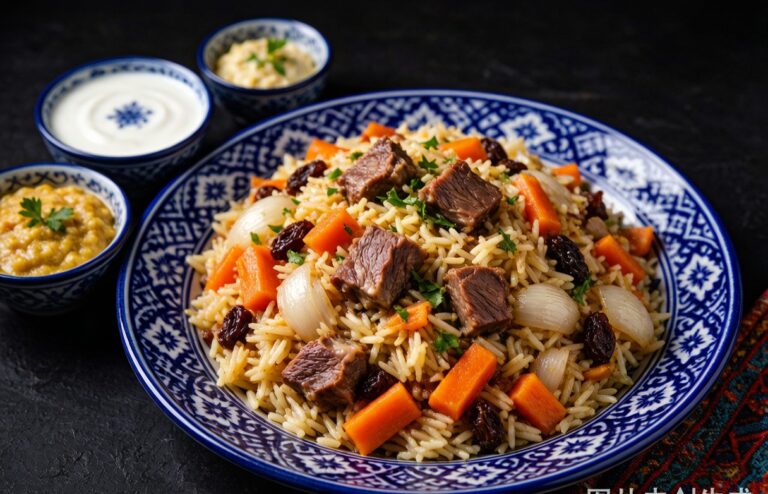
Pomegranate shows up across Xinjiang cuisine in more than juice: anar seeds scatter over salads and pilaf, pomegranate molasses (dips and marinades) appears in some Uyghur home cooking, and the fruit is a staple of New Year and festival spreads. In Hotan and Kashgar you may also find pomegranate-wine liqueurs and syrups sold alongside the dried-fruit stalls. Trying the juice is the easiest entry point, but ask at a home-style restaurant and you may find it in a dish too — and the visual pop of red arils on a pale pilaf is reason enough to seek it out.
Pomegranate in Xinjiang Culture and Festivals
The pomegranate is more than a fruit here — it is a symbol of abundance, fertility, and good luck that turns up across the region’s visual culture. You will spot stylized pomegranates on Uyghur embroidery, on painted chests, and in the tilework of older courtyards. At New Year and wedding tables, a bowl of pomegranates (often with the arils already loosened) signals prosperity for the household, and the fruit appears in poetry and song as a metaphor for a full, joyful life.
Because the harvest lands in early autumn, pomegranate season overlaps with the busiest market months, and vendors proudly stack the fruit next to grapes and melons as proof of the oasis’s bounty. Trying the juice during a September festival is the easiest way to taste the fruit at its absolute peak.
Choosing and Storing the Fruit
| Sign | What to look for |
|---|---|
| Skin | Thin, leathery, slightly angular — a “crown” of raised ridges at the blossom end |
| Weight | Heavy for its size = juicy arils |
| Color | Deep red to red-brown; avoid pale, waxy skins |
| Storage | Cool room or fridge; whole fruit keeps 1–2 weeks, arils 3–4 days |
If you want to press your own, buy fruit that feels heavy and crack it under water in a bowl — the arils sink and the pith floats, making cleanup far easier than doing it dry on a hotel counter. A simple hand press or even a sturdy citrus juicer will extract most of the juice without the bitterness you get from crushing the seeds.
Recovery mode
If this happens: Xinjiang pomegranate juice very sweet
Fresh-pressed juice is naturally sweet-tart, not candy-sweet. If a glass tastes like syrup, sugar was added — ask for pure “anar” with no sugar if you want the真实 taste.
When it goes sideways: Easiest place to try it
Any large bazaar — Turpan, Kashgar’s old town gates, and Korla all have press stalls in season. The Sunday markets around the Tarim oases are especially good.
If you run into this: Taking pomegranates home as souvenirs
Fresh fruit is risky to fly with (customs rules vary), but dried arils and pomegranate molasses travel well and make a lightweight, distinctive gift from the region.
On the ground: Pair with local food
Yes — the tartness cuts through rich grilled meats and pilaf, and it is a natural counterpoint to oily lamb dishes after a long drive.
If this happens: Available year-round
Fresh-pressed only in late summer–autumn. Bottled versions are sold year-round but are a different (sweeter, blander) experience.
When it goes sideways: Pomegranate juice healthy
It is rich in vitamin C and antioxidants and is a genuinely good alternative to sugary sodas on the road — just mind the added sugar in bottled blends and the heat spoilage of fresh presses.