Sayram Lake with Kids: A Family Plan and What to Pack
{“@context”: “https://schema.org”, “@type”: “Article”, “headline”: “Sayram Lake with Kids: A Family Plan and What to Pack”, “url”: “https://www.xinjiangtraveltips.com/sayram-lake-last-tear-atlantic-guide/”, “author”: {“@type”: “Organization”, “name”: “Xinjiang Travel Tips”, “url”: “https://www.xinjiangtraveltips.com/”}, “publisher”: {“@type”: “Organization”, “name”: “Xinjiang Travel Tips”, “logo”: {“@type”: “ImageObject”, “url”: “https://www.xinjiangtraveltips.com/wp-content/uploads/2026/01/logo.png”}}, “mainEntityOfPage”: {“@type”: “WebPage”, “@id”: “https://www.xinjiangtraveltips.com/sayram-lake-last-tear-atlantic-guide/”}}
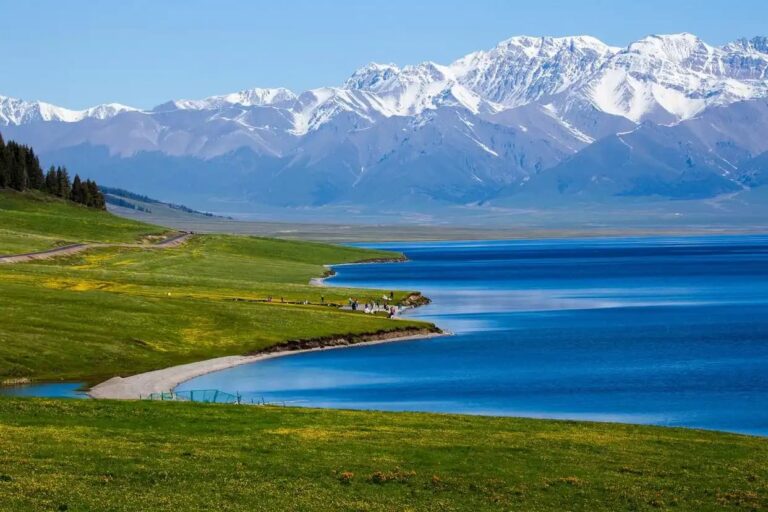
Sayram Lake (赛里木湖) is genuinely doable with kids — flatter and more accessible than most Xinjiang alpine stops — but the altitude and the wind catch first-time parents off guard. Here is a realistic family plan, written for travellers with young children rather than seasoned hikers.
Is it kid-friendly? Mostly yes
At 2,073 m the altitude is modest; most children handle it fine with normal pacing. The challenge is not the height, it is the wind and the cold, which arrive even on warm summer days. Plan for “cold and breezy” no matter the forecast.
Pace it for short legs
- Skip the full 70–90 km loop. Drive to the east causeway and the south-shore reed pulls, walk the flat margins, then leave. Two hours of lake time is plenty for small children.
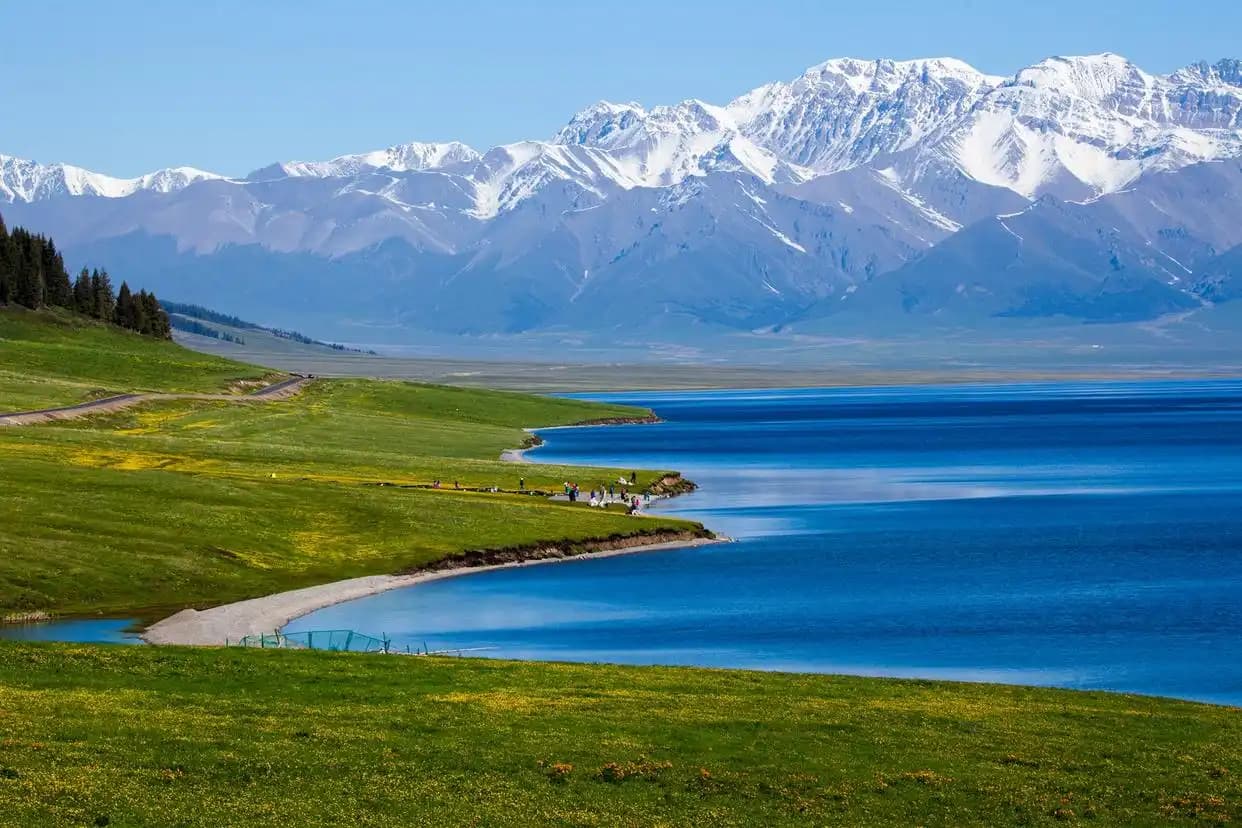
- The south shore is your friend. It is the flattest, most open section, with swans in summer and easy pull-offs. Save the dramatic west wall for a child-free trip.
- Build in a warm-up stop. Yining has food and toilets; use it before the final approach.
Stroller or carrier?
A sturdy stroller works on the paved pull-offs and causeway, but the grass margins are uneven. For toddlers, a carrier is more flexible. Either way, keep the buggy within reach of the car — the wind is no joke.
Altitude and cold: what to pack
- One windproof layer per person, plus a hat. The lake earns its “tear” name partly through that constant wind.
- Sun protection: at altitude, UV is strong even when it feels cool. Sunglasses and child-safe sunscreen.
- Snacks and water: inside the scenic area, food is limited and seasonal. Pack more than you think.
- A change of clothes for the inevitable splash or chill.
The one thing I order every time
The sweet version is the one for the market, not for a morning. Ask for it plain the first time. In Sayram Lake Last Tear that is the tea, and the reason is not the flavour. It is the rhythm of it: someone puts a glass in your hand, another arrives, you sit for ten minutes, and suddenly the rest of the day is sorted. For the part people underestimate, see our [[sayram-lake-the-last-tear-of-the-atlantic-a-complete-visitors-guide|Why Sayram Lake Is Called the ‘Last Tear of…]].
How to order, and what a portion really costs
Card and phone payment both work everywhere in Sayram Lake Last Tear. Tips are not expected in the small places and are quietly welcome where there is table service, but do not build the visit around it. The number on the board is for one, and one here is enough for a European adult if you share two. Order one less than you think, because the rice arrives in a bowl the size of a small basin and the second helping does not need ordering.
What travels home and what does not
What does not work is anything fried or saucy, which turns in transit, and anything you cannot repeat at home. Buy the dried fruit in the market rather than at the airport and ask for it packed at the stall. Nuts, dried grapes, an uncut flatbread and vacuum-packed lamb all survive a long-haul flight. It is cheaper, the staff wrap it properly, and it spends a week in your bag as the best thing about the trip. For the part people underestimate, see our [[sayram-lake-the-last-tear-of-the-atlantic-and-xinjiangs-alpine-gem|Sayram Lake: The ‘Last Tear of the…]].
How it is actually eaten
Eating alone here is a quiet business and the kitchen knows it. In Sayram Lake Last Tear the meal is a long one, not a fast one. Bread goes down first, tea arrives without being asked for, and the main dish comes when the people eating together are already sitting properly. If you are travelling solo and the thought of a room full of families bothers you, the counter seats at the small places are exactly the right answer. For the part people underestimate, see our [[sayram-lake-the-last-tear-of-the-atlantic-a-complete-visitors-guide|Why Sayram Lake Is Called the ‘Last Tear of…]].
Make it a game
Children engage with the swans, the big rocks, and the “find the snow on the mountain” game far more than with scenery. The main guide has the background if you want to explain why the water is so blue.
Logistics for families
Self-driving beats the shuttle for families — you control nap timing and toilet stops. Base in Yining (1.5–2h away) for proper hotels and meals. For tickets, access, and where to stay inside the area, see the practical guide.