Flaming Mountains Photography: Golden Hour and Combining with Nearby Sites
{ “@context”: “https://schema.org”, “@type”: “Article”, “headline”: “Flaming Mountains Photography: Golden Hour and Combining with Nearby Sites”, “description”: “Explore China#8217;s hottest region, experience the mystical mountain range where Sun Wukong borrowed the banana fan three times in Journey to the West,…”, “url”: “https://www.xinjiangtraveltips.com/xinjiang-flaming-mountains-travel-guide/”, “datePublished”: “2026-02-10”, “dateModified”: “2026-02-10”, “mainEntityOfPage”: { “@type”: “WebPage”, “@id”: “https://www.xinjiangtraveltips.com/xinjiang-flaming-mountains-travel-guide/” }, “publisher”: { “@type”: “Organization”, “name”: “Xinjiang Travel Tips”, “url”: “https://www.xinjiangtraveltips.com” }
}
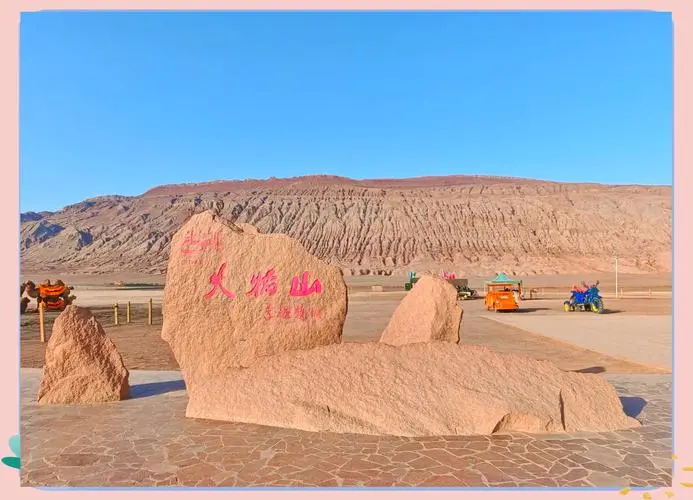
The Flaming Mountains (火焰山) are a photographer’s paradox: spectacular red rock that, at the wrong hour, photographs as a flat brown smear under punishing heat haze. Timing and pairing are everything. This is the shooting guide; for visiting logistics, see the Flaming Mountains practical guide.
Golden hour is the only hour
- Late afternoon to sunset: the low sun ignites the sandstone — rust, orange, near-crimson. This is the shot everyone wants.
- Avoid midday: the heat haze washes the colour out and the contrast dies. Noon is for shade, not shooting.
- Sunrise: a quieter alternative if you are already in Turpan at first light.
Composition
- Leading lines: the eroded gullies make natural diagonals; a 24–70mm lens handles most frames.
- Include scale: a person or the Journey to the West statue gives the cliffs their size.
- Silhouette: at sunset, shoot the ridge as a dark cut-out against the lit sky.
The hour I go back for
Midday is the hour to avoid, not the hour to schedule. Everything goes flat, the shade disappears, and the temperature on an open plateau rises in a way that stops you caring about photographs. Between the two I would pick the later one, mostly because the early version costs you the rest of the day. Go early or go late and the same ground gives you two different subjects. The whole face of Xinjiang Flaming Mountains turns a colour that does not exist at any other time, and the site is empty enough that you can stand still and hear nothing.
Sunrise is the one worth an alarm for. By ten the coaches are here, and by one it is an hour of people shuffling past. I have come to like the last forty minutes before the gate shuts, when the groups have gone and the staff are sweeping, because that is when you can look up properly instead of squeezing a shoulder past strangers. Whatever the guidebook says about golden hour, go on a weekday. The light is only free of company on a Tuesday.
The evening version of that plan is in our [[flaming-mountains-xinjiang-travel-guide|Flaming Mountains Practical Guide: Beat the…]].
What the ticket and the extras actually add up to
On your own the same afternoon comes out at maybe half again as much. The admission is cheap, the internal transport is what adds up, and a family of four in one car turns a small ticket into a real line in the budget. Prices at the gate are reasonable by European standards, which is exactly why they are easy to underestimate. Staff there are used to it, and the answer takes ten seconds. Ask once at the ticket office what the full circuit costs before you commit.
The headline entrance ticket is only the first line. On top of it comes a shuttle or sightseeing bus inside the site, and if you want a far viewpoint rather than the main one that is another leg. Parking, a printed map, and a guide are the other three places the number moves. Two of us covered the whole thing for well under what a single hotel night in Xinjiang costs, but only because we shared the car and shared the entry between us. The evening version of that plan is in our [[tianshan-mountains-xinjiang-travel-guide|Which Tianshan Section to Visit: Tianchi vs…]].
A second look on day two
Almost nobody does Xinjiang Flaming Mountains twice. The second time you can skip the obligatory viewpoint and walk along the base of the ridge where the light comes in sideways, and that is the photograph you keep. I did, and the second visit was better, because the first had been spent working out where to stand. If your itinerary has a spare morning, spend it here again rather than at the bigger name on the far side of town. For the part people underestimate, see our [[xinjiang-travel-guide-2026-2|Xinjiang Travel Guide 2026]].
Pair it for contrast
The Flaming Mountains are best shot as part of a three-texture day:
- Red rock (Flaming Mountains, golden hour).
- Green (the Grape Valley, cool and leafy — shoot midday when the mountains are unshootable).
- Earthen (the Jiaohe ruins, warm light at the same golden hour).
That trio — red, green, earthen — is the Turpan visual story in one day.
Gear and safety
A polariser deepens the sky; a hat and water are mandatory even for a short shoot. Shoot from the shaded viewpoint platforms rather than walking the open rock in the heat.