How to Avoid Crowds in Xinjiang: Timing, Routes, and Quiet Alternatives
Xinjiang is enormous — one-sixth of China’s landmass — yet most foreign visitors funnel into the same five or six posts: Kanas Lake, Sayram Lake, the Kashgar Old City, Turpan, and the Duku Highway. I made that mistake on my first trip and spent a July afternoon bumper-to-bumper on a mountain road that should have been empty. The fix is not to skip those places but to time and route them differently. Here is the crowd-avoidance playbook I wish someone had handed me before that traffic jam.
Why Xinjiang Crowds Are Different
Domestic tourism in Xinjiang is huge and seasonal, and it clusters hard. Schools break for summer, the weather is kind, and millions of Chinese travelers hit the road at once. Unlike Europe, where crowds spread across a continent, here they pile onto a handful of headline scenic areas with limited parking and single-lane access roads. A famous lake can go from serene at 8 a.m. to a parking-lot by 11. The leverage, then, is timing and substitution, not distance.
The Calendar Cheat-Sheet
| Window | Crowd level | Why | Move |
|---|---|---|---|
| Jul – Aug | Very high | Summer holidays, best weather | Avoid weekends at Kanas/Sayram |
| Early Oct (Golden Week) | Extreme | National holiday, 8 days off | Skip the headline sites entirely |
| May – mid Jun | Moderate | Shoulder, wildflowers out | Best balanced window |
| Sep – early Oct (pre-Golden) | Moderate | Autumn colors, kids in school | Prime for photography |
| Nov – Mar | Low | Cold, some passes closed | Great for solitude, check access |
Golden Week and summer traps
If your dates are fixed to a Chinese public holiday, accept that the famous spots will be packed and build your plan around the quiet alternatives below instead. If you have flexibility, shift by even two weeks and the same lake feels like a different country. For a month-by-month weather-and-crowd breakdown, see our best time to visit Xinjiang guide.
Quiet Alternatives to the Big Three
| Headline spot | Quieter swap | Why it works |
|---|---|---|
| Kanas Lake | Hemu Village side valleys / Kanas geopark trails | Same range, fewer buses, more birch forest |
| Sayram Lake | Ulungur Lake or local reservoirs near Karamay | Open steppe water without the ring-road tour buses |
| Kashgar Old City | Tashkurgan bazaar or Yarkand’s back streets | Living old towns, far fewer selfie sticks |
The swaps are not consolation prizes — each one keeps the character of the headline spot while dropping ninety percent of the people. Ulungur Lake is vast, windswept, and almost empty on a weekday, with the same sky-meets-water drama as Sayram and none of the ring-road bus convoys. Hemu’s side valleys give you the same birch-and-river calm as Kanas without the ticket-town crush. And Yarkand delivers the same mud-brick charm as Kashgar’s old town but with locals going about real life instead of posing for influencers. You lose the name recognition; you gain the experience.
The Weekday Equation
A simple rule saved me more grief than any app: in peak season, treat Saturday and Sunday at a headline site as a different, worse destination. Chinese travelers take two-day weekend trips in huge numbers, so Friday-night and Sunday-night transport sells out while Monday and Tuesday mornings stay calm. I once did Kanas on a Tuesday and shared the boardwalk with maybe forty people; a friend who went the prior Sunday described a shoulder-to-shoulder scrum. Same place, same month, opposite experience — purely a function of the calendar.
This also affects where you sleep. Booking a guesthouse in a small county (Tekes instead of the Kanas ticketing town, for instance) lets you drive in at first light and leave before the day-trippers arrive, rather than fighting both the morning inbound and the afternoon outbound waves.
Time-of-Day Tactics That Actually Work
Most tour buses arrive between 10:30 and 15:00. If you can be at a gate at opening (often 8:30–9:00) or stay past 17:00, you will photograph and walk places the groups never see. At Kashgar’s Id Kah square, sunrise is empty and golden; by noon it is a sea of hats.
Opening hours and light
Xinjiang runs on Beijing time but locals live two hours behind, so “early” for you may still beat the local rush. Use the soft morning light for photos anyway — it is the best of the day and the emptiest.
I also learned to eat late. Lunch at a famous spot at noon means a queue; eating at 14:30 after the buses leave, or at 11:30 before they arrive, turns a frustrating wait into a relaxed meal. The same logic applies to photo viewpoints — the classic shot everyone takes is crowded from 11:00 to 15:00, but at 09:00 or 17:00 you may have the platform to yourself.
Route Design to Skip the Rush
Instead of the standard Urumqi → Turpan → Kashgar southern sprint, consider a loop that threads small counties: Urumqi → Qitai → Jimsar (the lesser-known ruin circuits) → heading north to the Altai fringe, then looping the Ili Valley. You trade a little drive time for a lot of elbow room. Build one “hero” crowded site per week, not per day, and surround it with quieter stops so the trip never feels like a queue.
A concrete example: instead of the headline Urumqi–Turpan–Kashgar run everyone books, I built a loop through Qitai (where strange wind-formed yardangs sit almost visitor-free), Jimsar’s less-famous ruin circuits, then north toward the Altai fringe before swinging through the Ili Valley. The driving was longer, but I averaged a fraction of the crowd density and stumbled onto three roadside markets no guidebook mentioned. The headline sites are still on the map — they are just the dessert, not the main course.
Transport Timing
Long-distance buses and the new high-speed rail fill on Friday evenings and Sunday nights with weekenders. Travel mid-week and book the first departure. For the Duku Highway, start before 8 a.m. or after 16:00; the midday convoy is the part people hate. A privately hired car with a driver also lets you simply stop where the buses cannot. First-time visitors should skim our Xinjiang travel FAQ before booking transport.
A Personal Crowd-Avoidance Story
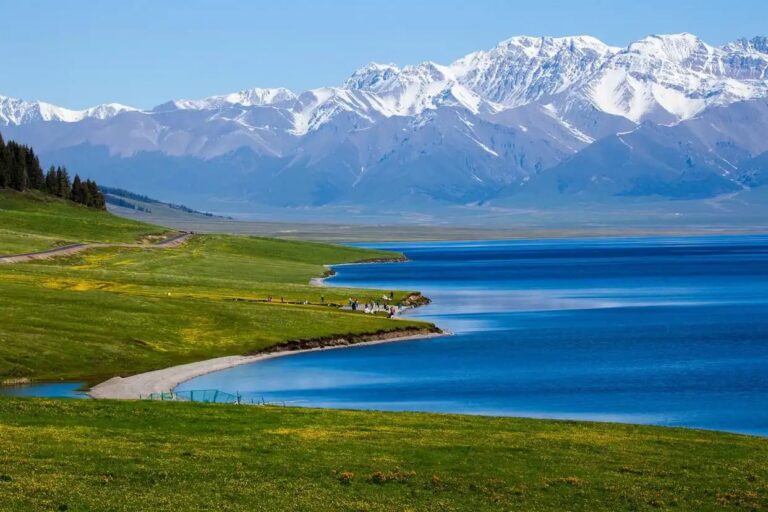
On a September trip I reached Sayram Lake at 8:40 a.m. with morning mist still on the water and exactly three other people in sight. By the time a tour bus convoy rolled in at noon, I was already 20 km down the ring road eating grapes from a roadside stall. Same lake, two completely different experiences — separated by three hours.
The calendar decides everything
Winter
Late September to early October (before the Golden Week crunch) and the shoulder month of May offer the best mix of open roads and decent weather. Deep winter is emptiest but some passes and yurts close.
Most swaps like Ulungur Lake or Yarkand need no special permit, but border-adjacent areas such as Tashkurgan still require the standard border permit — check per destination.
At the gate by 8:30–9:00 beats the 10:30 bus arrival. For sunrise photography, plan to be set up 30 minutes before first light.
Summer
Yes — just visit them at opening or late afternoon, and on a weekday. The scenery is genuinely world-class; the crowds are a timing problem, not a reason to skip.
Autumn
The quiet alternatives are normal towns and villages with regular police presence and phone coverage on major routes. Tell your hotel your plan, keep the tank topped up, and you are fine.